


 FEATURES
Repetition as devotion: Inside Pugilist’s ‘Found Sound’
The Scotland-turned-Aotearoa-turned-Australian producer’s debut album comes after a mammoth 70 releases, but not a moment too soon.
The often-touted ‘true’ definition of insanity is the idea of doing the same thing over and over again, expecting different results. While this may be true for say, a history intent on forever repeating itself or the lives of sociopathic young men hell-bent on not learning or changing, for some reason, art appears to be an exception to such a definition.
Where dance music is concerned, to many unitiatied listeners, it may be the true definition of insanity. Repetitive, hypnotic motions that a growing part of the population appears to be learning to love sounds like a Goosebumps offcut or the b-side to Reefer Madness, and yet here we are.
To many, the idea of finding an artistic practice in amongst that repetition could be laughable.
Thankfully, we’re on a dance music website.
That ‘artistic practice’ is becoming an increasingly generous term, much like the idea of being a creative or influencer before. What props up much of that kind of distrust or scepticism nowadays is the approach that people take into that creative process. What are they here for? Is it because this is cool?
Perhaps one of the biggest tells and sources of dismay for many fans of electronic music is the level of privilege, financial backing, and wealth surrounding many new artists. For a music culture so inherently social, it can be easy for such people to blend into the background with productions that imitate but rarely innovate. While the music is often dedicated to movement, nightlife, and festivals, there’s still a level of reality missing compared to producers whose art is the result of a passion to the point of struggle.
Naarm/Melbourne-based producer Pugilist’s debut record, ‘Found Sound’, released last month via his own imprint Ruff Kutz, is the culmination of an artistic practice that has seen the artist produce countless releases over more than a decade.
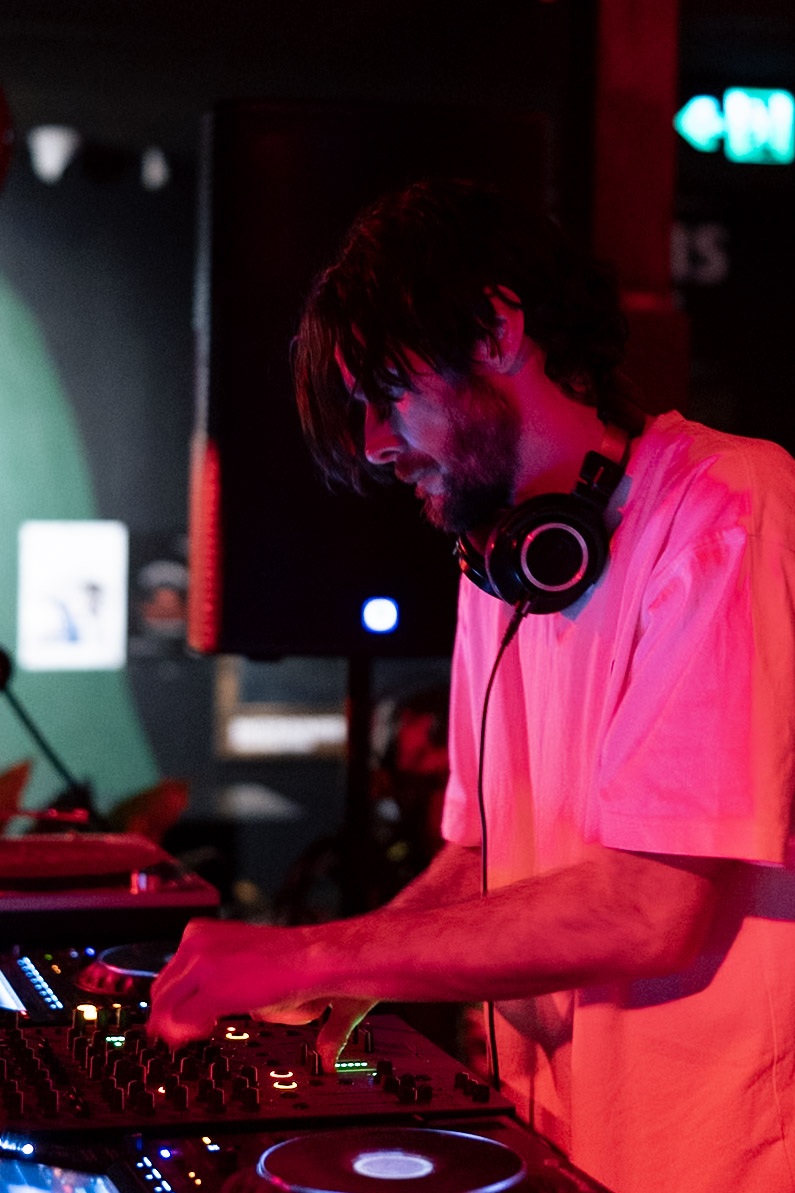
The artist, real name Alex Dickson, is originally from Scotland and was raised in Aotearoa/New Zealand, finding himself in Naarm within the last 10 years and setting up a new life in pursuit of greener cultural pastures.
“There’s not a lot there,” Alex reflected. “People just have to create things (in remote areas).”
Alex is, in almost every way, the antithesis of the idea that repetition is the definition of insanity.
“At this stage, I’ve got around 70 separate releases,” he told me.
70.
Seven zero.
Alex’s work, regularly working within the frameworks of jungle, drum & bass, dub, dubstep, dub techno and much more, is a near-endless output that has, for many years, made my eyes water. In the time since touching base on this article, in fact, he’s released another three EPs, with ‘Found Sound’ sitting outside of that schedule. For many artists, the decision about when, where, and how to release their first album is nowadays almost inseparable from the idea of a schedule. How should an album fit into an artist’s overall ‘offering’? Should it be the culmination of collaborative work, designed to open up new touring opportunities, or be right as new management, a new label, or other figures enter the equation?
For Alex, it appears that none of those factors has been of any concern in the production of ‘Found Sound’. After 70 releases, a decade of producing music, and a life clearly lived, Pugilist’s debut record is driven by a refinement in his artistic practice that warrants being solidified as a singular artistic product.
The idea of reproduction is something core to what Alex does. In reality, the sheer volume of releases under his belt has come largely from the way he deems music as being ‘ready’ to release.
Alex’s process has become so refined that tracks are most often the product of a single session of brainstorming, experimentation, and execution. Unlike the regularly heard trope of a perfectionist dialling in the clap of a snare or the intricacies of sidechain compression at a particular build, Pugilist’s work is almost like an archive of his own creativity, rather than a ‘product’ of it. As a result, the idea of him having 70 releases becomes no less impressive, but more a sign of his desire to perfect his craft.
“Anyone who knows me will tell you that I’m a bit feral when I get into the zone. It becomes a bit disgusting,” he laughed. “I don’t leave the house for a few days, and I’ll just make three or four tunes a day.
I forget to sleep, or eat well. I’ll go to bed late, go to work in the morning, but then I’ll just make nothing for months. I might write like three EPs in two weeks, and then just nothing.”
When it comes to tracks, “90% of the time, it’s one and done. I’ll start the track and finish it in that session. I realised pretty early on that overthinking is pointless. There are very few releases where I’ve wished I’d completely changed it.
I think it’s good to capture that moment and just share it.”

On ‘Found Sound’, Alex himself says that this kind of process, albeit one slightly more refined and critical, allowed him to delve into his internal monologue.
“It’s been in the back of my mind for a few years, and it’s something I’ve been talking about. Timing and opportunity presented themselves when my seasonal work finished up a bit, and I thought, ‘maybe I’ll take a break and put the groundwork into this’, both setting up a label and finishing my ideas.” This break in his work, aided greatly by his long-term partner, whom we’ll return to slightly later, saw Alex take a few months off at the beginning of 2025 and refine the record in a way that required slightly more self-reflection than previous pieces.
‘Found Sound’ is a record defined by mood rather than sonic unity. Pugilist is known for, above all else, a commitment to bass. Whether in jungle, dub, electro, or otherwise, Alex’s love for sound system culture and its impact on the sound and mood of musical spaces is clear and enduring.
“I started off making dubstep, which is obviously rooted in sound system culture. Going even further back to dub and reggae, the cultural movement around all those genres has been a big influence on me. I’m a bass head.”
“If you test tunes on a big rig, you’ll feel the difference, and that’s what it’s really all about for me. I like people to feel the music, and I think it adds another element of connection.”
Alex’s love of sound system culture has persevered across his music and, clearly, in his social life as well. He’s found kindred spirits across state lines in the likes of Translate Sound and DUNJ, and, in his first move to Melbourne, found friends at Grumpy’s, a venue that no longer exists.
“I always felt a bit out of place at a techno event or something like that. You know, I still enjoy it, but I’ve found navigating the social circumstances a little trickier.”
In our conversation, Alex made particular note of the sheer effort involved in building a system from scratch. “It’s no small investment in time, energy, money, and even logistically moving it around is a nightmare,” he said. “The community it creates is pretty magic.”
Paying homage to the work ethic of people integral to the sound he himself produces is but one element of Alex’s internal monologue on ‘Found Sound’. Sampling, done across the record with a wide variety of source material, is yet another way he’s paid respect to a culture to which he owes so much.
“It’s obviously a huge part of the culture of electronic music, and you can use your individual taste to give something a really distinct flavour, which might not be easily replicated by synthesising everything.” Among many, that includes samples from film, iconic jungle history, and the legendary vocalist MF DOOM, with lyrics from his collaboration with Madlib, Madvillain, and their track ‘Meat Grinder’.
“I wanted to showcase some of my biggest influences to give context to my sound.”
While pursuit of a full, bass sound and the use of samples may be two of the key throughlines on ‘Found Sound’, what Alex is able to produce with those parameters in mind is an emotive, timeless piece of work that feels emotionally dense, without ever actually ‘suggesting’ anything to the listener. At a time where electronic music’s biggest stage appears to be Coachella, or the onslaught of big-name festivals slowly colonising countries the world over, Pugilist has proven on this record a quiet confidence that comes with a knowledge of what you’re making, rather than a focus on where you hope it gets you.
Alex is no stranger to honesty. Whether in expressing his staunch political views about the genocide in Gaza or the state of global music culture, Alex wears his heart on his sleeve. In sharing ‘Found Sound’, what he said the album was was about as important as what it wasn’t, sharing what many may find to be quite a nerve-wracking public sentiment, but any day of the week for him.
“At a time where art has become readily reproduced and seemingly disposable, I have made something longer-form to be enjoyed as a complete piece, rather than its single elements,” it read.
In questioning him about this statement, Alex clarified that the algorithm-based nature of so much that we ‘consume’ has “made art a background noise with no context or connection, with listeners often listening to a playlist with no knowledge of who an artist is or why they’re even listening.”

A disdain for current music streaming models is what led Alex to place ‘Found Sound’ as a Bandcamp only release and as a physical vinyl, a trend growingly adopted by those opposed to, among many things, the investments of Spotify founder and Helsing chairman Daniel Ek, and the reputation of his peers.
“The underground has been co-opted by the mainstream,” he said, definitely. “It’s no longer a counter-culture in many ways, regardless of how much it might try to go back into DIY sound systems and illegal ‘raves’. There’s a corporate, sanitised version of the scene that exists and focuses on a kind of ‘playing it safe’ hierarchy. We’ve shifted from community to individualism, and that goes against the original movement of the underground music, in my opinion.”
Alex’s opposition to brands like Boiler Room has led him to regularly oppose members of the local and global scene, willing to forgo values in favour of exposure or payment. The ‘sale’ of underground culture, particularly that created by people literally building and making sound with their hands, where Alex cut his teeth, is clearly a guiding star for what he wants to never do.
Since the writing of ‘Found Sound’, the world has become a darker place. Even Alex admits that, were he to explore his own internal monologue now, it would find itself in a heavier place. “I’m in a bit of a nihilistic pit, with all the shit that’s happening. It’s hard to stay positive,” he admitted.
At a time when much of the luck dished out by the universe feels entirely unfair, it’s hard not to mentally nod along with such a sentiment, and to do so with a numbed kind of acceptance that comes from doing so so regularly.
Though Alex may, in his own words, feel slightly distanced from a record filled with slightly more hope, perhaps therein lies the point of his process. ‘Found Sound’ is who he was then, in that moment, and the world that he saw before him.
While Pugilist’s own work is his to celebrate, his experience, like that of many others, is a passion pursued outside crucial work hours. This may seem like an obvious point, but for many, the freedom to create is secured only after rent is paid, something that music is rarely able to provide.
Listed in the credits of ‘Found Sound’ is another collaborator, only referred to and not mentioned by name in this article. Umeya, Alex’s partner.

Finding himself in a moment of comparatively little work, Alex and Umeya decided that he would finally get around to writing his album, not according to any overarching plan for artist growth, for PR, a festival circuit or any other goal, but because it was a chance to, aided entirely by Umeya continuing to work.
“I had a small amount of savings, so to speak. The job market was cooked, and so we made the call,” Alex reflected. “It’s hard to be a consistent creator without having security. Most people I know still have to work a job to pursue music.
I was very lucky to have Umeya support me during that period. It took the pressure off immensely and resulted in my biggest productivity spike ever. The album wouldn’t have happened otherwise.
There’s an element of privilege to pursuing art, which is often overlooked. People who have proximity, time, connections and financial security are way more likely to succeed.”
Though Alex’s own admission that his album would be heavier if recorded today, ‘Found Sound’ is, in many ways, an articulation of Pugilist’s own internal monologue to Pugilist himself.
The so-called insanity of doing the same thing over and over again looks more like discipline, or devotion, when done this way. Not with an outcome in mind, but to pay homage to a process and a mindset that resists the urgency of the world, and instead documents a moment as it is, flaws and all.
“I felt a little more hopeful or something. There was a lot of horrible shit happening, but I saw movements, and I saw a light. I thought, ‘this might be a moment of change.’”

-
Jack Colquhoun is Mixmag ANZ's Managing Editor. Find him on Instagram.
