


Why won't the Australian music industry talk about Daniel Ek's "private" meetings?
Following the Spotify co-founder and Ai military start-up Helsing chairman's "lunch with music industry bosses", little has been said publicly.
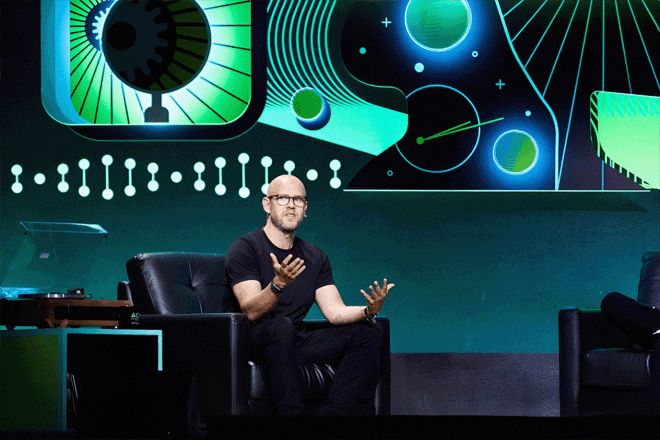
In late February, Spotify co-founder and AI military start-up Helsing chairman Daniel Ek made local headlines for his visit to Australia, which the SMH’s John Buckley reported as a “charm offensive” designed to sway Australia away from legal requirements that streaming services play more local music.
As reported by Buckley, Ek and his colleagues “included a lunch with music industry bosses on Monday (February 23), along with meetings with key Australian officials, as Spotify tries to convince them that forcing audio streaming platforms to preference local songs in their algorithms could strangle music exports.”
However, the results of these meetings remain entirely unpublicised, with industry groups and Spotify itself unwilling to comment on the list of attendees or what was discussed.
Spotify’s lobbying of the Australian government is seemingly in direct response to changes to Australian content laws, which sit under the National Cultural Policy, Revive, and will also see services like Netflix forced to guarantee the funding and platforming of local film and television.
Spotify’s reputation for undervaluing musicians and less-commercial labels has been widely reported and regularly cited as out of step with the needs of a healthy music industry. Perhaps most notable is ex-CEO Daniel Ek cashing in his Spotify shares for a stake in Helsing, a start-up specialising in AI military software.
Helsing currently produces its own drones, aircraft, and submarines and is developing a new ‘Centaur’ system that will integrate “advanced AI pilots” into fighter aircraft cockpits. In June of last year, Ek led a €600 million ($1.07 billion AUD) investment in the company, and he is now its chairman.
Many people around the world chose to boycott Spotify as a result.
While Ek’s role as Spotify CEO ended on January 1st of this year, his influence on the music industry and governments around the world appears indispensable to Spotify.
Read: Daniel Ek in Australia: $200,000 for The Push amid Spotify’s lobbying campaign
To learn more about meetings held by Daniel Ek and his colleagues, Mixmag ANZ reached out to a variety of industry organisations and political offices.
They include the Office of the Prime Minister, Anthony Albanese, the Office of the Minister for Home Affairs, Immigration and Citizenship, Cyber Security and the Arts, Tony Burke, as well as APRA AMCOS (Australasian Performing Right Association, Australasian Mechanical Copyright Owners Society), the country’s largest music rights management organisation, ARIA (Australian Recording Industry Association), and Spotify itself.
In doing so, Mixmag ANZ surmised that any local meetings held about the future of Australia’s music industry, particularly conducted by the founder of the world’s largest music streaming platform, would in all likelihood involve at least one of these groups.
In answering our questions, spokespeople for both Prime Minister Anthony Albanese and Minister Tony Burke confirmed that they had not met with Daniel Ek or Spotify representatives, but would not comment on whether a request to meet had been made.
Mixmag ANZ reached out to both ARIA and APRA AMCOS, with APRA AMCOS declining to comment on whether any of its members or board had been a part of the meetings.
A spokesperson for ARIA replied, sharing that “this is not a matter for ARIA to be commenting on”, instead directing all questions to Spotify. Spotify did not respond to Mixmag ANZ’s questions directly, but instead confirmed that Daniel Ek and colleagues had attended a private music business leaders' lunch, as well as reinforcing that the lunch was “private”.
Following this call, an ARIA spokesperson confirmed that the organisation’s CEO, Annabelle Herd, was at the lunch, but when asked for the best point of contact for questions directed to her, the spokesperson said, “Annabelle won’t be answering any questions about a private lunch.”
-
Mixmag ANZ asked the following questions:
1. During the lunch, were Australia’s proposed local music discovery or algorithmic quota policies under the Revive National Cultural Policy discussed, and if so, what position did you advocate?
2. Are you willing to disclose who else attended the lunch and what sectors of the industry they represented, given the potential implications for national cultural policy?
3. If the Australian Recording Industry Association positions itself as an advocate for the Australian music industry, why is ARIA unwilling to disclose what was discussed at the private lunch with Daniel Ek?
4. Why should Australian musicians trust ARIA to advocate for them if discussions with the world’s most powerful streaming executive are treated as strictly “private”?
5. Did anyone at the meeting raise concerns about Daniel Ek’s role as chairman of Helsing, particularly given the backlash from artists who have boycotted Spotify over this issue?
-
Following a series of ‘off the record’ responses, an ARIA spokesperson shared:
“In the interest of the privacy of the attendees, ARIA will not provide details of a private and informal lunch that it did not host.”
During Mixmag ANZ’s original call with a Spotify spokesperson, they noted that some of the people present at the lunch were representatives of music labels and promoter groups, which they pointed out are private companies. While that may be true for some, ARIA is not.
On its website, ARIA proudly claims that it is “an advocate for the industry, both domestically and internationally”, funded largely by “continued support and membership of local record companies.”
Particularly as Australia enters into global war, meetings between cultural representatives and the chairperson of a piece of the military-industrial sector may understandably prompt broader public-interest questions about the role and visibility of those representing Australian music.
Gadigal Land/Sydney-based DJ Bouki shared their distrust of music organisations that are unwilling to be transparent about such meetings, regardless of the implied privacy involved.
“There seems to be an upper tier of execs who decide what gets pushed on these platforms,” he shared. “I think they’d prefer you don’t know who these decision makers are. Especially with all the bad press around Spotify and Ek, I’d imagine the big labels want to avoid any further negative attention associated with meeting him.”
“They lack the courage to lobby the government to geo-block them till they pay artists fairly,” another musician, asked to remain anonymous, shared.
“They know there’s going to be public backlash,” Naarm/Melbourne producer Kuya Neil shared. “Upsetting, but this is business as usual.”
Coinciding with Ek’s visit to Australia was Spotify’s $200,000 commitment to a multi-year partnership with youth music organisation The Push. This marks the first time Spotify has worked with the organisation, but it continues a trend of the streaming service funding youth music and mental health initiatives globally.
In December of last year, it was reported that The Push was among a series of groups whose Victorian government funding was cut from four years to two.
In February last year, in its submission to the Australian Parliament, The Push advocated for a $6.8 million federal investment to fund National All-Ages Events Teams, providing live experiences to over 120,000 young people and creating 1,200 new jobs. To date, this funding has not arrived.
Mixmag ANZ presented a series of questions to The Push about its $200,000 Spotify partnership.
-
They were:
1. Was The Push aware that Spotify executives were lobbying the Australian government on local content regulations at the time the partnership was announced?
2. Were any conditions around the discussion of Spotify or the use of its platform attached to the $200,000 funding or the broader partnership? e.g Will Spotify branding or promotional activity appear in The Push’s youth programs or educational initiatives
3. Spotify has been lobbying against proposals under Australia’s National Cultural Policy to increase the presence of Australian music on streaming platforms. Does The Push support those proposed local content requirements?
4. Do you think partnerships with large tech companies require a different level of ethical scrutiny when youth programs are involved?
-
At the time of publication, The Push had not responded to Mixmag ANZ’s questions.
The fact remains, if Spotify is confident in its position against algorithmic quotas, why do these arguments need to be made behind closed doors?
Organisations like ARIA and APRA AMCOS position themselves as advocates for Australia’s music industry, but without transparency around the conversations these organisations are involved in, the term advocacy begins to feel less appropriate.
At a time when Australia has never been more outwardly proud of standing up to tech billionaires, this silence raises broader questions about accountability, as cultural industries have never been more under threat. Are these simply routine meetings between industry stakeholders, or attempts to quietly shape cultural policy before it reaches the public stage?
Until questions like these are answered, and those involved are willing to speak openly about who is involved and what is discussed, the Australian music community is left to wonder whose interests are truly being protected, and whether transparency has become negotiable.
