


 CULTURE
Hiko: 'Creating Māori oases in a concrete desert'
Writer Nicholas Lindstrom dives into the potency of a musical movement only recently given its own name.
It was the night that the Hīkoi mō te Tiriti hit the nation’s capital. The nationwide protest was sparked by the introduction of the Treaty Principles Bill to Parliament, a piece of legislation that sought to unilaterally redefine the principles of New Zealand’s founding treaty without the consent of the other treaty partner, the indigenous people of the land. Effectively undermining the rights of Māori enshrined under Te Tiriti o Waitangi.
It was the crown jewel of the cynical reforms led by a right-wing coalition looking to reverse decades of hard-fought progress for indigenous rights. Reforms that include removing the obligation for school boards to consider Te Tiriti o Waitangi, in a nation with a legacy of beating Māori schoolchildren for speaking their native language. This was the political and cultural maelstrom that led an estimated 50,000-strong march onto Parliament’s grounds on November 19th 2024.
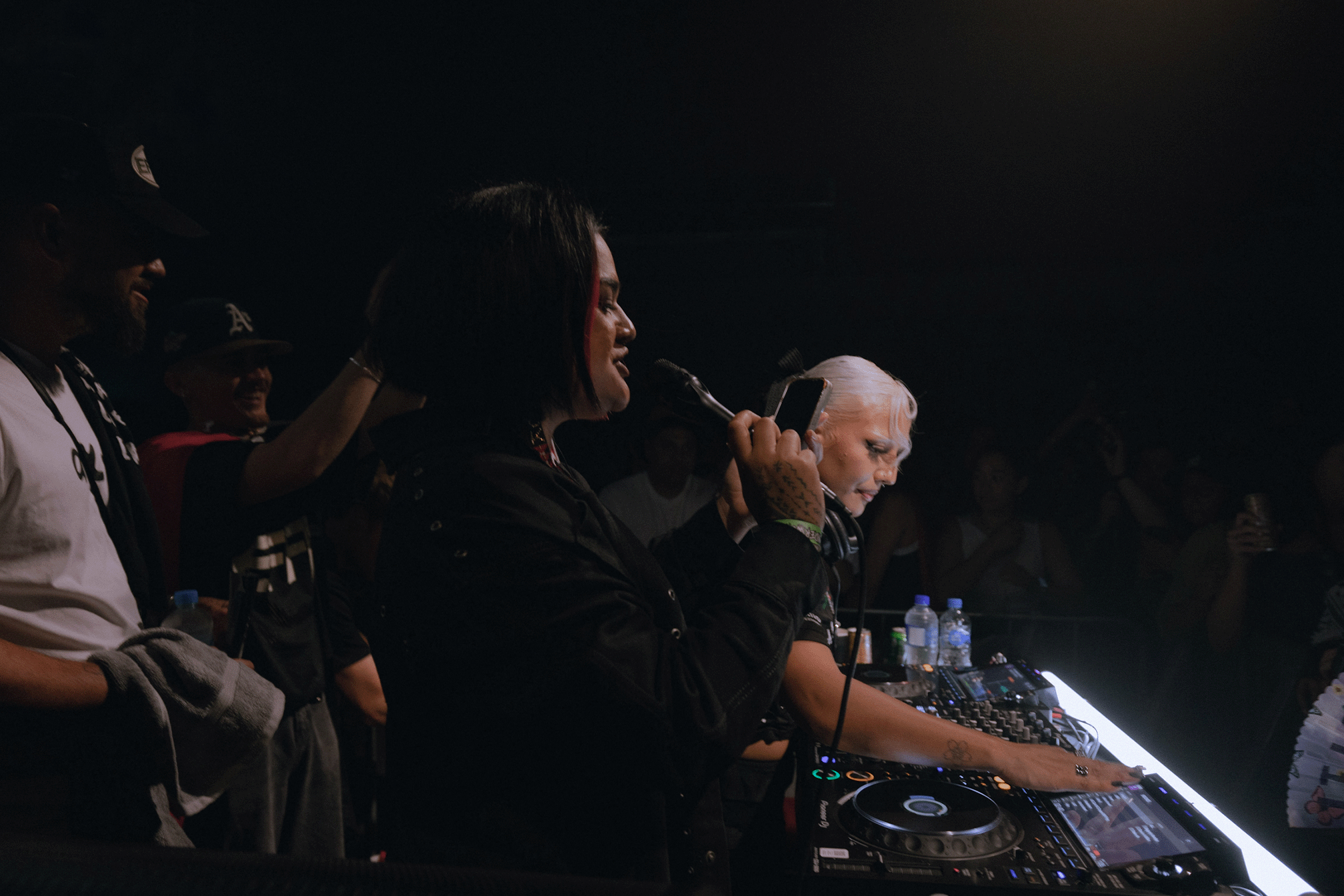
Further north in the country’s largest city, the unofficial protest afterparty was about to kick off. Auckland’s perpetually kaleidoscopic Karangahape Road was flooded with red, black and white. Tino Rangatiratanga flags that had earlier been hoisted on flagpoles were now adorned across bodies; protest signs bearing acerbic messages repurposed for an evening of defiant joy and catharsis through music. Sonically, the evening tapped into the cutting-edge undercurrent of Māori music—a staunchly Māori lineup lovingly curated by our globe-trotting superstar, DJ & producer Lady Shaka. Alongside the more established genres, there was a sound uniquely ours.
A genre of Māori electronica that had been pulsating through the underground nightclubs of Aotearoa for years.
In subsequent wānanga (workshops), that energy would be harnessed under the name Hiko.
I sat down with one of the genre’s pioneers, award-winning producer MOKOTRON (Ngāti Hine), to discuss the origin and fundamental aspects of music’s newest Māori movement.
In an Instagram post from May, Lady Shaka (Ngāti Porou, Ngāti Raukawa, Ngāti Tuwharetoa, Ngāti Rangi and Te-Atihaunui-a-Pāpārangi) articulated that the precedent for Hiko was set by the creation of Kapa Haka (Māori performing arts) and the foundation laid by Sir Apirana Ngata. Kapa Haka taps into the latent potential of combining Western rhythms and melody with Te Reo Māori (the Māori language), using waiata (songs) as a vessel to ensure the survival of Te Reo Māori in contemporary Aotearoa. Today, Kapa Haka has one of the highest participation rates of any activity in Aotearoa, second only to sport. By combining uniquely Māori sonic elements with electronic music, Hiko carries the torch lit by the invention of Kapa Haka. MOKOTRON explained the connection between Hiko and Kapa Haka goes beyond conceptual precedent “We need to break out of this idea that kapa haka is just for Māori, break out of this idea that kapa haka is just for the stage, and break out of this idea that kapa haka can only be accompanied by a guitar. Add a drumbeat, add a bassline, and we are looking at a global phenomenon that could reverse the culture cringe and make Aotearoa one of the music capitals of the world.”
READ: Lady Shaka is the past, present, and future of Pasifika club music
The story of how Hiko got its name begins with an auspicious location for a wānanga: the Equippers church in Rotorua. The church is located in the Ford Block Suburb, the neighbourhood that inspired Alan Duff’s ‘Once Were Warriors’. The book’s film adaptation presented a particularly dark representation of contemporary Māori that, due to the film’s global success, has proliferated since its release in 1994. It is on that ground, fertile with historical context, that the newest genre of Māori contemporary music would be christened.
There have been many names proffered to describe the native sounds of New Zealand’s underground. Indigenous Bass, Māori Bass, waiata tāhiko, waiatāhiko, puoro tāhiko and Disko Hiko to name a few. All of these names were tabled for discussion during the Rotorua wānanga. But, as MOKOTRON explained, the lightning bolt moment came from Lady Shaka herself. “Shaka’s a genius, I really believe that it’s Shaka’s world and we are just living in it. She was walking around the room. And she just goes, ‘What about Hiko? Let’s just call it Hiko.’ And that was it.” The movement now had its name: ‘Hiko’, which loosely translates into English as ‘electricity’ or ‘lightning’.

There is another link that connects Hiko and ‘Once Were Warriors’: taonga puoro (traditional Māori instruments). The film adaptation used the whirring sound of the Pūrerehua as a presage to violence, introducing taonga puoro to a wider audience but also associating the instruments with cruelty. This is an inversion of how taonga puoro are traditionally used. “These beautiful Taonga are predominantly associated with Wāhine and children, and healing. They were never associated with masculine domination.” MOKOTRON stresses that the reclamation of these taonga through Hiko requires centering the instruments as key sonic elements. “It's not just a little sound effect, it's the very soul of it. If we are going to use Puoro, we need to do it in a different way. Because right now we are using it as a cheesy sound effect that is not really incorporated into the song; they’re used to evoke fear and a masculine energy. And that is not what puoro are for. They are the god’s voices, the ancestral voices; they are meant to heal us.”
Alongside the use of taonga puoro is a commitment to championing Te Reo Māori (the Māori language). The history of dance and electronic music in Aotearoa is inextricably linked to efforts to revitalise Te Reo Māori. It was the north star that guided the work of Dalvanius Prime, Ngoi Pēwhairangi and the Pātea Māori Club, and the central imperative of Moana and The Moa Hunter’s 1991 hit ‘A E I O U’. MOKOTRON sees Hiko as a continuation of that legacy of championing te reo through waiata. “If we could write our own Māori electronic music, this would be a way of taking Te Reo Māori, puoro Māori and kaupapa Māori (principle/purpose) into so many different spaces.”
READ: MOKOTRON is carving his own path with Indigenous Māori Bass
New Zealand is a country being driven further into separatism through insidious culture wars that scapegoat indigenous and minority groups as a diversion from everyday economic ruin, perpetuated by systems that encourage wealth hoarding. The emergence of Hiko is a timely reminder of how our country could be if we chose to embrace Te Ao Māori. It is a metonym for the possibilities of Māori-led, Pākehā-supported kaupapa. MOKOTRON believes that the genre’s focus on kaupapa Māori is not exclusionary but inherently allows space for non-Māori practitioners.
“This doesn’t mean that you have to be ethnically Māori to do it. It’s about kaupapa. What is your kaupapa? Is it te reo, is it puoro, is it mātauranga? Because otherwise someone might say anyone Māori writing any kind of electronic music is Hiko, but it’s about leading with kaupapa Māori.”
The work of the legendary Paddy Free with Moana and the Tribe is an example of how fruitful Māori-led, Pākehā-supported approaches to electronica can be.
The recent emergence of Hiko means that there are still questions to be answered about the genre’s sound, boundaries to be defined and then defied. During a studio session in North West London, Lady Shaka posed a pressing question to MOKOTRON about the genre’s sound. “She said to me, ‘What’s the loop of Hiko?’ All these forms of music have a loop. And, I knew exactly what she meant. Jungle has the Amen break; baille, reggaeton, dancehall, everything has a sample or rhythmic pattern that is a foundation.” The consensus was that the rhythmic loop of Hiko would come from Kapa Haka. “I suspect it’s probably Poi, somewhere between 120 and 140 bpm. Poi will provide the polyrhythms, as the only real percussive instrument that we have. I’m planning to record the foundation loops and spend a couple of years learning Poi. Once I have recorded those loops, then I’ll just pass them out.”
The genre’s future is reliant on Hiko being a wide tent that encompasses many different sounds from across the electronic music spectrum. Nearly a year after Hiko was named, there are already examples of Hiko producers creating tunes that are not uniform in sound but united by a focus on kaupapa.
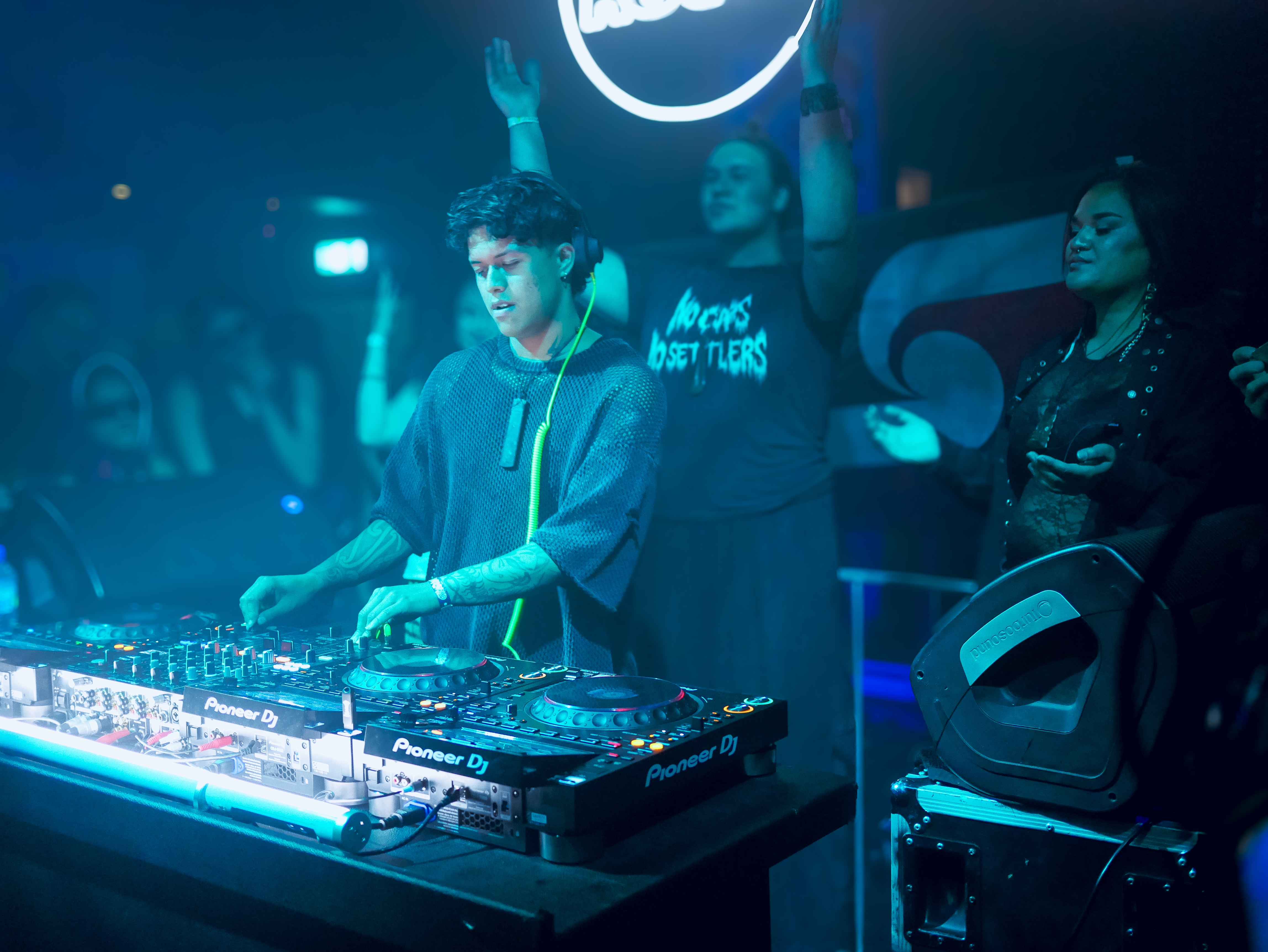
Akcept (Ngāti Porou, Tūhoe) is an Ōtautahi-based producer and DJ who is known for creating immersive dub-infused soundscapes that traverse low-frequency rhythms. In 2024, Akcept was invited to produce a remix of ‘HĪRERETIA RĀ’ for MOKOTRON’s ‘THE UNITED TRIBES OF BASS’ project. The producer credits the album’s release party as a catalyst for his journey into the world of Hiko. “For me, when it really started to click was the United Tribes of Bass Release Party. There was a whole bunch of us from all over the place coming together to share music. Being in an environment that is a club setting, but with lots of Māori people around. There was Haka Tautoko after some sets, and we had a Mihi Whakatau to start. When you ground it in Te Ao Māori, everything else becomes supplementary, and it feels right.” While the versatile producer is still working across electronic music’s broad spectrum, his unreleased work is first and foremost led by Kaupapa Māori.
“Most of it at the moment is politically charged. Thinking about Haka and forms of expression, that type of thing. Haka has always been used as a vessel to talk about things that have been going on, moments that have happened, taonga tuku iho, as a way to ensure our stories, our traditions. Being able to share that with the next generations. It's capturing a moment in time. I try to bring that whakaaro in when I’m making new music.”
For Akcept, Hiko's emergence comes at a perfect time in his artistic journey. “I've reached the culmination of my taha Māori and my music side. I’ve always existed in both of those worlds, but it feels like it's taken a long time for them to kind of meet each other. What I’m working on at the moment is all grounded firstly in Te Ao Māori, before approaching the electronic elements of that track. It all starts with the Māori elements, rather than being a supplement to electronic music. It should all work by itself as a composition, as a waiata Māori, and the electronic elements just help it to exist in a different world.”
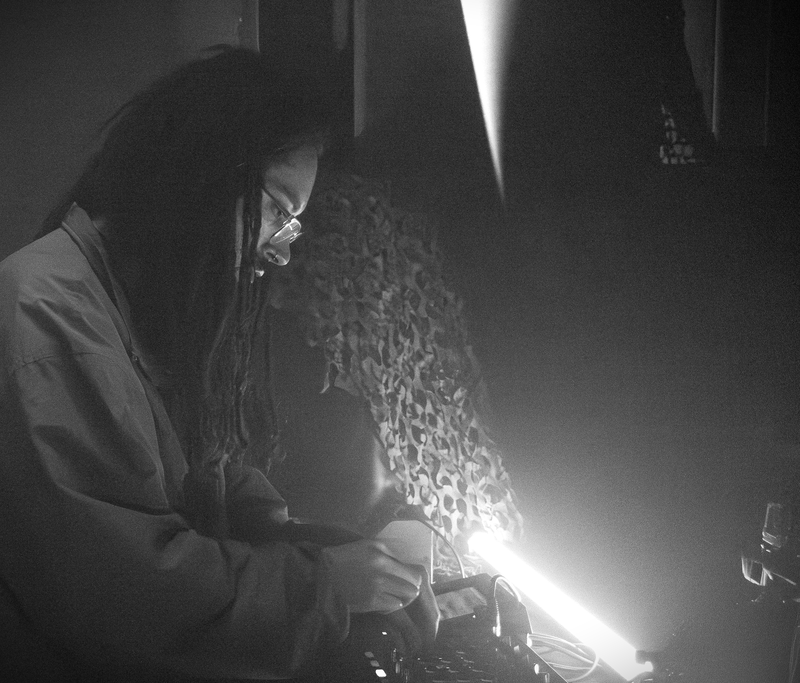
The wide tent of Hiko also encompasses more dance-heavy, disco-inspired sounds, like those found on Geneva A.M’s (Ngāti Ruapani, Ngāti Hingahinga) debut album ‘PIKIPIKI’. The award-winning producer, beatmaker and vocalist crafted a record of stand-alone anthems united under a singular Kaupapa. Geneva explained, “‘PIKIPIKI’ is about ascension, rising above the bad stuff that's going on. You can take that horrible stuff and turn it into something beautiful. That’s why I wrote ‘Nau Mai’, which is essentially my Karanga, to welcome the listener. You enter my house, which is the album, sit down and have a cup of tea, and we start from down here, which is probably where you are because of all the horrible stuff going on, and then we slowly build upward. At the end, we reach ‘Pikipiki’ which is quite angelic and uplifting with all these voices.” Perhaps the shining example of Hiko on the record is the title track, a song inspired by dual influences, including original Māori electronic pioneers, The Patea Māori Club.
“I was really inspired by my job at the time. I was looking after these beautiful pieces by this amazing artist called Maungarongo Te Kawa. He has this ethos of positivity and taking something that’s painful or hurtful and turning it into something that is beautiful and colourful. I sat with that exhibition for five weeks or so, and I was thinking about how proud I was of how far we’ve come, how we have a voice, and how I have a voice. I would be playing around with the exhibition name ‘Hikihiki’, singing it out loud because there was a lot of reverb in the gallery space. So I would just be catching the ferry to work, and I would spend eighty minutes each day just messing around with that vocal piece while banging out a ‘Poi E’ beat. That’s really how it came together.”
The track contains all the hallmarks of Hiko. It’s led by Kaupapa, written fully in Te Reo Māori, and features the resounding call of the pūtātara. The song is even centred around a gorgeous choral harmony inspired by Kapa Haka. “I really missed Kapa Haka from high school, and I just wanted to put heaps of voices in there. That’s how I came up with the melodies. And then I sent out a message to some of the most talented singers in Aotearoa."
The album also speaks to another major concern of Hiko: being Māori in urban city spaces. It’s most prevalent on track three, ‘Urban Planning’. The track features a Pepeha, a customary way of identifying oneself using the landmarks of one's local area. Many Māori lost connection with their pepeha through governmental suppression of culture, and after being forced to relocate away from traditional lands into city spaces for the necessity of finding work. “I wanted to show people how a pepeha looks when you don’t have one. For the longest time, I didn’t have an actual pepeha. You know, these motorways and all of these artificial things were a constant reminder of what was missing. I filled the gap with the concrete, I guess. I’m very proud of my city.”
The result of this urban drift was the creation of new cultural hubs for the congregation of Māori now living in the city. Geneva is excited about the potential for Hiko to harness that energy into a vessel to reclaim Māori identity in the city. “Hiko is a great way of claiming a space that has existed since the beginning. Where people could come to a place and feel free. And that goes back to the secret clubs that were for communities that are now celebrated, or the discotheques that a lot of Polynesians and Māori would go to in the 70s and 80s, when my mum was a punk. It’s been incredible to see it build.”
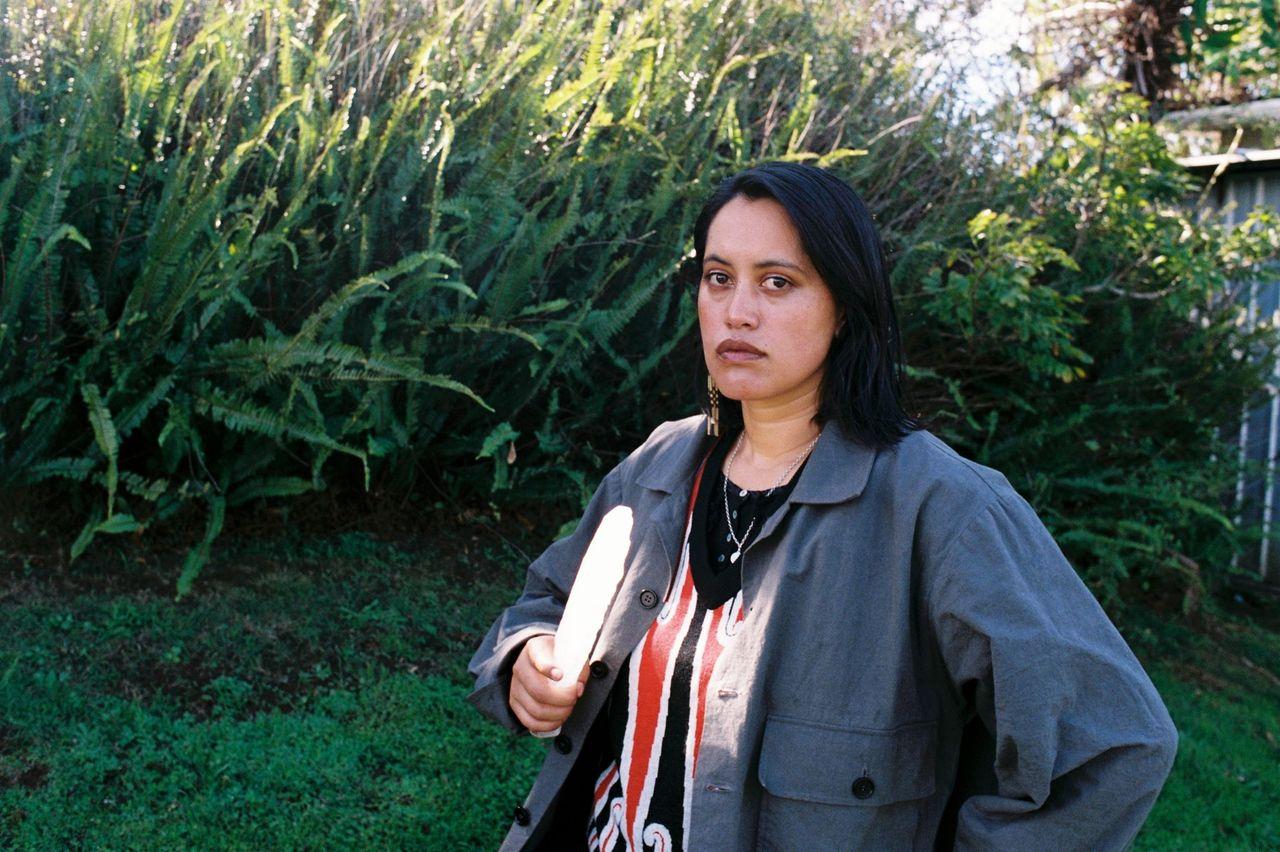
In the hyperbolic internet age, labelling anything a ‘movement’ means condemning it to the ravages of the 15-second attention cycle. But Hiko isn’t some digital fad; as MOKOTRON explained, it belongs to the underground scene that birthed it. “If there’s no one in the rave, it’s not a rave. A club is just a room full of people in a shitty underground space on K road. And if they are not there, it’s not real. It all comes from there; that's the vision. How does it feel when the bass hits, when all your people are together, underground on K road, that's the culture. It always has to be collective.”
If it isn’t evident by now, the scope of the genre’s impact extends far beyond the realm of music. Hiko is a contemporary iteration of the mission started by Sir Apirana Ngata and Kapa Haka. As MOKOTRON explained, Hiko provides another avenue for Urban Māori to connect with their language and culture.
“For me, as someone who has lived on the edge of the city for most of my life, the question is, how do we transform our urban spaces? And those urban spaces, one of the key things they have is electronic music. Whether it's clubs, cafes, bars, festivals or art exhibitions. The city is a desert, and we are trying to build oases. How do we use electronic music, the music of the city, to create Māori oases? Hiko harnesses the ubiquity of electronic music to carry Māori language and instruments into contemporary spaces. “There are about three Māori language schools in the CBD, and we could have 50 bars, cafes, and nightclubs playing waiata Māori. It’s not just the dance floor; it could be in the DJ mix, a podcast, a cafe, or a museum. That is the power of music; it can’t be stopped. Particularly electronic music. By creating this music, we are creating Māori language oases in a concrete desert. Because no one can stop the weapons of break and bass.”
By combining the music of the city with Kaupapa Māori, Hiko allows for ancestral moments in a modern world. Moments where time and space dissolve, where the city disappears, and we are just Māori on Māori land. Alleviating the weight of the city, if just for a moment.

-
Nicholas Lindstrom is a Tāmaki Makaurau/Auckland-based music journalist, currently working at the New Zealand Music Commission and hosts the Friday Drive show on 95bFM. Find him on Instagram.
