


 COVER STARS
Cousin: music without a mirror
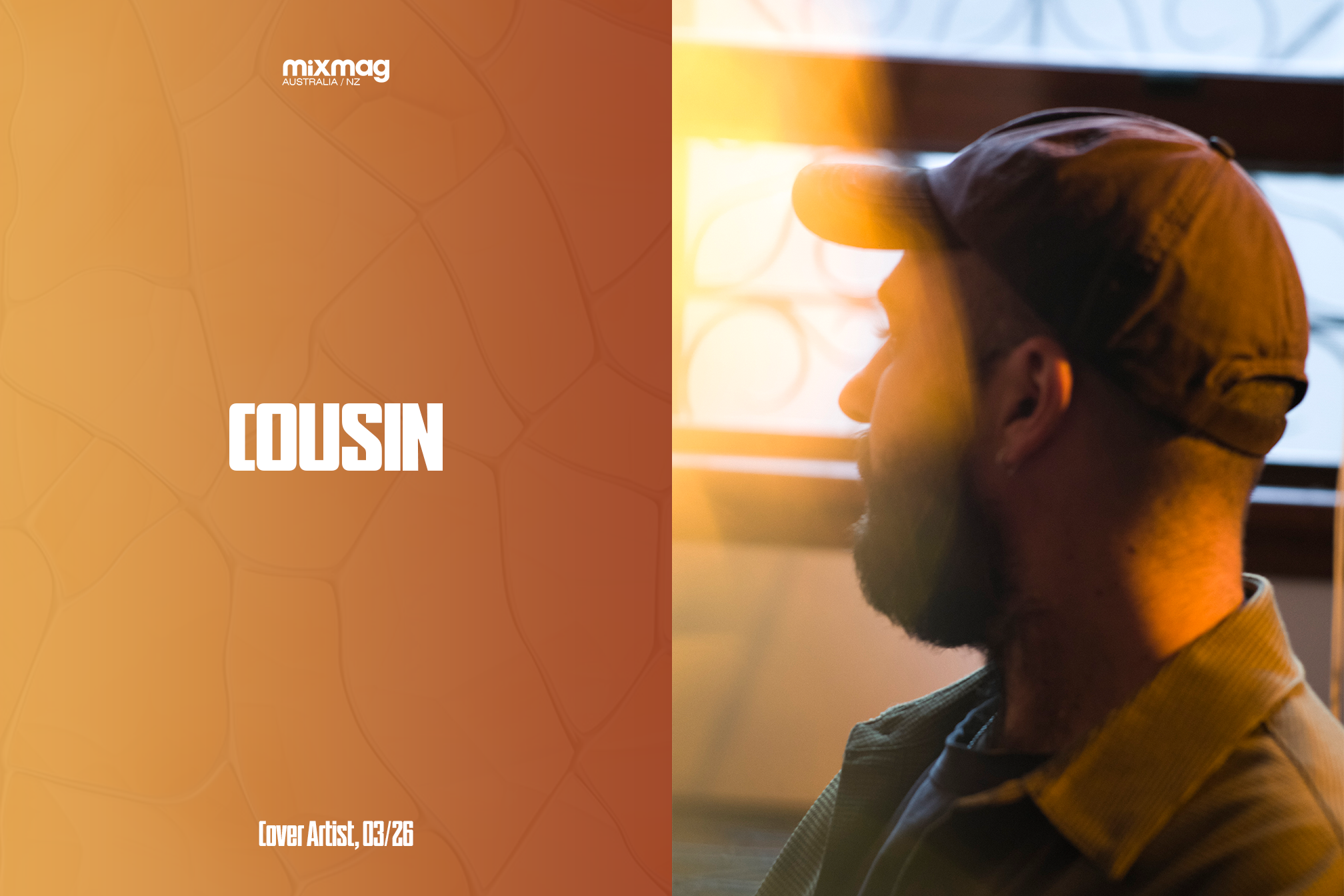
The Gadigal Land/Sydney-born producer, DJ and Moonshoe label head is Mixmag ANZ’s first Cover Artist for 2026.
In 2025, the idea of a producer and DJ is often surrounded by publicity. In many ways, they’re able to exist outside of their own context, in a fourth space, not entirely unlike the safety of the third, but far less comfortable to many.
A life online is life itself to most musicians nowadays. Holidays-turned-tours are posted across social media, clips of so and so ‘dropping’ a previously unreleased joint at the best party you’ve never heard of punctuate any old Monday, and the get-ready-with-me format becomes a tried and tested part of any artist’s social ‘plan’.
For some, however, conflating creative output with personal or social value is not a concern at all. The online world, while arguably impossible to live without, has a reputation for detracting from reality itself. The context you live in, your home, your influences, and how you interpret them is the life you choose to create.
In many ways, artists who acknowledge this are, somewhat ironically, lauded for their confidence and ability to skirt a more mainstream approach to ‘marketing themselves’. Three years ago, German producer Skee Mask made headlines as one of the earliest artists to raise a middle finger to the streaming giant Spotify, for reasons far beyond his own image. The likes of Riccardo Villalobos, while in insanely high demand, has a catalogue as vast as any label’s, with so little of it being available on any one platform.
It could be easy to assume that the ‘rebellious’ nature of actions like theirs, out of line with the general narrative of what it takes to be a musician, is what has set artists like this apart. To some, that may be exactly it. Pushing back against the status quo is, in many ways, what this musical culture was built to do. However, the unifying factor in the lives of many artists, labels, festivals, and people like this is their lack of concern for anything other than what they do.
“Maybe the music says enough,” he said, amusingly close to the end of our interview, from across my desk.
I’d spoken to Jackson many times, but none of them for this long. It’d taken some time to coordinate our conversation. He’d been halfway around the world twice, released on two compilations, produced an entire collaborative EP and announced his label's 10th birthday celebration since I first tabled the idea with him several months prior.
“No matter how much music I make, somehow people still want me to talk about it,” he joked.
As of late, his output has been unmatched. In many ways, he was right. What more was there to say that hadn’t been communicated already?
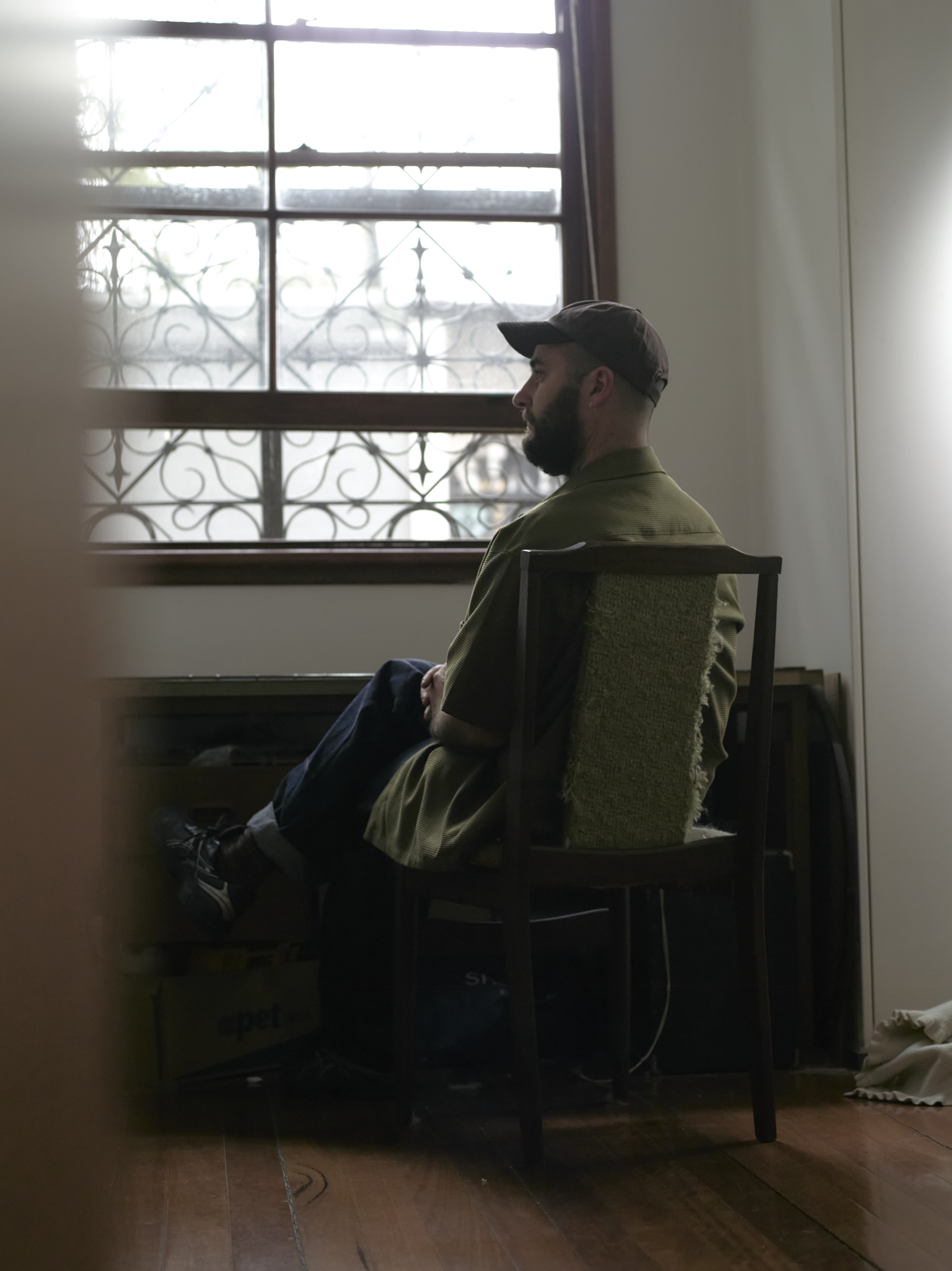
Gadigal Land/Sydney-born producer, DJ and Moonshoe label head, Cousin, is Mixmag ANZ’s first Cover Artist for 2026.

Jackson grew up on Gadigal Land, the child of musically inclined parents and one of four brothers, all of whom are easily identifiable peers of the Sydney scene. His father was a drummer and percussionist, and his mother was a lover of music, having shown him and his brothers everything from Dean Martin to a variety of African music, and even The Streets. His childhood was spent surrounded by instruments, and, like many other Australian children, he first started playing the recorder in primary school, a rite of passage that may seem entirely alien to many not travelling through the country’s public school system. Eventually, this turned him to the clarinet, then to the saxophone, bass guitar, and guitar, all with some casual tutelage on drums from his dad.
“You know, even though I didn't totally rebel from what my parents do, teenagers usually want to do something a little bit different. My dad really wanted me to play the drums, so I played the guitar.”
His musical upbringing is by no means unique, but in a world where music production grows ‘easier’ or less involved by the day, it’s a part of his being that needs reflection. While Ableton and similar software have somewhat democratised the music production process, platforms like Suno and the advent of AI call into question what people prioritise when they say they’re “creating” something. For Jackson, that creation started very early.
“The beginning of electronic stuff for me was when I was about 9, my dad bought this really shitty Yamaha workstation - A janky ‘90s one that had drum kits and a few different piano sounds - though it had this loop function on it… just one button that would start and stop a loop that you could overdub eternally…I would make these 4 bar loops that would just build and build until they were absolute chaos, and I had to rip the headphones off.”
In any ‘deep diving’ interview of this kind, it’d be common for parallels between this early adoption of sound and technology to be drawn with that artist’s output today. In truth, Jackson’s desire to create has clearly long been set aside from his role in its creation, with a drive to be behind an instrument, rather than at the front of any stage or on the cover of any magazine.
It was that kind of approach to experimentation and creativity that led Jackson to Brad Landy, who would later join forces in a more official and long-term capacity as the Freda to Jackson’s Jackson. An early precursor to a lot of the music that they would continue to make and DJ as individuals, and an influential force for many, blurring the line between dance floor and chill tent here in Australia. It was in this form that I first became aware of their existence, playing the likes of Umami, Heavenly and Rimbombo in the aftermath of 2014’s lockout laws.
-
That early music, some of the earliest of Jackson’s available online, still clearly exists within the same universe. Live instrumentation meets warm, slightly bendy percussion and pads, off-kilter rhythms, and often warped vocal samples, providing an almost comforting look back into a Sydney still so familiar to so many.
What has changed most in this time is arguably the kind of experience that is brought to the table in constructing a world for the listener to dance in, whether physically or in the front left of their mind.
Moonshoe, a multi-faceted label-turned mix series, as any such project does, provided Jackson with an opportunity and a challenge to create a world slightly larger than himself and Brad. From its need for visual accompaniment, which, as idioms go, would provide thousands of words rather than none at all, as well as the stresses of event management, Moonshoe became yet another outlet for work that aims to speak for itself rather than be spoken for.
READ: 10 Years of Moonshoe, the Gadigal Land/Sydney label marks a major milestone
Jackson’s own visual accompaniment was and still is a fitting metaphor for this approach, dedicated to moments made with real hands and real people, drawn slightly askew.
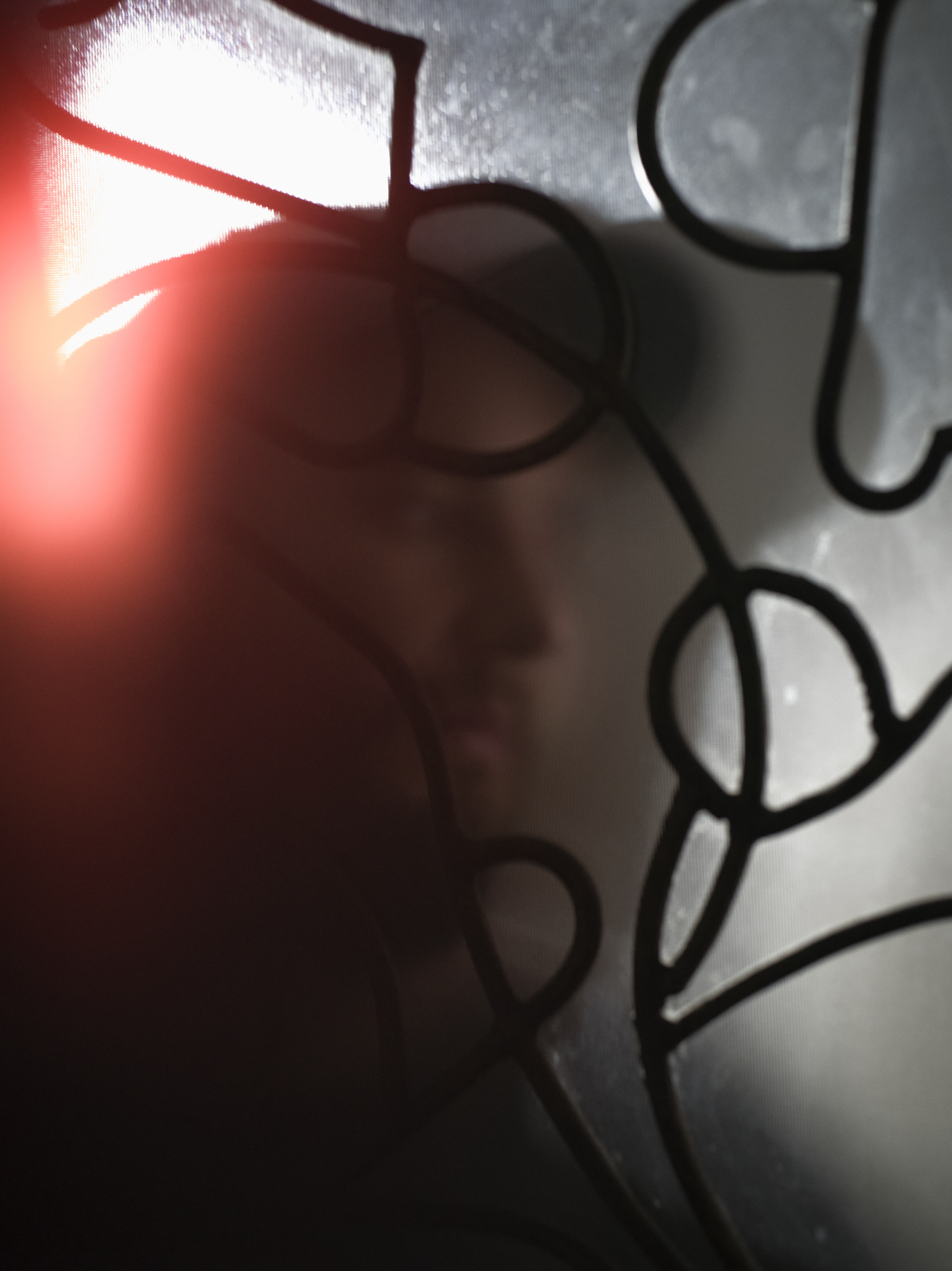
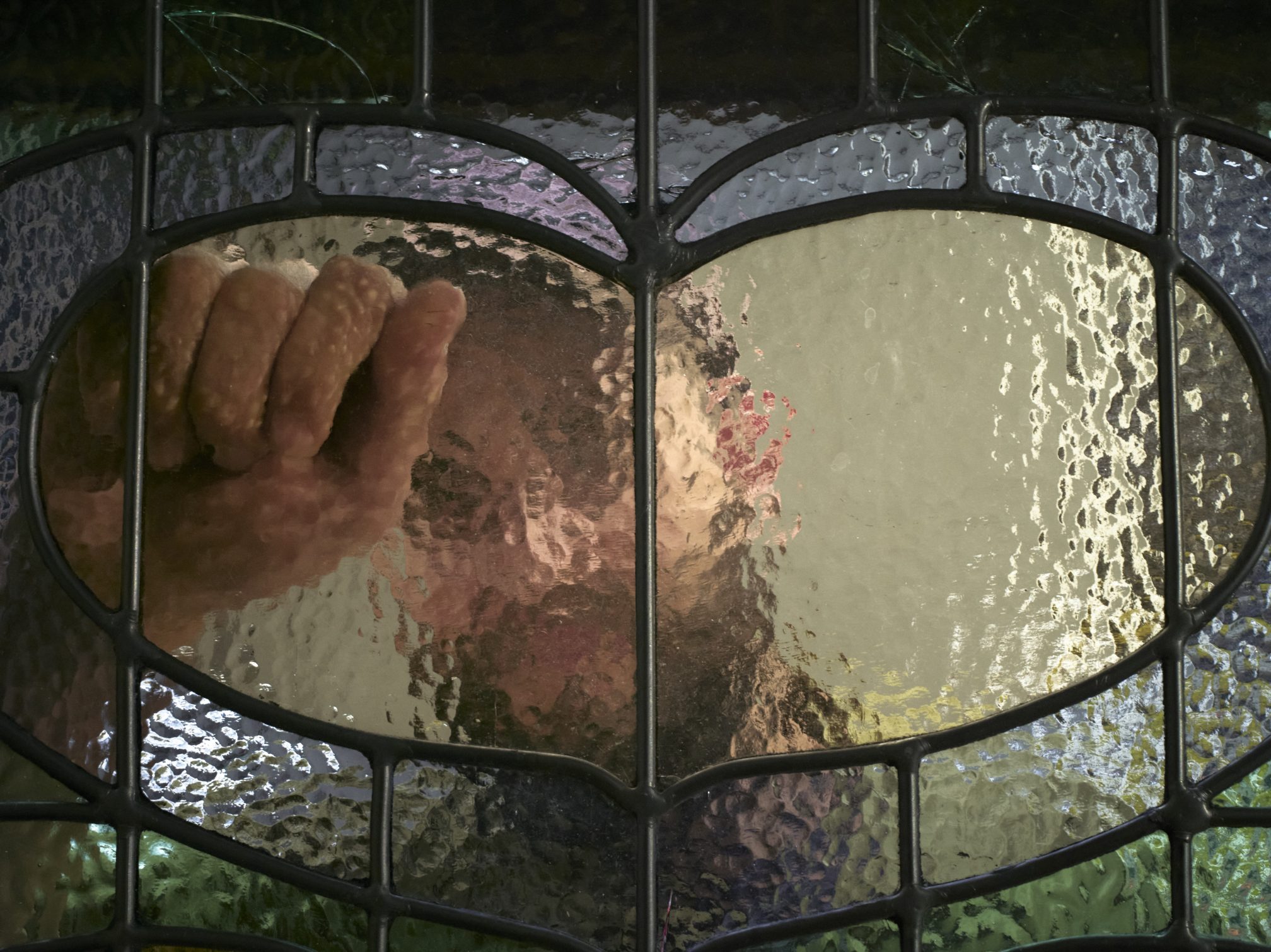
On ‘Wake The Town’, Cousin’s most recent solo release, creativity comes not only in the form of a more refined approach to rhythm, subtlety and all-round groove, but in an evolution of this kind in physical form. A stained-glass panel, made with thanks to Alex Schubert, serves as more than just the release’s art.
“I’m doing what I can to spend time out of the digital world. If I look at the screen all day, I’ll go insane. It’s nice to grind some glass or get my hands dirty occasionally.”
Unlike a mirror or window, stained glass doesn’t offer direct, unmediated reflection. It shapes perception rather than reveals it. For Jackson’s music, it isn’t and will never be a transparent, singular idea, but instead something constructed and interpreted not only by him, but by his audience.
It’s in this same vein that Jackson shared his disdain for genre.
“I always want to be freely creating stuff that’s not tied to anything.”
The world of electronic music is increasingly a space where this kind of genre segmentation is becoming less and less relevant, yet conversations like this, categorisations, and understanding through labelling only become more common. Perhaps as a side effect of the streaming era, Jackson’s algorithmic alignment with Aussietronica or Float House is of all-importance to Spotify, and yet of none to him.
Across his catalogue, Cousin regularly touches on genres with firmer foundations, such as dub, dub techno, house, and ambient, but it’s the way in which these genres interact with one another that renders their conventions and boundaries irrelevant. Words like ‘atmospheric’, ‘percussive’ and the use of the term ‘low-end’ are ones that one would find in conjunction with his name, used as an attempt to provide a descriptive categorisation rather than describe anything in too great a depth.
His approach to producing music appears as fluid as this idea of what his music should be.
‘HomeSoon’, released on Vancouver-based label Mood Hut in 2023, has, in many ways, a ‘natural’ sound, achieved in part through the use of what sound like field recordings or percussive elements imitating rocks, wood and water. That is by no means siloed to this release; however, with ‘Fifth Wall’, yet another EP from the same year, this time released by broken beat aficionados Well Street Records, where hollow knocks on wood serve as punctuation between heaving dubstep wobbles.
On Jackson’s collaboration with his brother Ben, ‘Unsolicited Joints’, many of these warm, human and slightly animal elements are brought into the context of deep house, and on ‘Fly In Amber’, his EP with Quebecois producer Priori, the space and atmosphere of Jackson’s work finds itself on a record far trancier than many before it.

In performing live, a dimension of his artistry that Jackson has cultivated for longer than Cousin has existed, this kind of fluidity between genres or an ‘umbrella’ of sounds is almost non-apparent to him, almost as if it were on purpose.
This irreverence towards broader ‘music culture’, or that which has bubbled to the surface of the feed, is one that many across the more purposeful, experimental and spotlight-averse side of electronic music share. It’s in this shared desire to skirt the boundaries of ‘popular’ music, instead forging ahead into music which is unifying, that many like-minded people have come together not only in Jackson’s home on Gadigal Land, but overseas.
Increasingly, being an electronic musician and DJ has become a FIFO job. In many instances, this is a necessity for artists to expand their sphere of influence, grow a fanbase, and sow the fertile ground to move overseas and onto arguably greener pastures. In a time where any one of these pursuits could serve as some of the most potent fuel for the ever-whirring social media engine, this kind of approach, in a world increasingly accessible to those with money and influence, can see the world as a stage rather than as a place.
What are the world’s cities to those of us who get to take a celebrity shift in soundtracking them?
The like-minded peers that Jackson and many others share around the globe are people just like him, most often friends born as fans of one another. An example of this is the aforementioned NAFF-label head and producer Priori, with whom Cousin has a variety of collaborations, sets, and a true friendship, despite thousands of kilometres separating them. But while other arguably more ‘public’ dance music friends exist, there’s a comfort and realness to the ones that orbit people like Francis and Jackson.
It could be easy to think that these kinds of relationships, the creative challenges they bring and the opportunities tied into them are due, simply, to a tonal similarity. Music that’s “deep” begets deep people, or something less rudimentary of an explanation. It’s in this world, however, at a level of creation, articulation and love of music that few get to experience, where there is nothing other than the act of creating itself.
It became clear to me at this point in our conversation that Jackson “not thinking” about self-promotion was not just a way to describe a lack of desire to be on social media. For him, the act of learning, experimentation and aligning his musical experience is like an articulated, practised ritual that he cares to refine over and over again.
The philosophical gap between creative expression and its form is the place from which Jackson himself operates. His work, across its many mediums, is never not an example of this.
“Usually, when it's released, I don't feel connected to it. It takes me at least about a year, usually.”
“You’re going to love ‘Wake The Town’ then,” I joked.
After sitting with it for some time, I interpret Jackson’s happiness and satisfaction when people connect to his music as a broader happiness for someone connected to music at all. Rather than feeling proud of the music that he makes, Cousin is proud to be contributing to music full stop. It’s this kind of love that puts into context the multitude of sounds and projects he aspires to work within.
“The world would be better served by a greater openness. When that openness is practised through music and art, I think it begins to shape how we move through our daily lives. Music has a way of dissolving distance. It can remind us that what once felt foreign is not really beyond us - it’s something we could understand, feel, and connect with.”
Whether abroad or at home, Jackson is one of the lucky ones among us in having found people on the same wavelength. He attributes much of who he is to the lessons he’s learned among those people, especially here.
Australia is, in many ways, somewhat of an ephemeral place, particularly for those in music. Its widely held reputation for a lack of funding and opportunity for musicians and creatives of many kinds has meant that many people leave for arguably greener pastures the moment they get the chance.
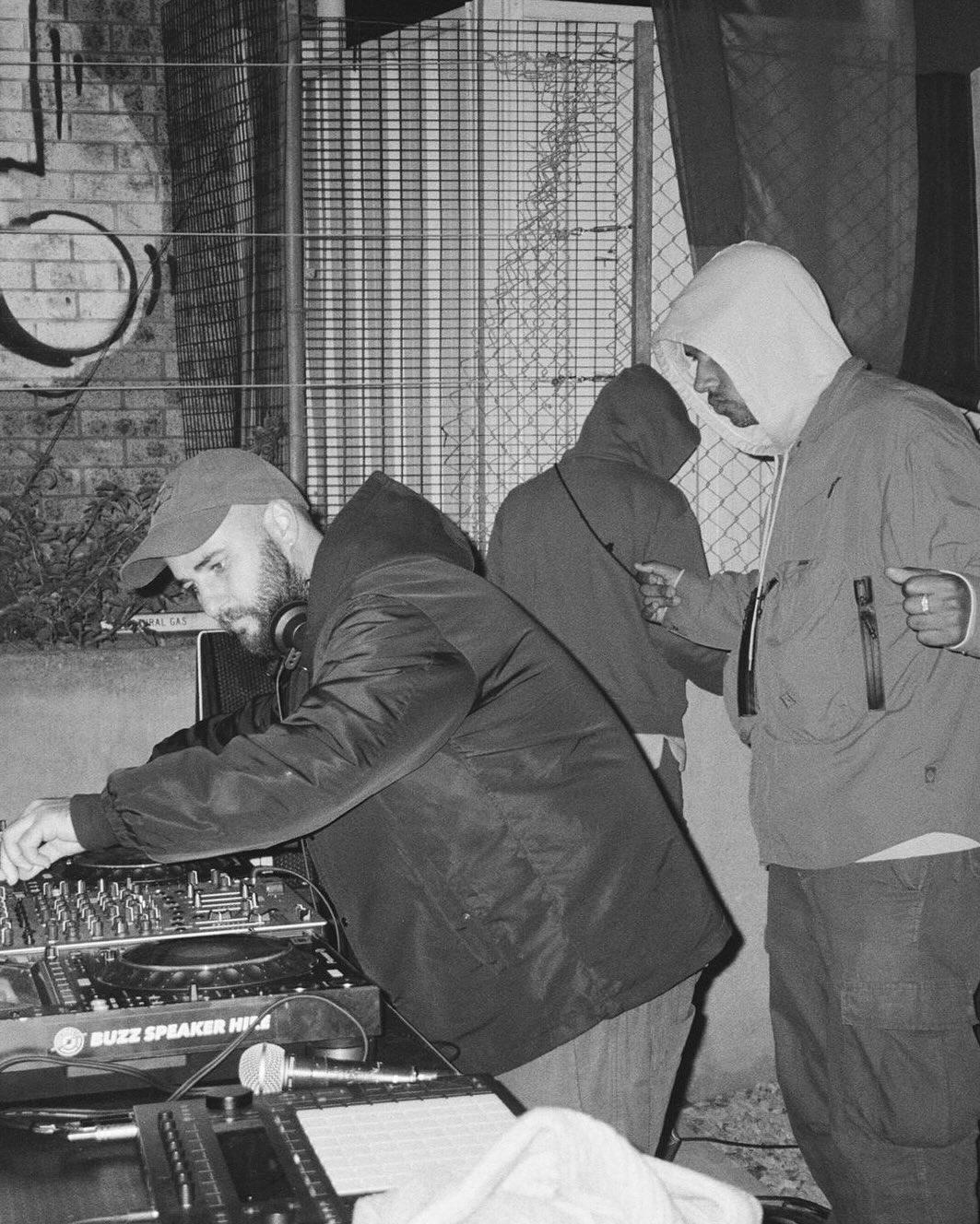
In the midst of one of my favourite gigs of the last year, Moonshoe’s and Moral Laxa’s takeover of Poor Tom’s Gin Distillery, featuring Natalie Lawrence, Cousin, the legendary Tikiman and Richard Akingbehin, my friend Tim and I spoke as Cousin laid down his and Tikiman’s then forthcoming collaboration, ‘Back Inna Business’.
We mused over why Jackson hadn’t yet moved overseas.
My only explanation at the time was the idea that he was, quote, “a real one”.
In many ways, that’s still the only explanation I have.
What I learned throughout this process, however, is that Cousin exists predominantly as a vessel through which music is produced. Foucault argued that the author exists as a classificatory device, as an idea that matters institutionally, not interpretively. In his view, the artist isn’t entirely irrelevant, but they are irrelevant as a person.
In the broader landscape of music, this idea doesn’t apply to everyone, particularly for dance and electronic music, whose roots are firmly planted in the struggles of black, queer and trans people.
For Cousin, however, this distinction feels intuitive rather than grounded in theory. In a cultural moment where the individual is often placed ahead of what is being heard, Jackson’s work sits quietly, trusting the listener to meet it a little deeper in.
His hand, ear and soul act as a means of classifying him as an artist, yes, but that classification serves him little purpose when he’s perfectly comfortable doing so from behind ‘Wake The Town’s stained glass.
The point is not clarity, but colour.
At 2024’s inaugural Soma festival, I saw Jackson perform with Posm, a large-scale live band born of a yearning for live music and improvisation amid COVID lockdowns. Soma is, to those unaware, the efforts of a small number of members of Gadigal Land’s scene, many of whom have touched projects, events and acts mentioned in this very article. Theirs is a story of love and passion, finally rewarded after a series of extended and punishing hardships.
Their inaugural year was a celebration of so much of that context.
Jackson told me that his performance in Posm and his closing DJ set were the most nervous he’s been in a long, long time, because he cared so much for the people and place that made him.
“You want to be able to give something special back to your community,” he told me. “But I hope to keep an unconditional love, no matter where the show…”
To care deeply about music is, for Jackson, more about the way in which it is able to move through and be touched by a listener, not how it can echo back onto him. In this way, his resistance to the ideas of genre and platform logic are less about rebellion, and more a refusal to make music indistinguishable from personality.
While that may not be the way ‘the game’ is played, the reward is a kind of longevity, irreverence and heart that the gamification of music culture seldom achieves.
In doing so, or rather, not doing so, Cousin’s music lives a life of its own.
-
Big thanks to Jackson for his trust, patience and care, not only through the writing of this piece but in the way he lives.
-
Jack Colquhoun is Mixmag ANZ's Managing Editor. Find him on Instagram.
