


 CULTURE
murmurations: sonic entrainment & mutual tuning
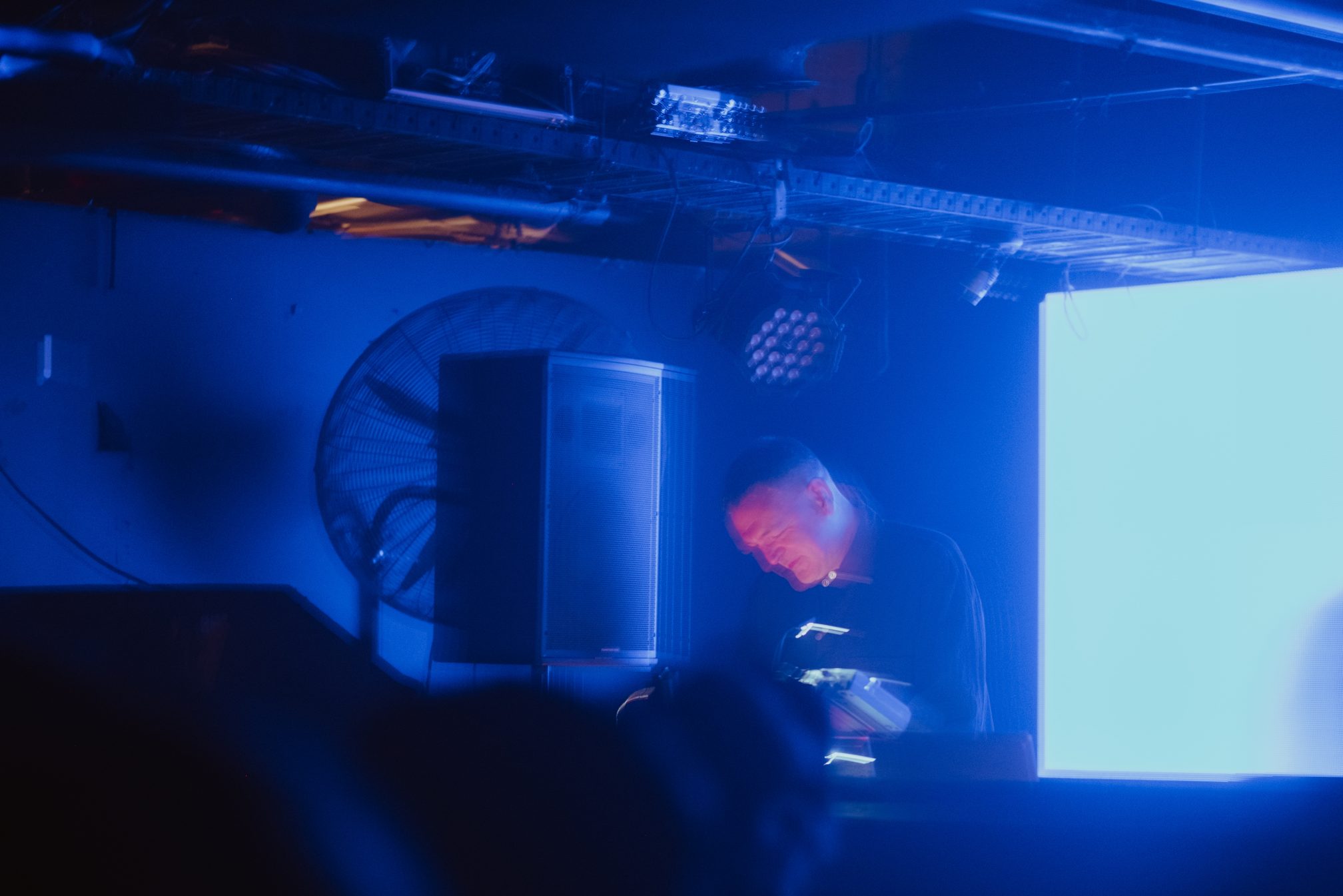
The event, focused on stepping outside familiar club frameworks, takes a different approach to intentional listening.
“Sonic entrainment refers to how bodies, minds, emotion and social rhythms fall into synchrony.”
In the words of murmurations, such a concept is a worthwhile pursuit to those truly looking to experience music, regardless of the social context in which it may be played.
The event series, thus far with only two under its belt, has presented an opportunity for music lovers to approach electronic music from a lens that questions the “dance” so often associated with it.
A collaborative project by designer and creative strategist Elisa Amelia Bausch and Nergal Youkhana, designer, Charades founder and booker for Sub Club, who recently departed from Chinese Laundry, is a no-talking, no-phone, intentional listening experience.
While club culture has arguably never been ‘bigger’, or at least more popular, murmurations seeks to give such an experience space, not only for punters, but for artists too. Thus far, having hosted the likes of Om Unit, Pjenne, Nicola Cruz and Irene Ais, murmurations provides artists and the music they play with an opportunity to find a home in the mind of the listener, not often occupied on busy dance floors.
Without visuals to guide attention, this may also mean a closed eye experience for those involved, utilising “the power of sound to function as a neurological reboot”, the pair claim.
At a time where dopamine hits and visual distractions inhabit almost every moment of our day, murmurations has dared to challenge how we interact with an artform never more illuminated by limelight.
Ahead of murmurations’ third instalment this Friday, where revered Berlin-based DJ and producer Barker, Willis Anne and Luna are set to perform, Mixmag ANZ spoke with Elisa, Nergal and Om Unit.
Q: Elisa & Nergal, thanks so much for your time. How did the idea of Murmurations arise?
E+N: murmurations came together through a shared love for deep listening and experimental, genre-open electronic music.
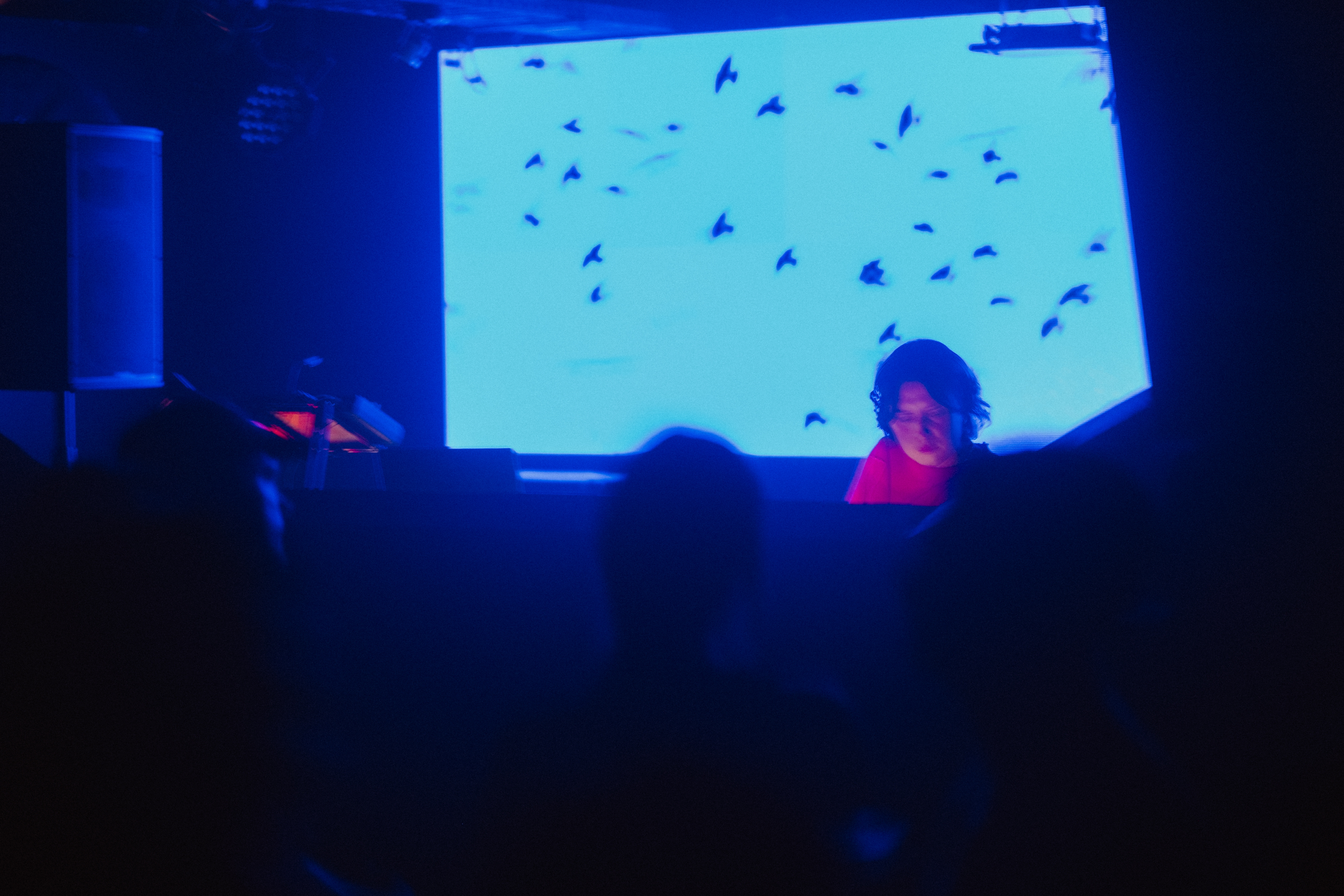
We felt that the way pop culture and urban wellness engage with sound practices today often diminishes the richness of sonic frequencies as a sensory and relational force. The crossroads between classic and contemporary expressions feel too alive, too varied, to be held within a single, fixed conceptual container. Instead, much like the ever-shifting visual patterns of a flock of birds in flight, we wanted to embrace situatedness, multiplicity, and movement. This is why each murmuration is shaped by its context - alive, artist-embodied, and site-responsive. We draw inspiration from spaces and formats that have expanded our own ways of listening, from MONOM and Spatial Festival, to Ambient Church, Age of Reflection, or projects like Zero BPM. We believe there is a growing need for more non-club spaces dedicated to immersive sonic experience. With Nergal’s background in booking club shows and working with international artists, murmurations offers artists the opportunity to step outside familiar club frameworks and dig deeper into their collections - exploring music meant to be listened to with intent.
Artists often known for high-energy club settings reveal a more intentional alter ego here, one that moves beyond the coded rituals of sub-genres and into a genre-open environment. Club culture gives us intensity; ambient worlds give us space. With murmurations, we want to inhabit both. At its core, this project is a natural extension of who we are and what we love.
Elisa is a musician at heart, shaped by a classical piano background and early conservatory training.
Very aware of what it means to be stuck in genres, she was always drawn to artists who bend genres and open portals to more ethereal states of listening. Her personal practice today quietly weaves classical sensibilities into experimental electronica.
Nergal comes from a background in club bookings, event management, and design. He is a resident DJ at venues such as Sub Club Melbourne and Chinese Laundry, performs internationally under his electronic artist aliases, and has been running the event series Charades since 2012. Within murmurations, our disciplines complement each other naturally: Elisa brings strategy and creative direction shaped by years of leading global brands and institutions, while Nergal contributes design practice and deep music industry experience.
Together, we create spaces for sonic entrainment and mutual tuning - experiences that move, adapt, and listen across contexts. The conceptual seed for murmurations emerged during a show we experienced together. Since deep listening is rooted in perceiving the environment and surroundings, our shared fascination with birds and ornithology surfaced, specifically the phenomenon of starling murmurations. Their constant recalibration in flight mirrors how we tune into one another’s frequencies during collective listening. From that moment, the entire concept unfolded.
Q: The idea of the event is deeply rooted in philosophy, specifically that of Pauline Oliveros. Why is her work so relevant to the idea?
E+N: Pauline Oliveros’ work is deeply relevant to murmurations because she understood listening not as a passive, consumable act, but as a relational, ethical, and world-shaping practice. Oliveros coined Deep Listening not simply as a musical technique, but as a way of re-orienting attention, toward sound, toward others, and toward the environment. For her, listening was a form of consciousness training: a means to expand perception beyond habit, genre, hierarchy, or ego. She further expanded this sonic awareness through Quantum Listening, which unfolds on multiple levels simultaneously: sonic, environmental, emotional, social, and historical. This idea resonates strongly with murmurations’ understanding of listening as an active, participatory act rather than a mode of consumption.
While Oliveros is a foundational figure, murmurations also stands in conversation with a broader lineage of artists and thinkers who have explored the transformative effects of intentional listening across disciplines. For example, David George Haskell, in his book Sounds Wild and Broken, writes about listening as a way of repairing our relationship with the living world. Haskell traces how sound connects ecosystems, human history, and technology, showing that listening can cultivate humility, care, and responsibility. His work reinforces murmurations’ belief that deep listening is not only aesthetic, but ecological and ethical: a way of re-entering relation with what surrounds us. This lineage also includes pioneering sound artists such as Laurie Anderson, IONE, and Wendy Carlos. Across very different practices, each has expanded how sound can function as narrative, environment, and perception-shaping force, with listening as a spiritual and relational act. They opened new perceptual and musical worlds that continue to influence experimental and ambient practices today.
murmurations is rooted in this lineage of female pioneers. It treats listening as a practice of attention, care, and co-presence, one that unfolds differently in each place, with each artist, and each episode. In this way, the philosophy of Pauline Oliveros is not referenced as theory, but lived as method: a foundation for creating spaces where sound becomes relation through entrainment, and where mutual tuning becomes possible.
Q: You provide a stone to punters as a means of grounding them while they listen. What do you think this does for their experience?
E+N: We offer a palm stone as a tactile anchor. Holding something physical invites attention into the body, creating a point of grounding as sound unfolds around and through us.
Just as a stone settles into the palm, murmurations invites bodies and minds to settle into a shared frequency. It functions less as an object and more as a reminder: of weight, presence, and how easily we can attune to one another’s rhythm when given time and care. In this way, listening becomes both embodied and relational. The palm stone is also a piece to keep - to collect - and to become part of a growing series we’ll continue across future events. A subtle thread connecting moments, places, and people over time. When possible, stones are sourced locally, allowing for a material trace of their specific location - quietly connecting place, memory, and sound over time.
Q: What are your hopes for murmurations?
E+N: We hope to grow murmurations globally, with roots in Australia, Berlin, New York, and beyond, creating different homes in which the project can take shape. Each location becomes a place for the practice to settle, adapt, and evolve. What begins as an event is intended to grow into a wider platform for sonic exploration and multi-disciplinary discourse.
Beyond live gatherings, murmurations opens space for dialogue between sound, science, philosophy, ecology, and embodied practice, inviting exchange across artistic, academic, and cultural contexts. The platform may expand into performance, production, and audiovisual craft, supporting artists and thinkers working at the intersection of listening, technology, and perception. The possibilities are intentionally open-ended, free to move, shift, and form new constellations, much like a murmuration itself.
Q: Jim, thanks so much for taking the time to chat while you’re here in town. This tour sees you jumping all over the place, often playing two gigs in a single city, or on the same night. How do you stay feeling inspired to play so much music?
OM UNIT: When it comes to Live or DJ, there are many reasons (including that it's fun). One reason is, as a DJ, there's a never-ending source of amazing music you can mix for people, and I really enjoy putting stuff together in interesting ways, doing maybe unexpected stuff here and there and connecting the dots between so-called 'sub-genres'. It's all connected.
When it comes to performing live, as I have been with my acid dub studies project, that's a joyful way to truly perform as a musician or as a 'true' performer, which is a different sort of fulfilment. Between those 2 varieties of pleasurable work, it's hard to stop tbh. I once cleaned up human faeces as a council estate cleaner as a kid, so... I have that perspective, too, maybe.
Q: You’ve just played Murmurations, a new concept event which centres on the idea of ‘sonic entrainment’, how bodies, emotions and social rhythms fall into synchrony. How does an event concept like that fall into what you look for in a musical experience?
OM UNIT: I like their concept, this idea of quieting the noise and getting into presence. In the absence of the prevalence of the more euphoric hedonism of the past that came with the ecstacy generation, and in a world where so many young people are fed SSRI's by doctors thereby nullifying the effect of MDMA etc. and in turn causing them to prefer the numbness of Ketamine I think it's a very interesting action to call people back into presence, quite radical in fact to gesture towards something more embodied and intentional.
Also. DJ culture has been packaged and commodified into some kind of cheap entertainment spectacle to the casual observer, and whilst I feel that DJ'ing remains a public service like it ever was, I think it's interesting to put some own-ness back on the crowd to be present rather than the DJ to be the spectacle to lock in to visually.
The music is meant to lead the conversation, not the physical presence of a DJ. A DJ is just someone putting it together. This idea of asking a crowd not to talk on the dancefloor, I think, actually encourages a righting of that balance somewhat back to the attention being on the dancer and that most important factor, the air that's being moved by the speakers.
Q: You just played their most recent event. Can you tell us what it was like?
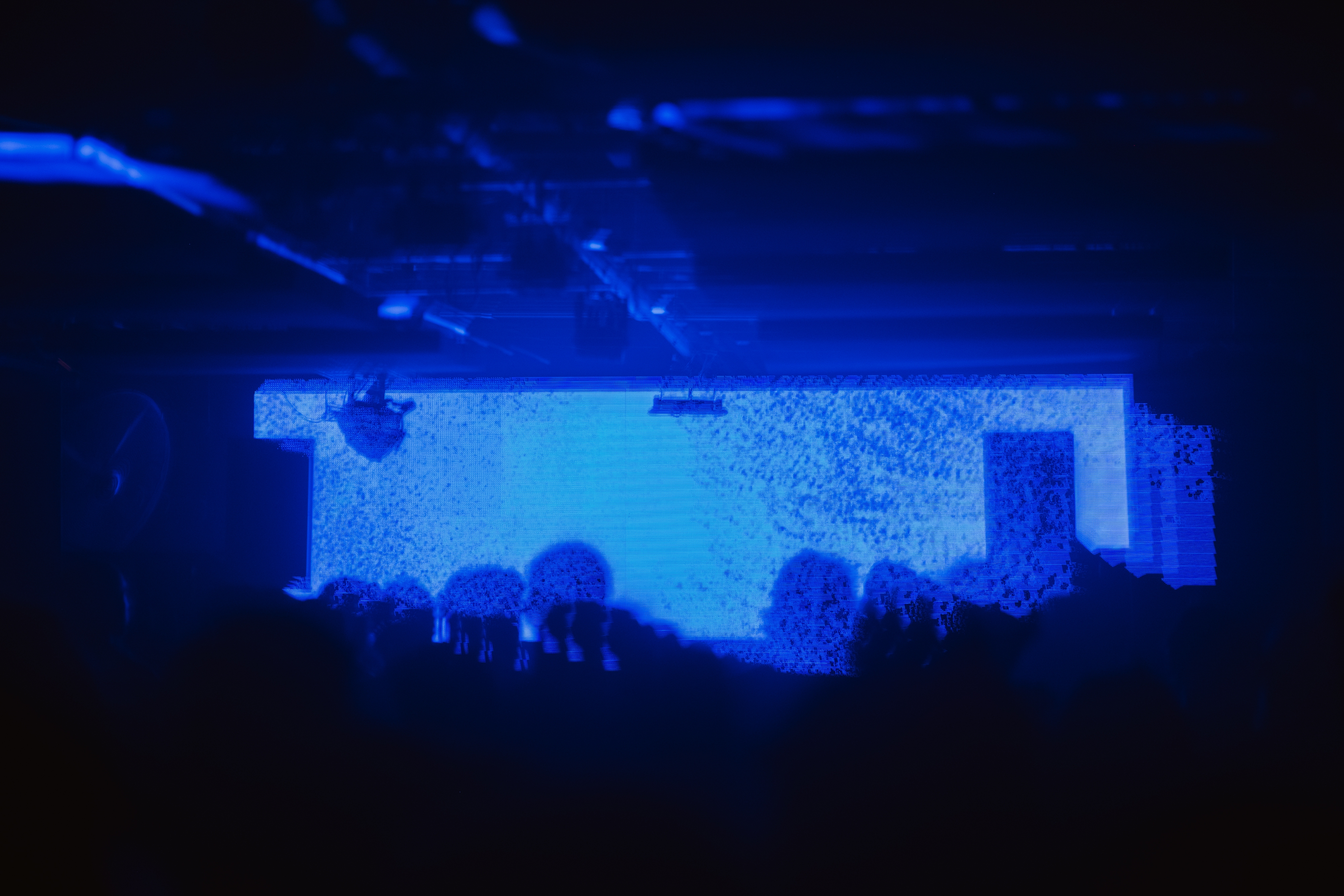
OM UNIT: Selling out the Sub Club on a Wednesday was flattering. Pjenny played a wonderful supporting DJ set and really held a deep and percussive space for the first couple of hours, and had everyone locked in together, which was awesome. I think I performed well, l and the crowd showed a lot of appreciation!
It's really wonderful not to have people talking during a live set. I have played some shows before where people just feel it necessary to talk the whole time, and it's quite off-putting to be honest, and belies this maybe unconscious belief that has crept into society that entertainment is this kind of disposable and ephemeral thing that they don't have to commit to.
I think that's sad because there's often something right there in front of them to get hold of if they could only drop their guard and show a little vulnerability and commit to engaging. Perhaps Murmurations is a gesture towards that.
Q: Your catalogue spans drum & bass, halftime, jungle, dub, and so much more. How does the breadth of your work inform your ability to operate in a space without scene-specific rules?
OM UNIT: Aesthetics are not scenes. Scenes are to do with class and locale, in my book. Aesthetics are like colours in a palette that you can borrow from and mix as long as you really understand where those styles come from and do it convincingly. It's all connected anyway. It's all black music ultimately, whether it's based in reggae, house, techno, etc., so if you have a respect for the roots of those cultures, you understand where those things used to be real scenes and then in turn you get a sense of the nuances and connections between them.
Once you really do your research and see how these things are all connected, and also understand that a lot of those styles mentioned have a 'golden era' that's in the past, you can understand that, in turn, they are pretty much stylistic aesthetics at this point and not true 'scenes'. There are global fan bases for all of the above, and most of those people understand those things, but I think to blinker oneself to any particular style of music or scene is awfully limiting, and I'd argue more often than not it's based on a fear of change and growth. That same lack of curiosity, I think, makes the mind calcify and makes one closed off, and from there it's a slippery slope into limited belief systems, homogeneity, and ultimately fearful control.
Q: Club culture traditionally offers intensity, while ambient music offers space and calm. How do you think we should balance these two ideas without one dominating the other?
OM UNIT: Club culture offers connection. sometimes intense, sometimes not - but clubs are a 'third space' to forget the bullshit and somatically move the body and mind as part of our natural need to self-regulate the nervous system with some colourful escapism to boot. I'd say ambient-led spaces could also be this, but there's perhaps a different intention for deeper listening and calls for a different level of vulnerability.
The goal, I’d argue, is the same ultimately, and I feel that there isn't this duality between intense and ambient. I feel there is a whole universe of music and a spectrum of intent from the most fragile to the most violent and everything in between to experience in public spaces that are always on some level about connection.
Q: The dance and electronic music culture has become incredibly dominated by the visual, particularly due to how it’s become marketed to punters. How do you feel punters should be pulling attention away, back to the ear and to their body?
OM UNIT: Shut up and dance, and try not to focus on the DJ so much. It is not a spectator sport. Marketing is not the experience in the same way that the map is not the territory. To quote DVS1, the sound system is the headliner.
Q: A ‘no phones’ rule is something that a lot of clubs have adopted, but in some ways, I feel like it’s become a box-ticking exercise for events wanting to appear a certain way, rather than truthfully being necessary. How do you think that no talking feels like an extension of a no-phone policy?
OM UNIT: Quite a cynical take, I think. If it's enforced, then it's a good thing, but yes i agree we have to do more than just have no phones. We have to think about how the sound is? What else can we do to encourage presence? People love to get nostalgic about the rave era, but really, it's all a mutated derivative of the spirit of an age that does not exist.
The best we can do is try to balance things back towards the music itself, which is most important. It's a cliche, but I think it's worth trying to encourage a dancefloor space to be something a little more sacred in the sense that we can get out of our minds and remember something more vital about ourselves.
Q: Is that a challenge you think punters should face?
OM UNIT: I think it's a challenge with great rewards, so yes, I think the idea of keeping convo to a minimum, at least, is worth enforcing or having as an understood agreement to entrants to a space. I like the idea of this being made clear upon entry and in the space itself, something that can be gently upheld rather than brutally enforced.
Q: After participating in murmurations, how do you feel this experience might influence your approach to future performances?
OM UNIT: I would certainly be down to have more conversations about messaging that goes out ahead of shows. I think it's a conversation that's worth having at large (just not on the dance floor).
-
murmurations 003 with Barker (live), Willis Anne (live) Luna takes place this Friday, February 27 at Naarm's Sub Club. Tickets are still on sale.
