


 INTERVIEWS
Ten years of Finding Figaro
For a decade, Finding Figaro has built itself around one kind of night. Here, its founders talk about the blog that started it, the grant that made it all possible and why Echo Beach still feels like their truest of homes.
Ten years is a long time for anything to stay independent in an increasingly monopolised cultural space. Finding Figaro has kept its focus on one kind of party, iterated across countless venues, public spaces, collaborations and lineups, and through a lot of change in its hometown of Naarm/Melbourne.
Originally started as a blog, the party has, in many ways, become an increasingly legitimate passion project-turned music platform, where its founders have been granted all manner of opportunities because of their readiness to learn from their mistakes and the positivity they seem to attract.
For new promoters eager to enter the space and have their voice heard, it’s a lesson that hustling hard can only get you so far, while consistency and care remain the true key to making an impact in your city.
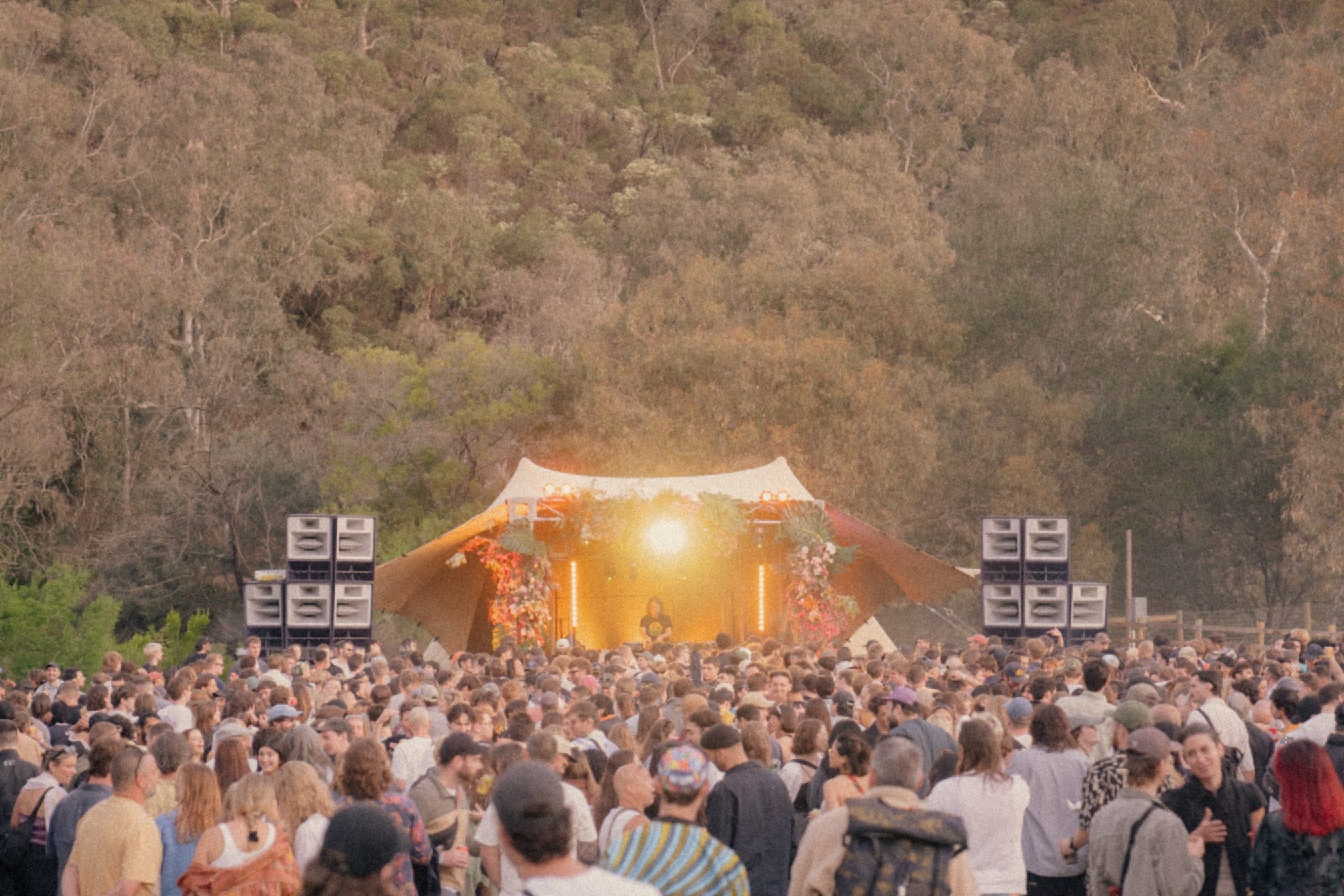
Much of that identity sits in its most regular occasion, Echo Beach, held each year since the brand went legit and gig-focused 7 years ago at the Collingwood Children’s Farm. Only 5km from the city’s centre and home to all manner of similarly-minded events in recent times, the farm has become a regular and important symbol of daytime revelry for its city.
For Finding Figaro, that very revelry is at the core of who they are.
Mixmag ANZ caught up with FF co-founders Nico Faust and Liam Moss, speaking on behalf of their other co-founders Luke (Ekuls) Zammit and Jack Warne, to understand what ten years truly means in the ever-churning life cycle of modern Australian culture.
Q: Hey FF team, thanks so much for taking the time to chat with us, & a very happy birthday. To start with, perhaps a cliché question but an important one nonetheless: how does it feel?
LIAM: It feels surreal. We started this when we were 20, so we've had some big birthdays this year. It’s been pretty much a constant throughout our entire adult lives, so it’s a privilege that we’re still chipping away at it all these years later.
NICO: It feels like a bit of a blessing, really. As Liam mentioned, we started this when we were so young. Much younger than you realise you are at the time. Having a project like this to muck around with really good friends feels like a privilege.
Q: Also, important question: who or what is Figaro? Have you gotten any closer to finding them?
LIAM: Aha, so I don't think Figaro is anyone; I think the name stuck after some references from MF DOOM and the opera many years ago. We're still no closer to finding it.
NICO: As I recall - and this really is stretching my memory - the idea was that he or it wasn’t really anything; it was more about looking for something new, or something you’d lost but you weren’t even sure what it was (a bit 6-7 if u will). This is when FF was a music discovery blog back then.
Q: FF started as a blog, which I understand was originally a bit of a ploy to score free tickets & meet people you admired. Was there much of a plan beyond that?
LIAM: When we started, we definitely didn't intend to work in music. We were all pretty broke, so this felt like the best way to get into festivals without having to buy tickets.
It was pretty innocent and probably more of a portfolio builder for other industries (we were both studying Advertising at the time) than a genuine way to get a foot in the door for the music industry.
NICO: The plan was no plan. I liked and still do like writing, so it was fun to noodle around with that. It was partly a racket for free tickets, and partly just another thing for us to play around with. It was handy because we could attach it to uni projects in a roundabout way.
Q: Is there any piece of work from that period that you’re all still really proud of? It seems like there was no shortage of incredible things happening in Naarm at that time, & legendary venues are now shuttered. Would love to know what sticks out in your mind.
LIAM: Mine were all pretty shit, but I admired quite a few of Nico's pieces. He did a really great piece on Butter Sessions about 3 years ago that unpacked their discography, and I remember we both nearly died when Tim Sweeney (Beats in Space) agreed to be interviewed by us about 8 years ago!
NICO: Gotta be longer than 3 years ago? There were some cool pieces; there were also some cool slices of time by way of premieres (remember when people used to do those?) on SoundCloud. Some good music came through the inbox back then and is still on our SoundCloud.

Q: Does that ‘editorial’ kind of POV still show up in how you guys programme? From my experience, a promoter who came up writing feels differently than one who started as a DJ.
LIAM: That's a great question. I've never really considered how a DJ turned promoter would approach booking a lineup. I think it definitely gave us a great foundation on what to look for when we were building a lineup. We do a lot of research on the acts that play our parties, so I think from that perspective it's made us look deeper than just what music the artist plays.
NICO: I think it probably does. I think we try and balance a few things when we program. We want it to be approachable, unpretentious and first and foremost - fun. On the other side of the scales, we also need it to be interesting and engaging. Dance music is so, so saturated. Turns out we’ve been doing it for a while, and to be honest, I think we both at times feel really rinsed by it, a lot of people playing similar things, or chasing trends.
I think when you have an artist who feels distinct in such a loud, crowded scene, it takes you right back to those bright, heady days when everything seemed large and new and plump with an apple in its mouth. It’s funny, in a way we’ve seen the scene in Melbourne change A LOT since we’ve been doing this, and mostly we’ve never moved on from the stuff we loved 10 years ago. It’s not that we haven’t been curious about other sounds that have had moments; I think we’re probably just a little stubborn and found what we really like quite early.
Q: You had three years, or thereabouts, before you threw your own event. What was the thing that finally tipped FF from covering to doing?
LIAM: I think it was just time. We’d dabbled in DJing a little bit and had spent enough time on and around dance floors to think it was something we could give a try
NICO: I think the spending time on dance floors part of it was quite big. We were partying a lot; a lot of our close friends and I liked to party and share music with one another. I guess we inevitably had ideas and opinions on what made a fun, good experience on the floor. The early days were parties at Boney, occasionally other joints with some friends in the West - one of which was Zac McCracken (Babycino). Liam's older brother Haz (Hasim Minor, Domingo Jones, DJ Yassas, DJ Curls - just a few of his aliases over the years) and some of our friends had a little party (House of Friends - I think they’d agree it was a shocking name) that we merged with ours. To be honest, they kinda let us in and gave us a space to play; we picked it up through them. We did parties together for a few years as Two Steps, and we’re still all very close now. They’re a big part of the journey, and it’s lovely to still all enjoy doing the thing 10 years down the track.
Q: Tell us a bit about the grant that helped you get your first event off the ground. Where did that come from & how did it help?
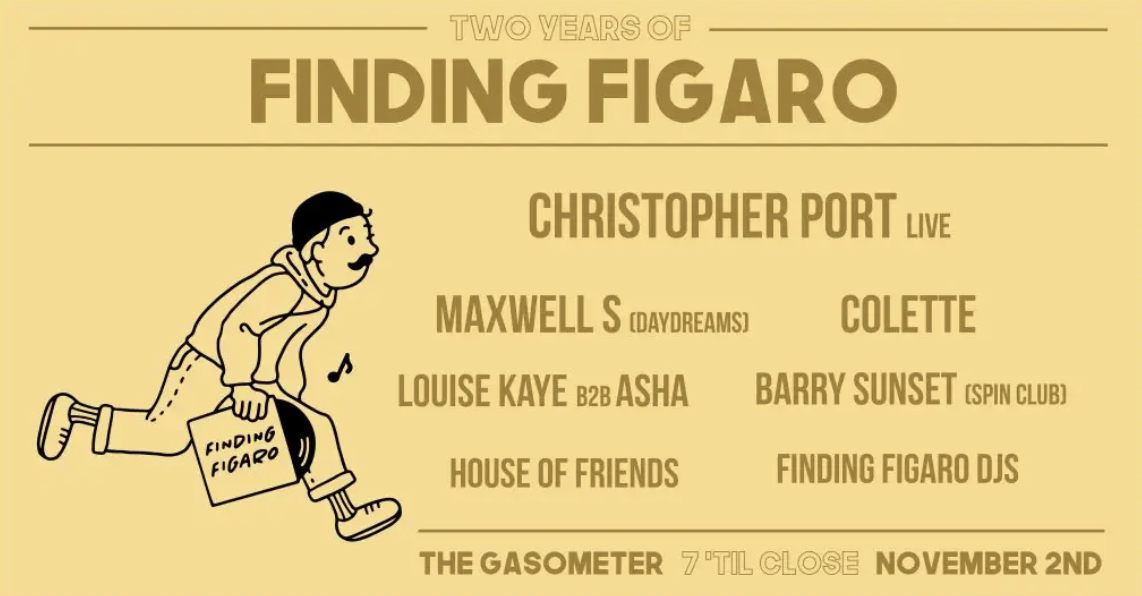
LIAM: It was a Hobsons Bay Council grant with a silly name, valued at $5,000. We actually won it for Echo Beach #1. I remember thinking at the time that we’d made it because we were both working casually as cleaners at a school camp, and five grand back then meant weeks spent on the vacuum. To be honest, I don’t think Echo Beach or Finding Figaro would have happened without us getting it. It gave us a tiny safety net (which we ate up pretty quickly when we realised how expensive these events were to put on), but it also gave us the encouragement to give it a go.
NICO: I think Liam is right. It seemed like so much money at the time - it wasn’t really, but it nudged us into deeper waters where we couldn’t really turn back; we had to go and have a crack. It’s pretty cool to think about it really; we definitely wouldn’t exist without it.
Q: Many years later, we find ourselves in a tricky position where Victoria has really stripped back its arts funding. What do you think we lose when public funding initiatives dry up?
NICO: I agree - also, a lot of what we initially wanted to do was showcase Melbourne’s underrepresented West, which the grant specifically enabled us to do by using Seaworks (which at the time hadn’t really been used for dance music - tho shouts to Jamaican Festival holding it down at Seaworks). We still try to spotlight Melbourne's West and have a great relationship with Maribyrnong Council, and have put on some really great parties in Footscray, some that spring to mind - Jamie Tiller and Anthony Naples & Lauren Hansom (separate occasions) at Railway Reserve, the last Simpatico we did in a neglected shopping centre (Metro West) last year and bringing Dekmantel to Footscray Park for Dekmantel Naarm.
Without support and our relationship with MC, those events simply wouldn’t happen. It’s a shame - it’s unbelievable how much easier it is to make events work in Melbourne's north. And we love and cherish the spaces we’re lucky enough to work with there, and we’re really grateful for those relationships we’ve built. But I think it results in a flatter experience for people attending events. Less diversity in experiences and spaces for sure, but there’s a massive mental barrier for people crossing the bridge to come West. Funding lets promoters take a few more risks, and hopefully that will, in turn, make punters more adventurous and open up more spaces. The city is so much bigger than the North's microcosm.
Q: In an increasingly commercialised space, I feel like there’s a “hustle hard” mentality that, for many people, justifies exclusion and a lack of public funding. What do you think we lose when we see this world as being a commercial one?
NICO: The reality probably is this - as promoters, we basically gamble the existence of Finding Figaro on each bigger event like Echo Beach. That’s how fine the margins are. If it bombs, we very realistically don’t exist anymore. And it’s not like people throwing parties (for the most part, obviously) are doing it for the loot. We do it because people did it for us, because we love to party with our friends, and because we think that space is important to maintain.
It’s risky, and it’s hard work.
If you look at our friends at Hopkins as a case in point, the truth is it’s hard to make something that isn’t commercially minded viable. We still do our very best to programme and design events that we love, and when I look at the latest Echo lineup I think we’ve done that - but it’s getting harder all the time. God bless grant funding, but an aspect of this which I think is problematic is because there isn’t that much dosh to go around; projects that have commercial proof often get funding (as they’re able to guarantee success - and success (in an ideal world) means that the grant money awarded translates into work for people in the industry - which is great, but doesn’t leave enough money to go around for projects trying something new and not typically commercial).
Q: Were there any particular early lessons that you learned more dramatically than others?
LIAM: We definitely got a lot wrong initially, but we also took our time with it and never really bit off more than we could chew. I think probably the biggest mistake new promoters make is going too big too soon, jumping straight into events before building a community around them, establishing relationships with enough suppliers and venues, and developing the skills to deliver an event and manage hiccups along the way.
NICO: We were riding by the seat of our pants in a healthy way. Challenged enough to be in a sink-or-swim situation, but canny enough to seek and take help when we really needed it. I’m not sure if it’s the same now as it was back then; I guess the kids probs just GPT an event plan or whatever, but I definitely felt that there was a community back then, and it was one that was willing to help kids with good intentions if they came and asked for help.
Q: At what point did this stop being a side project and start being a business with obligations?
LIAM: I think the beauty of what we're doing is that it still very much feels like a side project with four friends. We're all fortunate enough to have full-time jobs, so thankfully we're not relying on the business to pay the bills. This is probably why it's lasted so long; we haven't been forced to compromise on artists or ideas just because they will sell tickets, and we can still treat it as something that's incredibly fulfilling.
NICO: Agreed - if this was our single source of income, I think we would have gone insane with the risk.
Q: I’ve read you cite CC:DISCO!'s Club Coco as an early influence. What inspiration did you take from those parties?
LIAM: I'd say we owe a lot to CC as an early influence; she and maybe Crown Ruler were some of the first parties we went to that showed us what kind of events we wanted to be a part of. I'd say when we first started to manage Adriana and run the SPASTA parties with her, we based a lot of what we did on the 'CC Blueprint', e.g. the venues we used, the size of those rooms, the international guests we selected, and a compilation, etc. At the same time, I think we had to find something that made it unique and more meaningful to us, which was leaning into Adriana's (and our) Greek heritage and how it worked in its own special way.
NICO: CC is straight up one of the most genuine and welcoming people I know - particularly in this scene where there’s a bit of smoke and mirrors. I think when we talk about our events wanting to be unpretentious, fun, welcoming and expressive, there’s a strong shade of - less chin stroking, more dancing. We want artists at our events to be doing something distinct and interesting, and we really value that semi-intellectual side of things. But you’ve still gotta get lost in the music.
Q: You've described the brief as the lighter sound of electronic music. What does "lighter" mean in practice?
LIAM: In practice, I think it means the more accessible genres of dance music. When we first got into dance music, we were pretty inspired by labels and parties like Rush Hour, Dekmantel, Rhythm Section, etc., which at the time were really spotlighting more soulful dance music. I think our taste has come a long way since, so I don't necessarily rule out any genre, but we would rule out artists, tracks, or venues that are a little uninteresting or don't support an environment where our punters might feel comfortable.
NICO: It’s that unpretentiousness and probably an aversion to industrial techno and high BPM music. Rightly or wrongly, I think we find that stuff a bit muted and lifeless. That doesn’t mean we don’t like “hard music”, but it has to have a bit of a wink to it.
Q: Echo Beach started at Seaworks and moved to Collingwood Children's Farm. What did the farm give you that the Williamstown site could not?
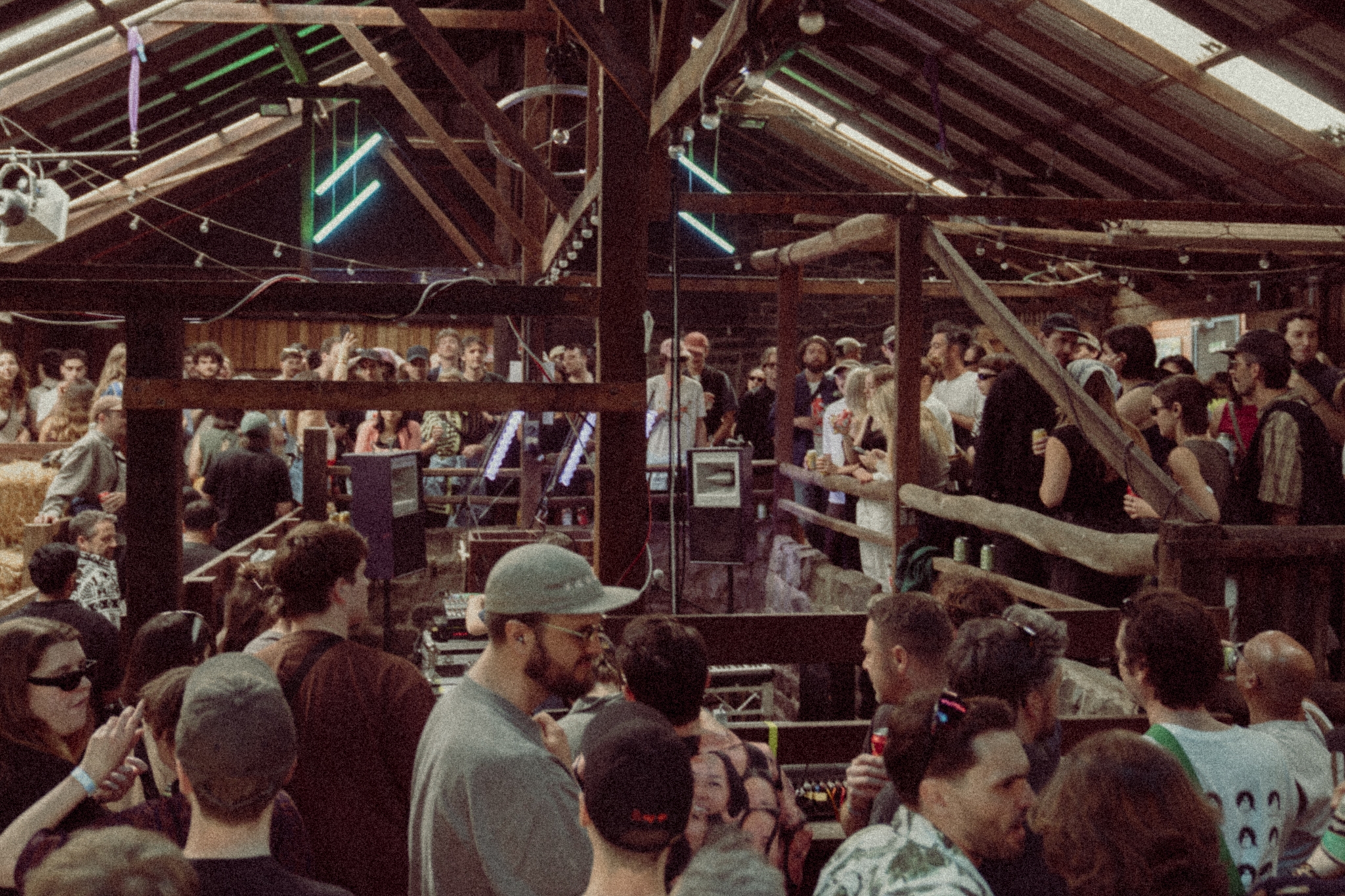
LIAM: We all actually met at Williamstown High School and grew up in Williamstown, so moving on from the venue was bittersweet. That said, it's incredibly challenging to get people to the Western suburbs for a day party, so I felt it was important to move the event to make sure it got to where it is today.
NICO: In part, that commercial viability we were speaking about. We had big dreams for a weekender, complete with euro-style boat parties shipping people from the city to the pier. Ultimately, it just didn’t stack up.
Q: The lineups have gone from local to Prins Thomas, Kenji Takimi, Pender Street Steppers, Mim Suleiman. How do you keep a day like that from tipping into a straight international-headliner show?
LIAM: It's a good question and a pretty hard one to get right. I think when we book an event, we usually start with the internationals because booking them is the hardest part. Then, once those slots are filled, we think about which locals would work best before or after them to create the best flow. A big part of the festival's DNA has been one-off B2Bs like Adriana & Barbara Boeing, Andras & Noise in my Head, JNETT & Mim Suleiman and, at the next Echo Beach, Andras & Moopie. These create a really unique experience for the fans and even the artists that I think can be even more interesting than a standalone international set.
NICO: I think - and hope - that a part of what we’ve been able to cultivate at an event like Echo Beach is a bit of a round offering, or a vibe, if you will. We try as much as we can to program an act we love that most people may not be familiar with. We’ve been lucky enough to have enough success to roll the dice on some big names we adore (see Midland on the next Echo), and they play an important role in selling tickets, but as much as we can, we try to build the lineup with our ears. I don’t think we’ve yet booked an act we didn’t think made sense for the lineup holistically.
Q: You’ve got relationships with a wide variety of locals, but two that come to mind most are Adriana & Lauren Hansom. How crucial have these two been in FF’s journey?
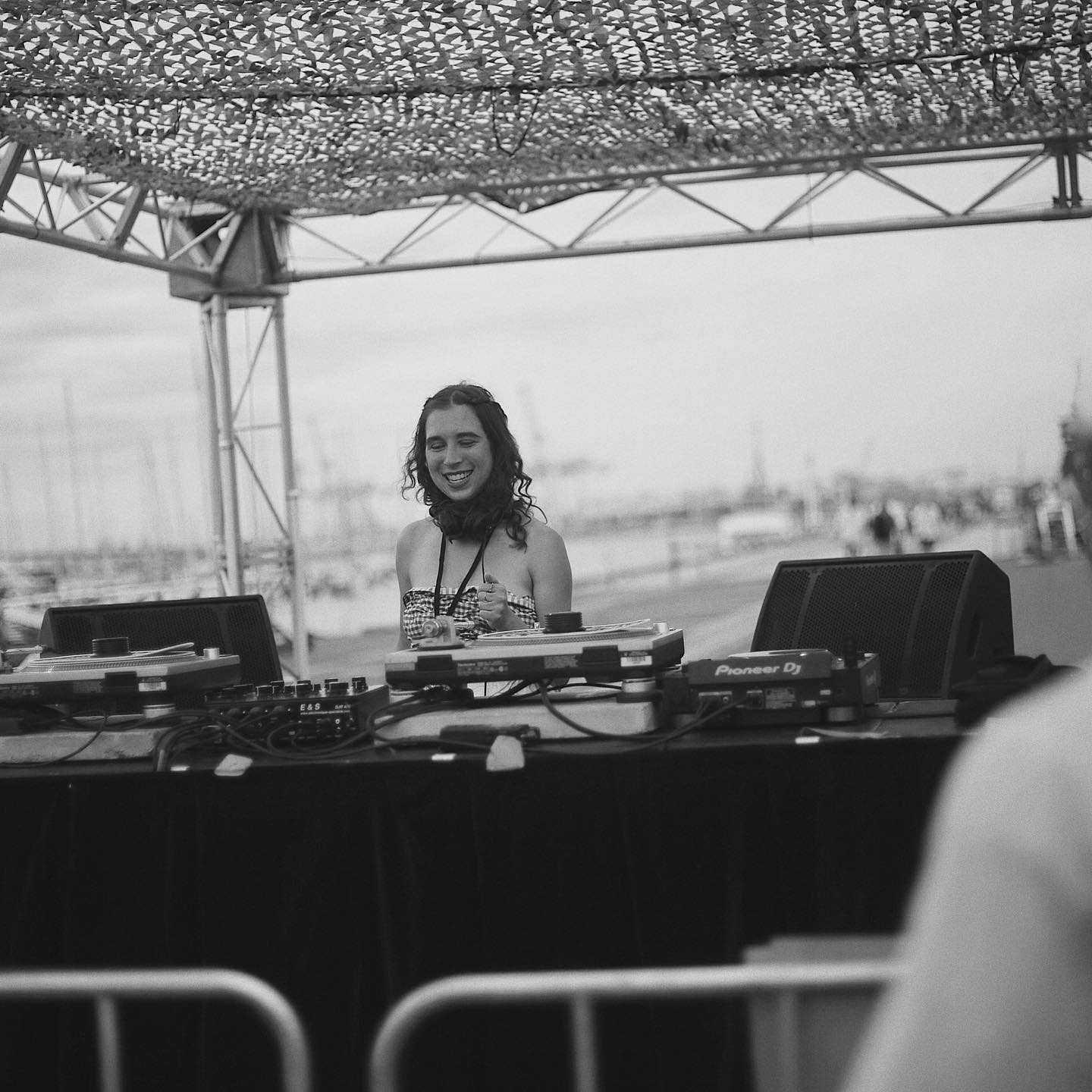
LIAM: So crucial, but both for pretty different reasons. I think we met Adriana while shooting this mini-doco. Like most people who meet her, we were immediately drawn to her pretty one-of-a-kind energy. Since then, she’s probably felt more like a big sister than anything else. We’ve shared some amazing moments with her, from her Meredith set to growing SPASTA into what it is, and just being in her orbit. With Lauren, I think it started as us just being enormous fans. Lauren and Mike (Who) are probably our favourite DJs in the country, so there's always been a lot of admiration, and it's been so nice getting to know them both over the years.
NICO: Lauren actually “headlined” the first Echo and we were probably a trifle painfully fan-boy-ey. Since then, we’ve just naturally developed a really nice friendship. That’s kinda the thing about having been fairly sure, or stubborn, about what our tastes are in music over the years. You really find your people.
Q: What did the partnership with Dekmantel feel like for you guys?
LIAM: The Dekmantel partnership was ultimately a really exciting project and obviously a pretty surreal experience. I feel like eventually it will return to Australia, but I can't imagine we'll be involved. I think we've really found our pocket in terms of the sound, production, and scale of events we like to put on, and it doesn't quite align with Dekmantel's global aspirations.
NICO: It was a fun project/learning experience/whatever. Probably somewhat ironically the best part of it for me might have been how it actually strengthened our relationships back home. Our partners in Dekmantel outside the Netherlands were Jamie (Crown Ruler), Glyn (WAT/Strawberry), and James (WAT). We were all friends before, and we still are today. It was a process for all of us to discover what we want to do. No shade on Dekmantel whatsoever, but I think it has all drawn us back to our own smaller communities.
Q: What did Dekmantel teach you about running a festival, and what did you have to insist on to keep it feeling Australian rather than imported?
LIAM: It taught us a lot. Being in the same room as them and understanding how they approach production, curation, bookings, etc., gave us a clear idea of what we do well and what we could do a lot better. At the same time, we do a lot of things that aren’t common in the Netherlands, which I imagine they found valuable. I think the Australian scene's approach to value for money and the overall punter experience is probably the best in the world, and that's something we definitely wanted to hold onto.
NICO: I agree there was a bit of really valuable cultural exchange. I think what we learnt from them was a really high standard for details and a kind of Euro-style ambition. Bravura was a word they used a lot.
Q: What is the ceiling on Echo Beach? Is there a size at which it stops being the thing you made?
LIAM: I feel we're very much at the ceiling for Echo Beach; I think we've found a nice balance between crowd, lineup and a size that works for an amazing venue. We don't necessarily need to grow it any bigger or alter the format too much from what we'll do in October.
NICO: Agreed. I don’t think the size of it will grow numbers-wise very much. The things that we still want to grow are the design elements, different (non-musical) modes of expression. Margins are so fine financially, as we mentioned, so those are things that we grow slowly, and with the help and generosity of creative friends in the scene.
Q: Why does that feel most like FF’s birthday?
LIAM: I think Echo Beach perfectly embodies everything we're trying to do. From the lineup and crowd to the perfect venue, I think it summarises who we are better than any other event we put on.
NICO: Absolutely. It’s the program each year where we’re almost entirely indulgent to ourselves. If you’re playing at Echo, we really love what you do.
Q: Melbourne keeps losing permanent venues, and you keep finding temporary ones, like the unused Metro West shopping centre in Footscray. Is the one-night takeover a creative choice or a symptom?
LIAM: A lot of what makes our events interesting comes down to having a unique venue that you can't see music in every weekend. Since we're only doing 4-5 events a year now, we want all of them to feel unique. While the admin of applying for new licenses, permits, and handling production differently for each event is a lot, it's definitely what makes it special for the punters and us.
NICO: Not sure if I can separate the two; it’s what we’ve always done. A lot of our first experiences were DIY under the Westgate things our friends put on, and there’s some magic in a space like that which we try and give punters each time. I think we’d just get bored doing events in normal places.
Q: How are you marking the ten years?
LIAM: We're about to launch some new 10 years of FF merch, which has been a steep learning curve in the art of retail. So we're definitely excited to get that out into the world!
Q: You have a 10-year celebration on the bill at Strawberry Fields in November, on Yorta Yorta Country. What does an FF party look like when you’re not the ones organising it?
LIAM: I think we're just stoked to be celebrating with a bunch of our friends both from home, interstate and overseas. It'll be incredibly nice not to worry about the little things and just enjoy ourselves.
NICO: Could be magic, or maybe the wheels will fall off lol. We’re really grateful for the opportunity to bring some friends onto the stage with us. In that way, it’ll feel pretty FF. It has always been an effort to bring our like-minded friends together and share some music. We've booked a lot of artists as fans and now absolutely call them friends, and the Strawbs program is a perfect showcase of that, with Joao (Omoloko), Loz (Hansom), Zac (Babycino), and Adri. It’s a pretty good mix of old, with Zac being one of our oldest friends and the relatively new, having probably only known Joao for 3 or so years now.
Q: What is it about Naarm specifically that lets a blog run by four school friends turn into a ten-year institution, and what would be lost if that stopped being true?'
NICO: I think it was people like CC back in the day that made it possible. As I said, it’s really just ultimately a project of bringing together like-minded people to play the music we all love. Over the years, we’ve been lucky enough to find our community of people who love that music. Maybe the thing about Naarm is that it’s big and varied enough to support different types of communities within the one scene.
-
Finding Figaro's 'Echo Beach VI' takes place on Saturday, October 31, at Collingwood Children's Farm. Tickets are still available.
-
Jack Colquhoun is Mixmag ANZ's Managing Editor. Find him on Instagram.
