

 COMMENT
Skynet in the age of AI: Hear My Eyes' Terminator 2
The rework of James Cameron's action classic by Peter Van Hoesen, Robin Fox & others was a celebration of creativity in a world increasingly devoid of it.
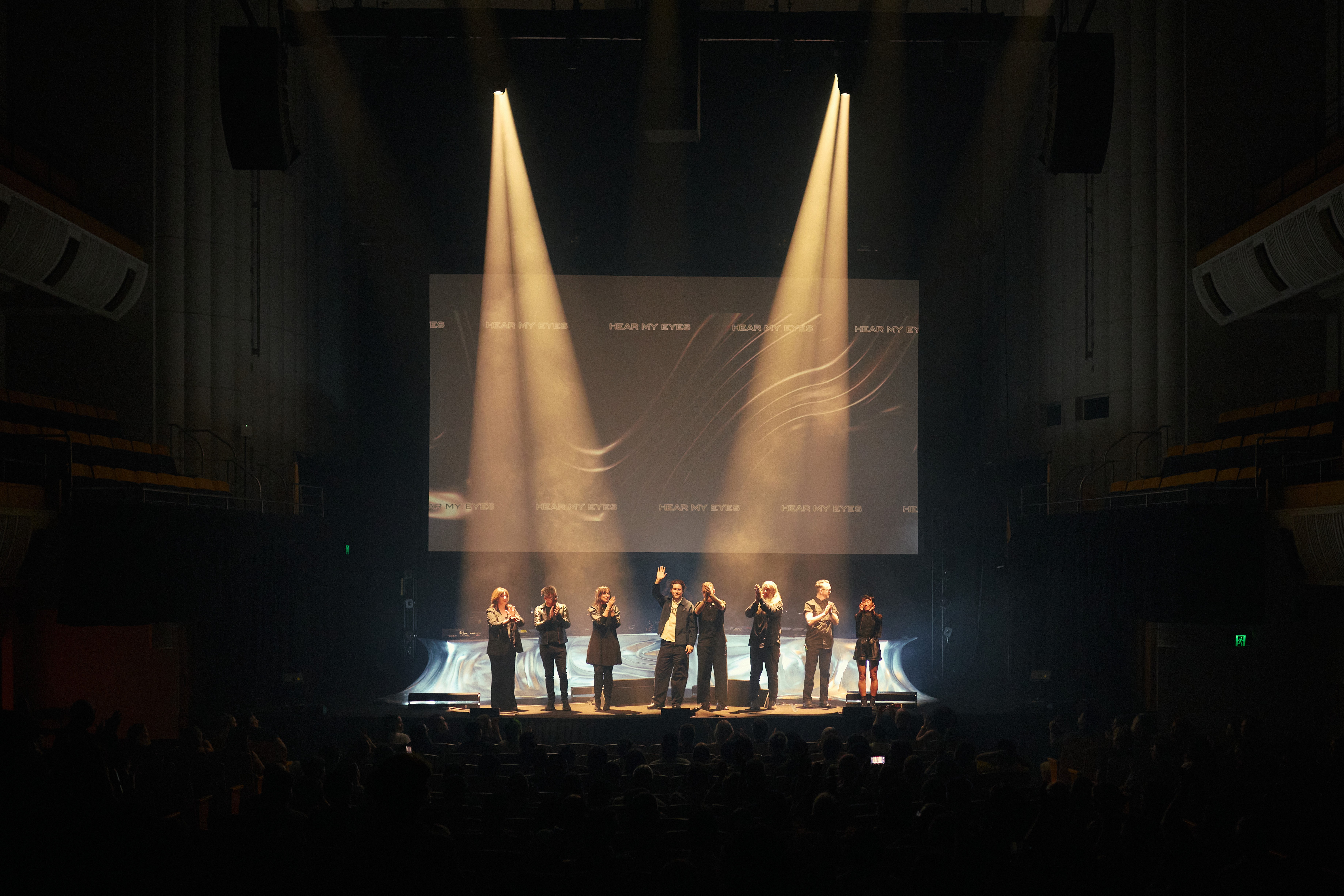
Hear My Eyes, the multi-media “hybrid artform” project by Naarm/Melbourne creative Haydn Green, has been on my bucket list for some time. It has, for over a decade, paired modern, often local musicians with some of the world’s largest cinematic productions to reimagine their soundtracks in a live cinema event unlike any other.
“There’s a misconception that we’re trying to compete with or better that original score,” Green told me. “We’re absolutely not.”
Previous iterations have seen HME reworking titles such as ‘No Country For Old Men’, ‘Chopper’, ‘Suspiria’, ‘Akira’, ‘Fantastic Planet’, ‘Wake In Fright’, and many more. Musically, they’ve tapped everyone from Sleep D to King Gizzard & The Lizard Wizard, Sampa The Great, Tropical Fuckstorm, and many others from different bands and projects, combined to form one-off supergroups.
The project has, in a somewhat unfortunate alignment with the trope that Melbourne has loads to do, taken off in its hometown but has taken a moment to get into stride in other cities. While previous films, including Sleep D’s take on ‘Pan’s Labyrinth’ or ‘Wake In Fright’ as done by Surprise Chef, had hugely piqued my interest, it was Terminator 2: Judgement Day, as soundtracked by Belgian techno legend Peter Van Hoesen, that ended up being impossible to miss.
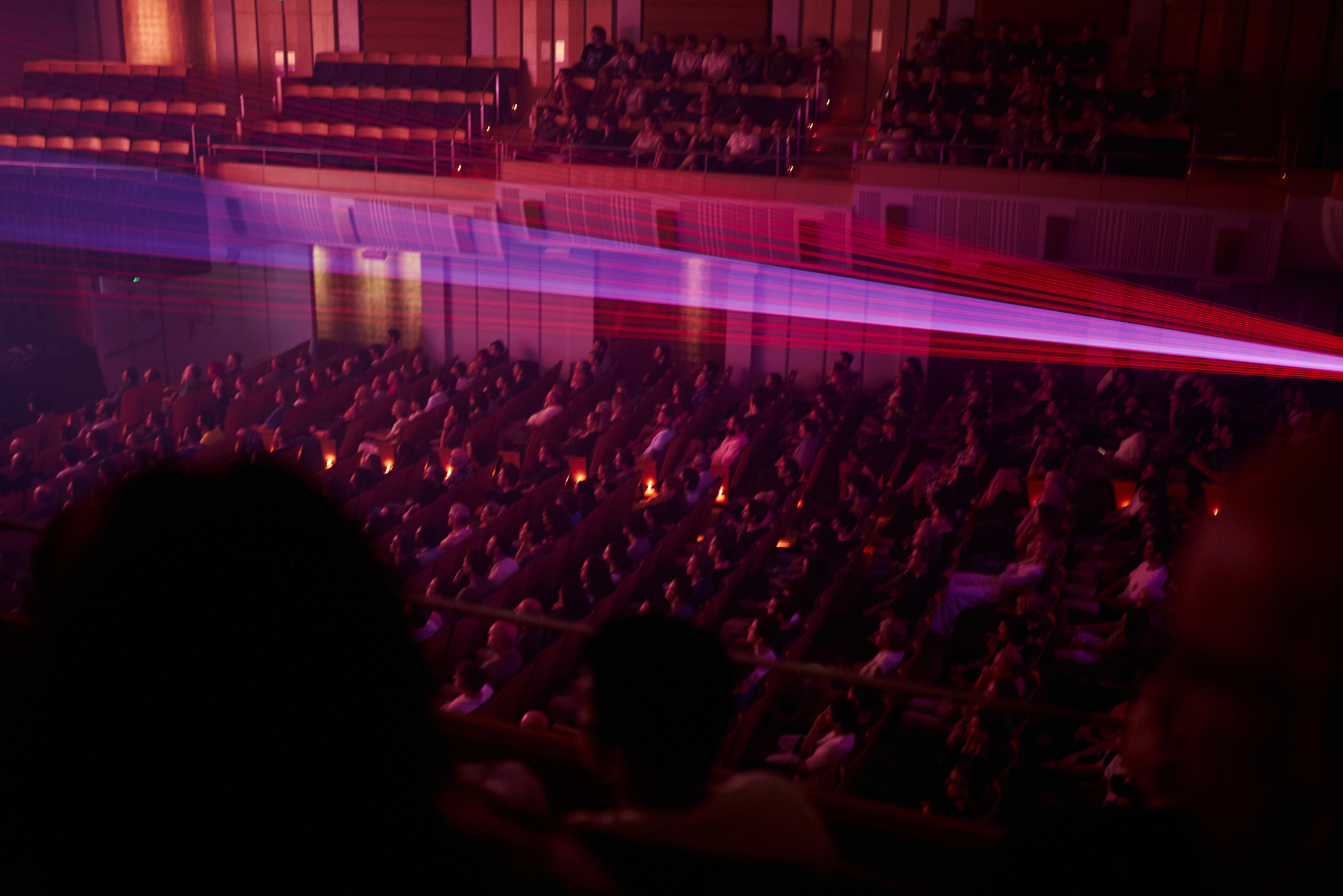
In discussing my anticipation for the film, both in the lead-up to its showing at Sydney’s City Recital Hall just a little over a week ago, and in my excited dance floor gushing about it in the week following, many were bemused by exactly how a project like HME would work.
Even before watching the film, I found myself amazed by the level of dedication required to license such huge films and strip them of their soundtracks. HME shows the films in their entirety, with the same dialogue, Foley, and contextual music (Arnie’s takeoff of ‘Bad To The Bone’ was a crucial inclusion), but with an entirely new soundtrack performed live.
It’s this difference that makes the project all the more impressive than just playing ‘Dark Side Of The Moon’ in sync with ‘The Wizard of Oz’. For music fans, it’s a level of commitment that ensures that the experience will remain an impressive memory of Terminator 2 for a very long time.
Perhaps even more impressive is the tech behind this screening of Terminator 2. Alongside Peter Van Hoesen, who had worked on the soundtrack seemingly for months, sat the MESS (Melbourne Electronic Sound Studio) Synthesiser Ensemble, as well as MESS’ co-founder Robin Fox, who provided a live laser show. Before the show, speaking with Haydn and his production manager, Todd, I was informed that PVH was acting more like a conductor for the music, mixing in each synthesiser player’s output to create the soundtrack in real time. Robin Fox, however, was set to do his own thing.
The group emerged from backstage and sat at a huge desk modelled to look exactly like the ‘liquid metal’ that makes up Arnie’s T2 adversary, the T-1000. This attention to detail, and many like it, became a major source of enjoyment throughout my viewing of the film. It’s a joy to see when a group of people is truly excited to do something.
A rewatch of Terminator 2: Judgement Day was not something I imagined I’d be writing about for Mixmag ANZ when I first took up the mantle as its Editor. Intellectualising an old action movie is something a platform like Letterboxd is seemingly chock-full of, and yet here we are.
I can understand why, to someone not familiar with HME, my having seen a techno-laser-filled rendition of a Terminator movie may be something to feel dubious about.
In some ways, it could feel like the pinnacle of macho culture in 2026. Arnold Schwarzenegger is, in many ways, the archetypal man of today in this role. He speaks when he needs to; he’s not emotional, and his means of conflict resolution is not killing someone but simply ensuring they’ll never walk again.
In the context of the original film, this is ‘badass’. Arnie’s Terminator doesn’t give a fuck, and in a post-Reagan world, his violence was a kind of ironic tongue-in-cheek reference to what some felt it meant to be in America (fuck, yeah).
For those unaware, Terminator 2 is set 11 years after the original, following a young teen, John Connor, who is the offspring of a man from the future, sent back in time to defend John’s mother in Terminator 1. John is “the key to civilisation’s victory” over a future AI-fueled robot uprising, and the key conflict of the film sees two Terminators engaging in a game of futuristic cat and mouse, as the lives of John and his mother hang in the balance.
Skynet, the AI system serving as the film's silent antagonist, has become scarily relevant in recent years. “The themes hit harder when you're living through some version of what Cameron imagined,” Green shared in our earlier interview. Though HME’s choice to screen T2 comes down to many more variables than simply feeling like the right time, I came away from the experience far more haunted and concerned than I was after my first watch, a little over ten years ago.
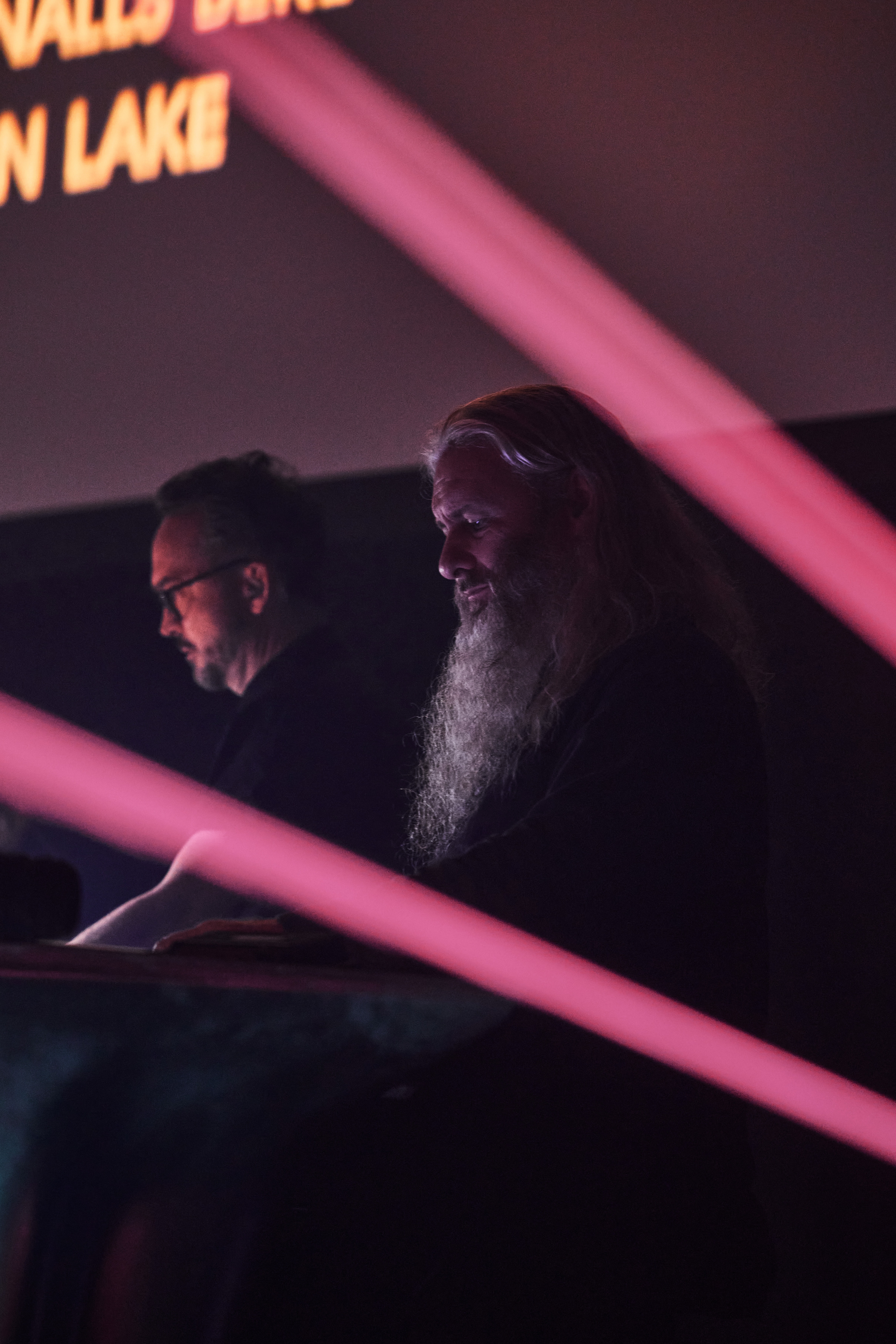
PVH’s soundtrack was, before we get into the weeds of it, less techno than I’d anticipated. Throughout the film’s first half, before an intermission was called, I found myself waiting for the usual techno tropes to come in during its chase scenes, moments of violence, and sci-fi flash-forwards. I quickly recognised that waiting for something I expected to come was doing a disservice to my enjoyment of the experience. In doing so, I was not only rewatching T2 but, in a way, just listening to techno again.
And so, I gave myself permission to both switch off and continue paying attention.
T2’s original soundtrack, composed by Brad Fiedel, is what you’d expect from an early 90s science fiction. Generally speaking, it’s driven by a kind of percussive reverb that was emblematic of late-90s electronic music, with a slightly militaristic edge for drama. Strings build, synth lines aren’t quite as there as you might hope, but generally, it holds up very well. In relistening to it, one thing that struck me was that, while it is over the top, it does so in a restrained way, utilising a lot of moody silence instead of feeling the need to match every explosion with an equally explosive accompaniment.
PVH’s rendition of the soundtrack, in the absence of hard-hitting techno, leaves a similar kind of space for the film to do its work. Its chase scenes feel all the more pressing when accompanied by music that’s been refined to a point that can, in my own opinion at least, match the prestige of its cinematography and practical effects.
In doing so, PVH provided a mood, a sense of tension, and a modern lens to a classic, making Terminator 2 feel modern. In many ways, it made it feel as if this were our burden to bear.
Will techno be playing when AI decides that we’re its target?
It must be noted that, in the week before HME’s T2 showed in Sydney, America and Israel bombed Minab school in Southern Iran, which has led to the deaths of more than 170 people, most of those children. The US and Israel have since come out sharing that their illegal war on Iran is utilising ‘advanced AI tools’.
Around midway through T2, John Connor’s mother, who in the 11 years since her son’s birth has been sleeping with one eye open in fear of a Terminator coming to kill them both, has a dream which, on my first watch, I likely would have simply described as being “gnarly”. Sarah finds herself at a large chain fence, cordoning off a children’s playground, overlooking a large metropolis. Knowing full well that Skynet is about to implement Judgment Day, thankfully for us, originally set to occur on August 19, 1997, Sarah screams for the children and parents to run away and protect themselves.
Suddenly, a bright white light appears as Robin Fox turns on the green and yellow lasers to mimic the nuke’s glow, while Sarah, the children, and their parents have their skin melted off their bodies before their bones turn to dust.
A slightly nervous chuckle appeared to come over the crowd in the room. While Fox’s lasers did add a slightly comedic element to the moment, the doomsday clock has never been closer to midnight than it is right now.
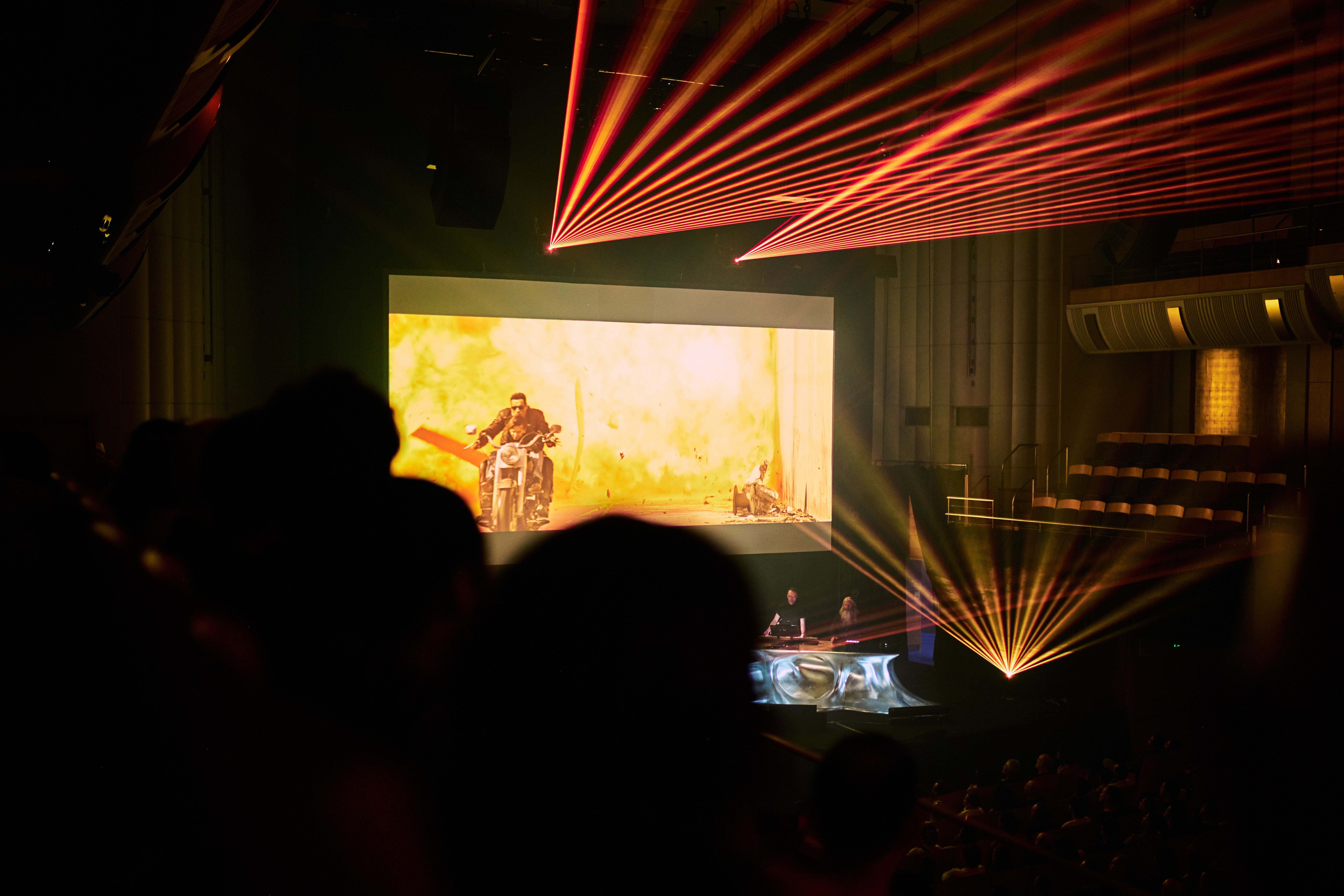
In the days since my watch of HME’s T2, I’ve been able to split my lingering impression into two, almost equally impactful feelings.
The first is something far more pessimistic: a profound relevance to our modern lives that HME, PVH, and Robin Fox were able to inject back into a film considered by many to be one of ‘the greats’ of a bygone era. It served as a warning of sorts, a warning perhaps ignored, as so many are in our day-to-day, increasingly soundtracked by talking machines.
The second was an appreciation for refreshing creativity. HME’s T2 was, in no aspect, a simple undertaking. We live in a world where Scream 7 and the fourth Spider-Man film franchise make global headlines, and brands purport to be more protective of their brands than ever before, while simultaneously signing their souls away to be Fortnite skins.
It’s a weird time for media, and while the Terminator franchise is by no means immune to this same kind of cash grab sickness, what HME proved is that in the right hands, a fresh take on something we know can feel exciting and new.
I’ll admit, this likely wasn’t for anyone in the room. Immediately after seeing the film, a friend sent me a screenshot of someone’s Instagram story, who he doesn’t know, screenshotted by his partner and then shared with me, claiming that “it wasn’t as good as the original.”
What is clear, in HME’s expansive cinematic universe, is that taste is allowed to be flexible. Whether in film, music or more broadly than that, there’s something for all of us, and we should be thankful when someone takes the initiative to try something new.