


 MUSIC
MUSIC
Simona Castricum shares her latest inspiration playlist, ‘Villain Arc'
The Naarm/Melbourne artist shares some of the inspo behind her sixth record ‘Villain’.
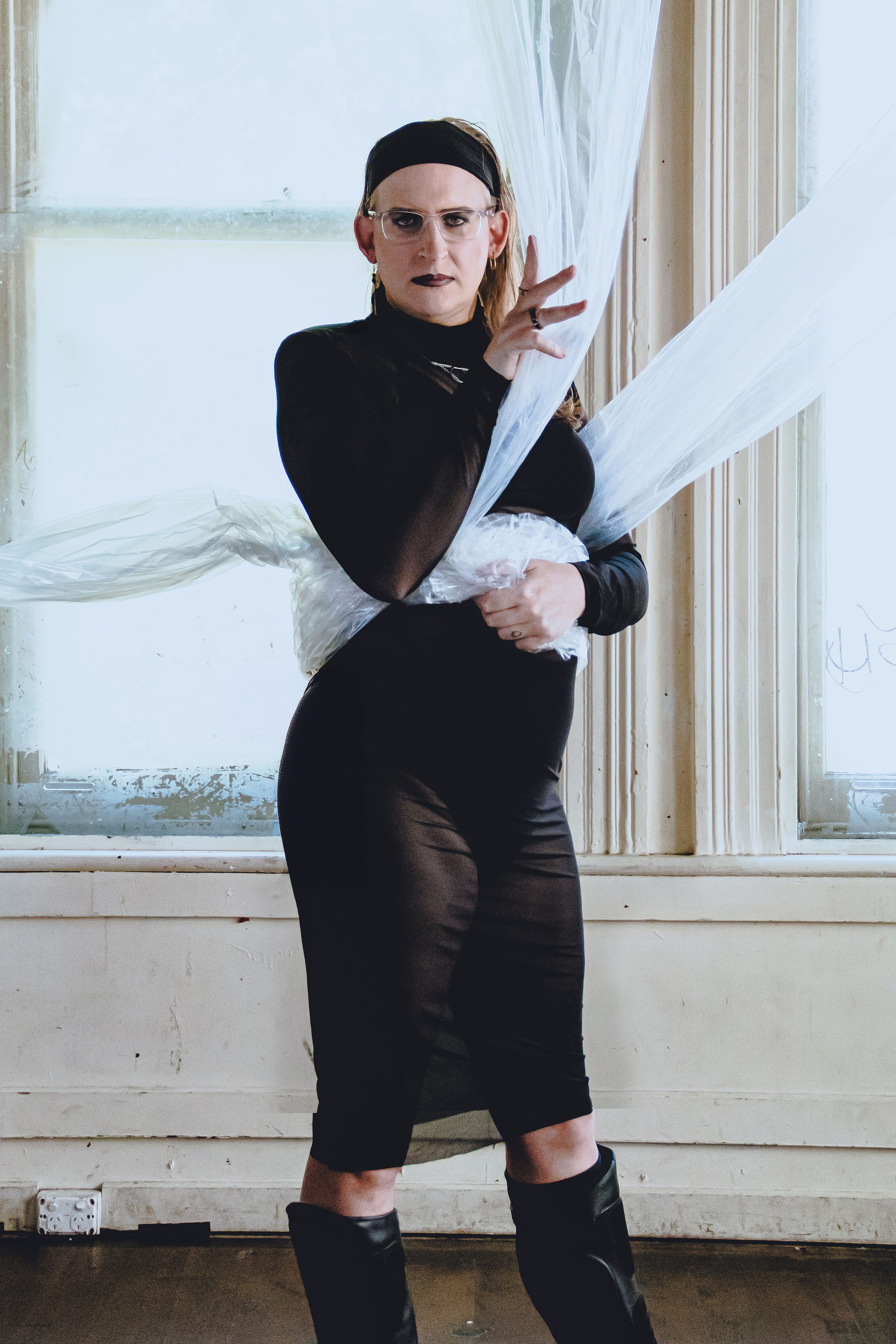
Naarm/Melbourne-based songwriter, producer, archivist, architect, and much more, Simona Castricum has, for decades, been at the corner of so much of what makes her city breathe.
Having cut her teeth in the city’s underground in the late 1990s, Castricum’s career is a laundry list of places, faces and sounds regularly touched on at seemingly every trend cycle’s rebirth. That includes her hosting of a regular club night ‘The Shock of the New’ at The Order of Melbourne, now Miscellania, as well as many appearances at The Gasometer, five studio albums to date and appearances at Strawberry Fields, Club 77, Sydney’s Mardi Gras and many more.
This month, Simona releases ‘Villain’, her sixth studio album, and continues to build upon a legacy of combining new wave post-punk with the likes of electro, techno and house.
Simona describes her work as “vignettes that map queer relationships within 21st-century utopian and dystopian urbanism”, with Naarm clearly at the centre of that world. Throughout ‘Villain’, she pushes even further into politics than ever before.
“‘Villain’ is a response to the climate of political and relational projection - the mythology people create to make sense of their own position,” she shared. “A lot of my work is about what transmisogyny does: the playbook of casting transgender women, in particular, as the societal menace at the door-the so-called ‘insurgency’ or ‘empire’ -when that is itself a cisgender fantasy of violence. It manifests in so many different ways with such familiarity. This record names it. It even leans into the character of the villain as a conscious act of resistance.”
On the cusp of her accompanying tour for the album’s release, Simona Castricum shared a playlist of inspirations behind ‘Villain'.
Listen to the playlist via Apple Music.
Curve — ‘Coast Is Clear’
“I remember literally running home from school when I was 15 and waiting by the radio for ‘Coast Is Clear’ so I could tape it. Toni Halliday’s voice distorted almost like a guitar was just: what on earth is this? Those early Curve EPs—industrial, electronics, shoegaze, rap—still sound completely singular. Alan Moulder and Flood were developing a production language around Curve, and Nine Inch Nails, that would become so influential in the ’90s for Garbage, Depeche Mode, and Gary Numan.”
L’rain — ‘Solar Cycle’
“I love the onslaught of ‘Solar Cycle’ — repetition, drums and guitars locking together until they stop feeling like separate things. I’m really interested in what happens when you bring the physicality and repetition of electronic music into guitar music, and Taja Cheek fucks with that space beautifully. The video brings performance into that language too. I think it’s really important for artists to actually perform in videos — it’s one of the ways we live vicariously through our musicians. It’s all drag”
My Bloody Valentine — ‘Nothing Is’
“People talk about My Bloody Valentine through the guitars, but I’ve always heard how electronic they are. Loveless has this infrastructure of drum machines and synths that everything sits on, but with ‘nothing is’ on their last record mbv, it’s the arrangement itself. To me, it’s just like a motorik techno — repetition building until it becomes lost in a kind of brutalist groove or razorblades.”
Tongue Dissolver — ‘EZLN’
“Tongue Dizzy have this incredible pure energy live that kinda reminds me of early Hunters and Collectors—only faster. ‘EZLN’ has that same repetition, bass and percussion I love, but it’s bodily and communal. They’re also not particularly interested in occupying a stage; they want to be down in the pit. And I think that’s what makes them an event rather than a show. Bring that to the Meredith Sup’ I say.”
Simple Minds — ‘I Travel’
“Simple Minds were one of the first bands I got into when I was six, in real time. Later I went backwards through the catalogue and found ‘I Travel’ — those industrial arpeggios, metallic handclap snare, yet still this queer art rock. Jim Kerr and Charlie Burchill are fascinating. When I talk about ‘stadium techno’, I think about Simple Minds all the time.”
Pink Floyd — ‘Run Like Hell’ (Delicate Sound Of Thunder)
“I saw Pink Floyd when I was 12 in 1988. I didn’t want to go. It changed my musical world. Exploding beds, drum cages, more lasers than the Star Wars saga. It's incredible to watch such a formative musical memory in their Delicate Sound of Thunder movie. David Gilmour’s guitar on ‘Run Like Hell’ excites me with its darkness and propulsion, and this version brings the inaccessibility of The Wall into a post-Roger Waters/A Momentary Lapse of Reason production world. Most Floyd fans will tell you this era is rubbish. I love it, and it's inseparable from how the band evolved to create the greatest live shows of their time.”
Tamaryn — ‘Victim Complex’
“Tamaryn’s collaborations with Jorge Elbrecht on Dreaming in the Dark and Cranekiss are amazing. ‘Victim Complex’ was one of those tracks where I heard Jorge’s production and thought: this is how I want my records to sound. That collision of dream-pop, breakbeats and industrial textures really hit me. Jorge eventually mixed Villain, so there’s a direct line from this track to my record.”
Bryan Ferry — ‘The Chosen One’
“When I sat down to write Villain, I revisited a lot of production from 1986, and Bryan Ferry’s Boys and Girls album became an anchor point. ‘The Chosen One’ is a jam. It helped me think about returning to guitar as a performance of gender, and about the relationship between the front person and the drummer. From here, Anetta Nevin and I began constructing a songwriting and performance world.”
LXRP — ‘Artifacting’
“First time saw LXRP one Sunday afternoon and immediately thought they were a most exciting live band. A year later I signed them to my label Trans Brunswick Express, and we released their debut album. ‘Artifacting’ has this Brotherhood-era New Order vibe — chorusy guitar, undulating bass, total loyalty to the drum machine, akin to the Sisters of Mercy’s ‘Dr Avalanche’. But also so much lyrical genius in Mish Furner’s urban transport metaphors: ‘So park yourself right there’. More cowbell indeed.
Max Q — ‘Way Of The World’
“Ollie Olsen had been pushing electronic music, post-punk and industrial music in Melbourne since the late ’70s to a cult following. Then, in 1989, you get this collision with Michael Hutchence, coming out of Richard Lowenstien’s Dogs in Space cinematic world and a post-Cold War political revolution. It was a collaboration that would spook INXS for years to come. Max Q’s ‘Way of the World’ is such an important record. You can hear Ollie’s lineage in it — bits of Cabaret Voltaire electro-punk — but suddenly you’ve got one of the most recognisable voices and sex symbols of the time. That whole Max Q record still sounds incredible.”
-
Simona Castricum's 'Villain' is out today, available via her Bandcamp.
