


 INTERVIEWS
Naarm through the eyes of Carl Cox
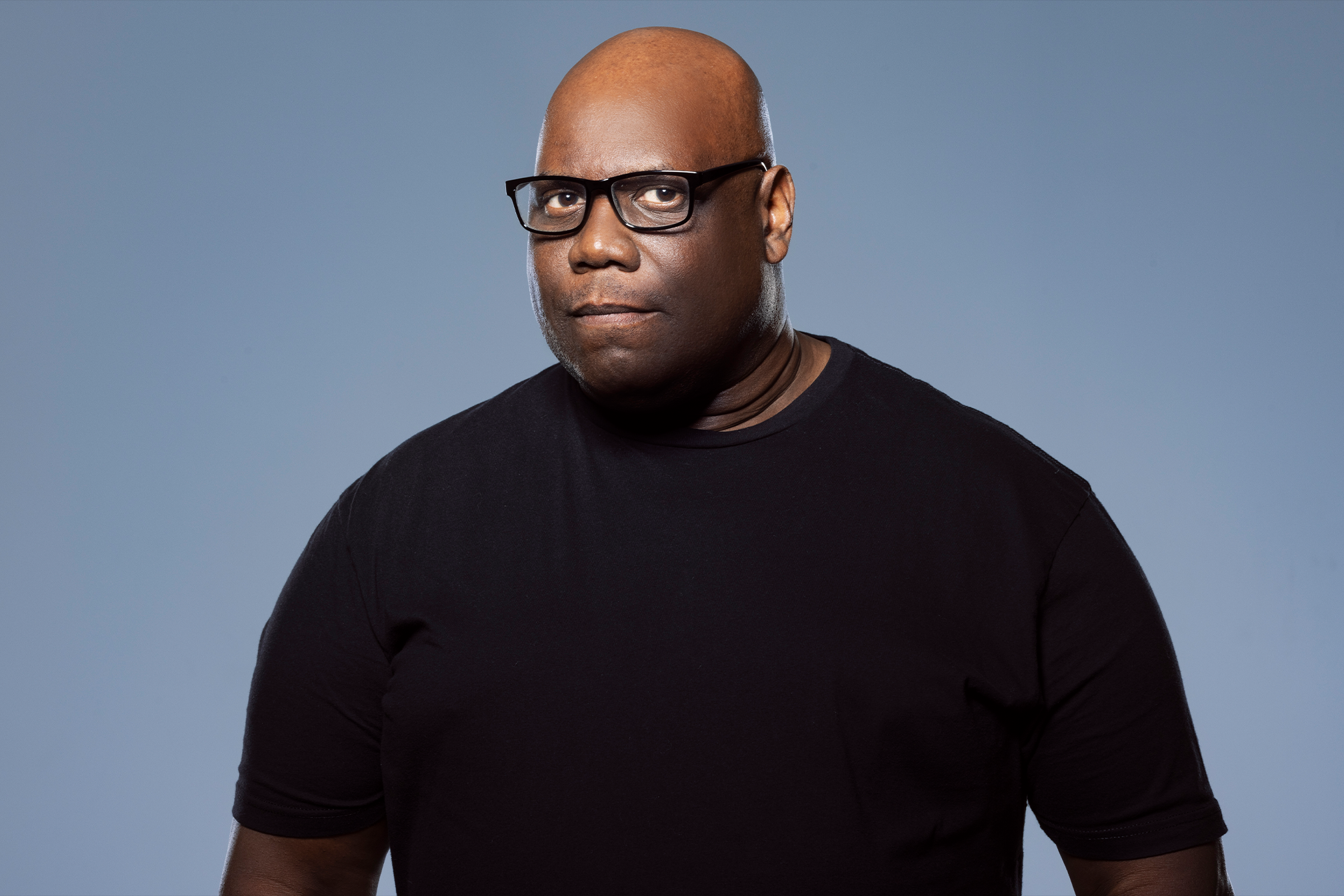
The Naarm/Melbourne local shares his thoughts & feelings on the city, ahead of his appearance at the Sidney Myer Music Bowl this NYE.
Mixmag ANZ is a media partner of New Year's At The Bowl.
Naarm/Melbourne has long been considered the epicentre of Australia’s nightlife. With no shortage of venues, promoters, musical movements, DJs, and artists to its name, it’s a city often viewed with envy by those who dream of living there, or with mild scorn by those who claim they never wanted to.
Whether supportive of the city or otherwise, locals are acutely aware of how it stacks up against some of the world’s best nightlife hubs: New York, Berlin, London, Amsterdam, Tokyo, the list goes on.
It may come as a pleasant surprise to some that Melbourne, for all its self-doubt, is home to one of dance music’s biggest names: Carl Cox.
Cox has long been synonymous with the heartbeat of electronic music, a DJ whose influence stretches from the underground raves of the 1980s to the massive festival stages of today. Yet even for someone of his stature, Melbourne has become a city where he feels at home, not just as a performer, but as an active participant in the local music scene.
This New Year’s, Cox is set to ring in 2026 at the Sidney Myer Music Bowl for New Year’s At The Bowl, featuring a stacked lineup of local and international talent, led by electronic music icons Underworld, and featuring Berlioz, Confidence Man, Joy Crookes , Ross From Friends pres. Bubble Love, Tornado Wallace, Sam Gellaitry, Good Neighbours, INJI, Emma-Jean Thackray, Harvey Sutherland, Roza Terenzi, Kamma & Masalo, Prosumer, Alex Kassian, Aldonna, X & IVY, Big Wett, Any Young Mechanic, and Shantan Wantan Ichiban.
Having last performed New Year’s in Melbourne nearly thirty years ago, the legendary DJ spoke with Mixmag ANZ about what he’s looking forward to, and what he’s reflecting on.
Q: Carl, thanks so much for taking the time to chat with me. I feel like you are technically now a local DJ of Melbourne, do you feel like that?
CC: Oh, yeah. Like, I do RSL parties, pubs, and weddings.
Q: Have you actually?
CC: I haven't, I've done a couple of weddings, for friends of mine, you know, and did the first record dance and that sort of stuff. I used to do weddings as my profession back in the day for 15 years, and that's how I tried to cut my teeth on playing to an audience.
At the end of the day, doing weddings is harder than doing any other event that you care to mention, because you've got so many different types of people wanting different types of music at various points in the night. So they’ve kind of got to appease everyone, and you’ve got to make sure that the bride and groom get exactly what they want.
So if they want ‘Islands In The Stream’, they're going to get ‘Islands In The Stream’, right?
Q: So glad to hear you’re contributing to the fabric of the city. Regarding Melbourne, you’ve been there quite some time now. In terms of the fabric of the city, its nightlife, its music, what sort of changes have stood out to you most since you moved there?
CC: You used to have Stereosonic and then Future Music, but now you don't. You used to have Queen's Club, and a lot of the clubs that were back in the day, and now you don't. You know, you had everything here, and now you don't.
You get like a lot of cool jazz clubs and funk clubs and listening kind of bars, and of course, you've got Revolver, which is still going. It's been the fabric of club nightlife forever, and that's still going on today.
We’ve got Billboards on Russell Street, we've got festivals, you know, that are upcoming.
And so, just looking at the fabric of what’s happened here in Melbourne, in the sense of what was, and what is now, you have to move with the times and understand what’s actually happening. I mean, you have to get used to it. You used to have old-school ravers who went to warehouse parties and places you’d never dream of going, but you went anyway, in the dead of night.
Now you have your regular club nights, which are super clean. You leave at a certain time, you’ve got bottle service, the whole thing. And that’s not just in Melbourne; that’s everywhere.
When I first started playing in Australia, the best place for me at the beginning was Adelaide. That was the house-music capital of Australia, a place called the Arkabar. Now it’s just a basement in a hotel, but back then you had Jeff Mills playing there.
And then, of course, in Melbourne you had all of your early techno artists like Josh Abrahams at the time, and David Carbone, and Quench. You had all this movement happening. It was Adelaide, it was Sydney, it was Melbourne, those were the three places I was frequenting most of the time when I came to Australia in the early days, based on the music I was bringing to the table.
Q: As I understand it, PURE was a brand that was born and refined a lot in Australia. How much did Melbourne’s approach to music inspire the way that the project took shape?
CC: Yeah, so basically, at the time, it was kind of like an IMS-style situation, an international music summit here, and I was invited to speak in Melbourne. And I said, “Listen, if we’re going to do something in Melbourne, I don’t want to just recreate something from Europe and expect it to mean something here.” I wanted to use local talent and really define what the sound of house and techno is in Melbourne.
That’s why I wanted to call it PURE, pure house, pure techno, no frills. The idea was that it wouldn’t be an overproduced show. It wasn’t going to be 20,000 people; it might be from 2 to 4,000, that was our concept. And at the beginning, it was working really, really well. I was enjoying the idea of it being a concept event, not something based on who was popular in Europe that month.
The premise was: you’re coming for the music. I’m the one flying the flag for it, and I’m bringing certain DJs who truly represent that sound. That was the whole idea of PURE.
And then, of course, as we got momentum over the years, COVID hit, and that was it. We hit a brick wall. It was hard to bring it back because suddenly the public were like, “Well, who’s playing?” And some of the DJs they were looking for weren’t the ones aligned with what PURE was about. On that premise, it just wasn’t strong enough to carry the ideal forward.
It was incredible, though, what we achieved at the time. As you can see from the YouTube videos and everything we recorded, it was a fantastic moment. I mean, the last time I played a really good techno event in Melbourne was at Eat The Beat. Those guys were amazing, we had Lily Palmer, Chris Liebing and myself playing, which was incredible. They’ve basically taken over the reins of what we’d left as a legacy with PURE, and I love seeing them carry that forward.
So, yeah, it was a shame. We’d like to bring PURE back at some point on the same premise, but people need to cool down on the headliners, that’s it. Just cool down on the headliners. There’s plenty of great talent out there without everything being about commercially accessible big names. The idea is to create the vibe and the feeling that got us here in the first place, the real sound of house music and the real sound of techno music.
Q: This wasn't a question that I planned to ask, but now that we're in that sort of territory, I’d love to know if you think the culture is addicted to headliners? Has the ‘environment’ that an artist creates become less relevant to crowds, do you think?
CC: Oh, no, 100%. It’s all about headliners. It’s all about who you book. I mean, if you put John Summit on, for instance, you’re going to get a crowd. If you book Solomon, you’re going to get a crowd. If you book somebody unknown, or someone considered “lesser” than that, you’re not going to get a crowd.
That’s the biggest problem you have. And if you don’t book those big names, the people start demanding that you play the big hit records, the ones they want to hear. So it’s difficult. Because you might have a DJ with real legacy, someone who’s been around for 20 years, and they just want to play the purest form of electronic music. But then you’re going to get a smaller crowd.
At the end of the day, those 500 people will come and find you, and that’s fine, but it’s a big difference between 500 people and 10,000 or 20,000. And it comes down to ticket sales: how much the tickets cost, how many you’ve sold. No one is asking, “What’s the quality of the party like?”
You can have 50,000 people, and the party can still be shit at the end of the day. So we’ve lost something. Back in the day, when you went to a proper party, you didn’t know who the DJ was. You didn’t even know where the party was half the time. You didn’t know what the sound would be. You just went for the experience. You went for discovery. And you’d walk out thinking, “I wasn’t expecting that, but wow, wasn’t that great?”
The word rave actually came from rave reviews. You’d go with your friends, and afterwards you’d say, “That party was awesome,” and you’d give it a rave review, meaning rave. That’s where the term came from. It wasn’t “I’m raving because I’m going mad.” It was because you appreciated what you experienced and shared it with other people, and the buzz built from that.
So it’s just a sign of the times, really, where we’ve ended up. I’ve been able to navigate around it all, and I’ll continue to navigate it. But I also like to remind people where I came from. Sometimes I’ll just do a two- or three-hour set. If I do six hours, you’re going to get a journey. And you’re not going to record six hours of my music on your phone, it’s not possible.
At the end of the day, I have to remind people where I came from, and that keeps me where I am today, as a gatekeeper of the music and of the scene itself. I keep coming back to that. As much as I say, “Okay, leave it to the next generation,” I still can’t. I’ve still got to get in there and go, “Listen, check this out.”
That’s kind of where I come in, and it’s not a bad place to be. It almost feels like a re-education for people who still want to visit the dancefloor. With that, I try to wean them off the music that’s all about drops and bring them back to the journey, where this music can take you. That’s where I like to feel my presence is known: in the realm of being a teacher, but still giving the dancefloor what it truly needs.
Q: Are crowds getting younger, or am I actually just getting older?
CC: You're getting older.
I used to go out when I was 14 years old. So for four years I wasn’t even drinking alcohol, the legal age was 18. And then, when I was definitely going to proper dance-music events, I was 18, 19 years old.
The crowds going out today are 17, 18. Meanwhile, I’m 63. And to an 18-year-old, they’re going, “Carl Cox… Carl Cox!” So it’s just like, we’re getting older.
I wish I was 18 again, for sure. I’d do it all over again, of course.
Q: Do you think this bubble we’re in will burst?
CC: Yeah, it definitely won’t burst, because there’s always cream that rises to the top. There’s always going to be another Dom Dolla. There’s always going to be a Peking Duk, someone who comes through and sets the tone for what happens next. And that person is usually from the same demographic as the people who are going to support him or her.
So the idea really is: new voices will always emerge. I mean, look, you’ve got Sara Landry coming to Melbourne tomorrow at Sidney Myer Music Bowl, where you’ve got a female DJ playing the hardest commercial music you can get on the planet today. And that’s going to be a busy affair. I’m not sure it’ll be 30,000 people; I’m not even sure it’ll be 20. But I’d imagine anywhere between six, eight and ten thousand.
Now, that’s an incredible number for someone coming into Sidney Myer Music Bowl who doesn’t sing, doesn’t play guitar, doesn’t play a single instrument, apart from dropping music digitally from CD players, and having an audience jumping up and down to every single track. That’s where we’re at right now.
And from here, it’ll just keep splintering into different avenues. The sound will evolve: maybe someone will play the same style but slower; maybe someone will play the same sound but with more R&B vocals; maybe someone else will play it with rock guitars. We just don’t know. At the moment, everyone’s loving the fact that someone can come in, play that style, that hard and that fast, and still pull that audience.
Meanwhile, the purist audience will say, “Well, I like it a bit slower, a bit more refined, a bit more cultured,” and they might listen to drum & bass. At the end of the day, it all depends on what you like. Your ears will tell you what you want to hear, what you enjoy, and what you’re willing to spend money on. And with that, you’ll always find something that sparks your interest and pushes you forward into the future.
People say dubstep is coming back, maybe it is, maybe it isn’t. You’ve also got tech house and house music splitting into Afro house, tropical house… who knows? It’s crazy. But it will not tail off. It will just keep reforming itself into different avenues.
Are there any particular musical or technological innovations that are really exciting you at the moment?
CC: Well, to be honest, I really do favour electronic live artists. I think the guys and gals who go out and talk to the machines, who perform purely with what they’ve created inside those machines, are incredible. Anything from Moog, anything from Roland, any kind of sample-based program you can use. You can run Ableton Live and send MIDI through all these machines, clock them all together, and just be creative.
And I love that idea because there are no boundaries. It’s a really interesting time, especially with what I’m doing with S.W., which is Awesome Sound I, which we’ve been running with Christopher Cole for the last five years, finding these artists all over the world who share that same performance-driven mindset.
I love the fact that you’re not hiding behind anything. If you’re creative, using your synthesisers, your modules, your samples, and bringing it all together live, that’s exciting. Honey Smack is a great example of that. Satek is a great example of that. Monolithic is a great example of that. There are so many great artists performing this music with no preset script; it’s exciting because we need more of that. You’re not expecting that person to deliver a polished, predictable set; you’re watching them create.
I do it as well, I go out and perform my music from an electronic perspective, with all the machines, and I really enjoy it. It’s like flying by the seat of your pants. It’s like hanging off a cliff by your fingernails. I love the punk-ness of it.
If you’re just playing another record from Beatport, an accessible track with two drops where everyone knows what’s coming, the job’s already done. But when you’re jamming on machines and someone is performing, really connecting with the crowd, and the sound is coming out of that live moment… that’s exciting. That’s what I think we need to search for more.
Because if you think back to what came out in the early days, the music we were all playing came from that exact essence. It came from artists jamming machines: the TB-303, the Roland 909, the DMX, all these samplers and drum machines. They were put together and out of that came acid house, techno, Detroit techno, all that music, all those strings and vibes were created live.
And there’s never been another record that sounds exactly like those records, because they were created purely out of the machines. It was collaboration, Derrick May, Juan Atkins, and Kevin Saunderson hanging around, saying, “Yeah, put that bassline in, man,” and suddenly it’s like, whoa, what’s going on here? That’s the essence of creating music, rather than sitting at a computer thinking, “Okay, on beat four we put this drop, then a drum roll…”
You hear that formula now on almost every record that becomes popular. Eventually, you grow tired of formatted music. You want someone to just unleash creativity, that’s what’s truly exciting.
For me, coming from that era into this one, I’ve brought those two elements together and created something else. My last album was built entirely from me jamming electronic machines together; that’s how it came about. And I think if I’d taken the computer-only route, that album would never have sounded like it does. I would’ve ended up with a formulaic album of formatted tracks, none of which are that.
All right, it wasn’t as popular as I might have hoped, but I didn’t care. I’d done it. I created it. And the funny thing is, after I released it, people have started coming back to it, saying, “Actually… that track is really good.” It just takes time for people to catch up.
But that’s how we progress and move forward, by taking a leap of faith in making music.
Q: This NYE, you’re set to play the aforementioned Sidney Myer Music Bowl. I'd love to know, what excites you most about that venue and about celebrating this new year in particular?
CC: Yeah, I mean, I think the last time I played New Year’s in Melbourne, I think it was at the Metro, was 1998.
I can hardly believe it was that long ago.
And the thing is, stepping out onto the stage at Sidney Myer Bowl… I mean, it’s such a revered music venue. All the greats have played there. I’ve played there quite a few times myself. When you step onto that stage and look out, you’ve got everybody looking at you, so you’d better perform, you’d better deliver, you’d better shape up. You go, “Right, here I am. I’m going to be standing up big time.”
It’s such a buzz. As soon as you play the first track, or get on the mic, or do something that connects with people, you just feel that euphoria in the entire place. There really isn’t anything like that in Melbourne. I get it when other artists perform from that stage, it’s a beautiful thing.
And to be asked to come and play and support Underworld, who are great friends of mine, I’ve done events with them for years, to be asked to stand alongside them again at this point in time… we’re ticking boxes, we’re creating memories, creating a legacy for electronic music.
None of us are spring chickens anymore, but we just love to perform. We love to get out there, and we want people to have the best time based on who we are as artists. So, for me, I feel very honoured and proud to be doing this, not just for the music scene, but for the fact that I’m here in Melbourne, making the time to be here now and nowhere else in the world.
It’s really special for me, and I’m hoping it’ll be special for everyone else. I can’t wait to play, but I also can’t wait to see the New Year in. Then I can kick back and hand it over to the boys.
Q: Do you have any New Year's resolutions for next year?
CC: I’ve actually been on a bit of a health kick, and I’ve been very strict with myself, cutting back on drinking, not taking on too many gigs, trying to sleep well, all that sort of stuff. I want to keep doing what I do at the level I do it, and honestly, I’m pretty happy with where I am.
I don’t really think much about the future in terms of what I’m going to do next. I just want to continue doing what I’m doing at the level I’m doing it at. I’m making new music for my next live shows, for 2027, so I’m really focusing on that for the future.
But to be honest, I just want people to be happy. There’s been so much negativity in our lives with everything that’s been going on around us. Hopefully, we can find some sort of resolution, and people can agree on a lot of things. And we can just move on with our lives, and hopefully, music can help us do that.
-
Tickets for Carl Cox’s NYE appearance are available via New Year’s At The Bowl’s website.
