


 MUSIC
MUSIC
Liner notes: Kiva, A lush, long-lost queer vision
Writer Martyn Pepperell shares the liner notes from the Australian duo's forthcoming self-titled re-release.
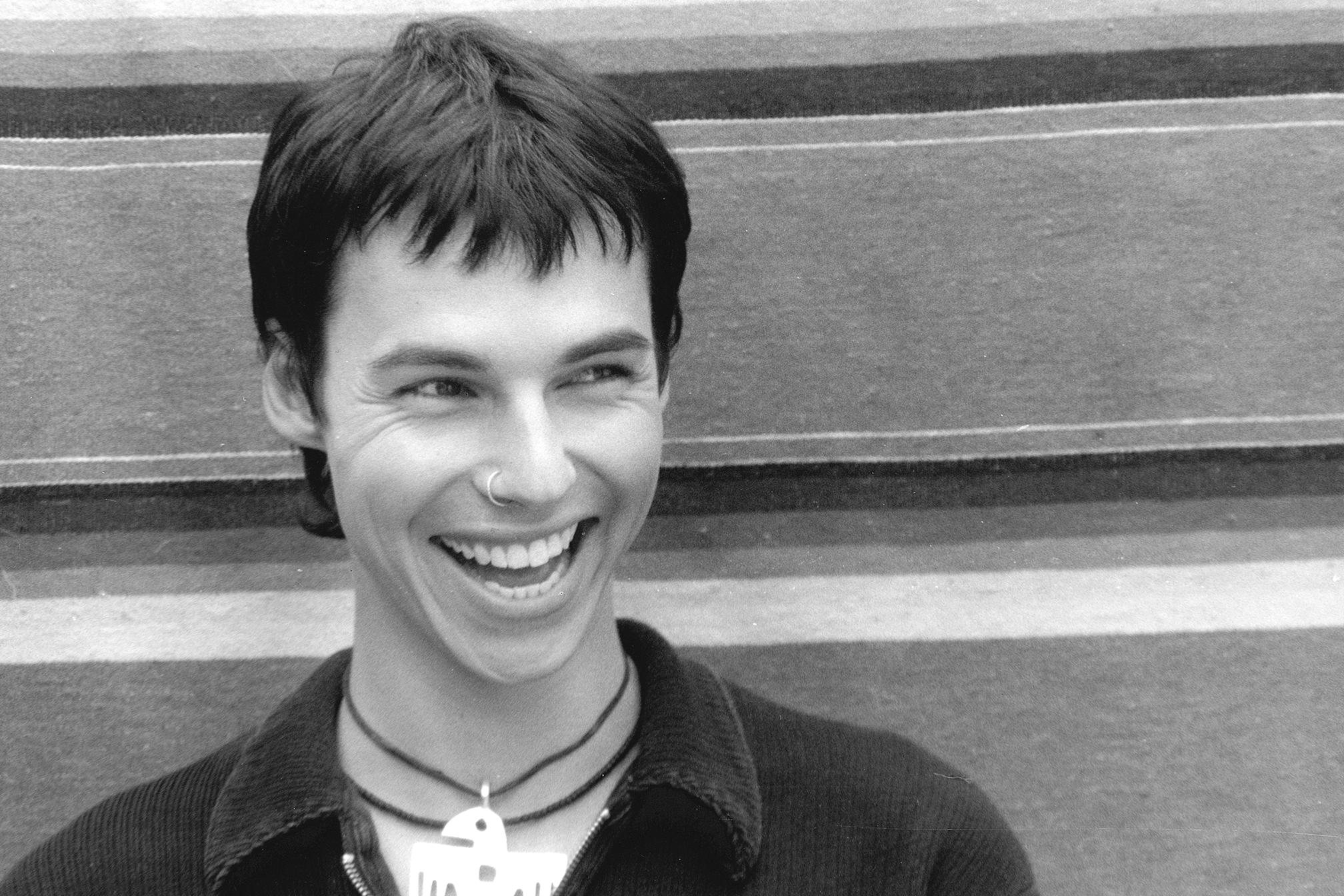
Kiva, the first and only album from Royce Doherty and Paul Mac’s duo project of the same name, is a sparkling gem hiding in plain sight within the Australian musical canon. Originally released in 1997 by id/Mercury, it offers up a collection of timeless queer pop songs draped in dreamy ambient, downbeat and dub sensibilities.
From the unhurried dub trance grooves that run through ‘Eternity Born’ to the antipodean balearic beat of ‘Sleep To Dream’, the music is the product of a serendipitous meeting of minds between two young music obsessives who crossed paths in Melbourne in the mid ‘90s. Kiva is also a perfect evocation of the futuristic techno-utopian impulses that supercharged the global electronica counterculture during the race towards the 21st century. “I never had these big diva plans or anything like that,” Royce reflects. “It just sort of evolved that way.”
Twenty-eight years later, searching for Kiva online is a frustrating experience. At best, Google will lead you to their Discogs page, YouTube uploads and the odd NTS mention. Although the album is available on streaming services, it has felt precariously close to slipping out of the collective psyche until recently. Now, however, all of that is in the process of changing thanks to Kiva’s first-ever vinyl LP reissue, lovingly remastered by Mikey Young for the Naarm/London-based record label and dance party, Gazebo.
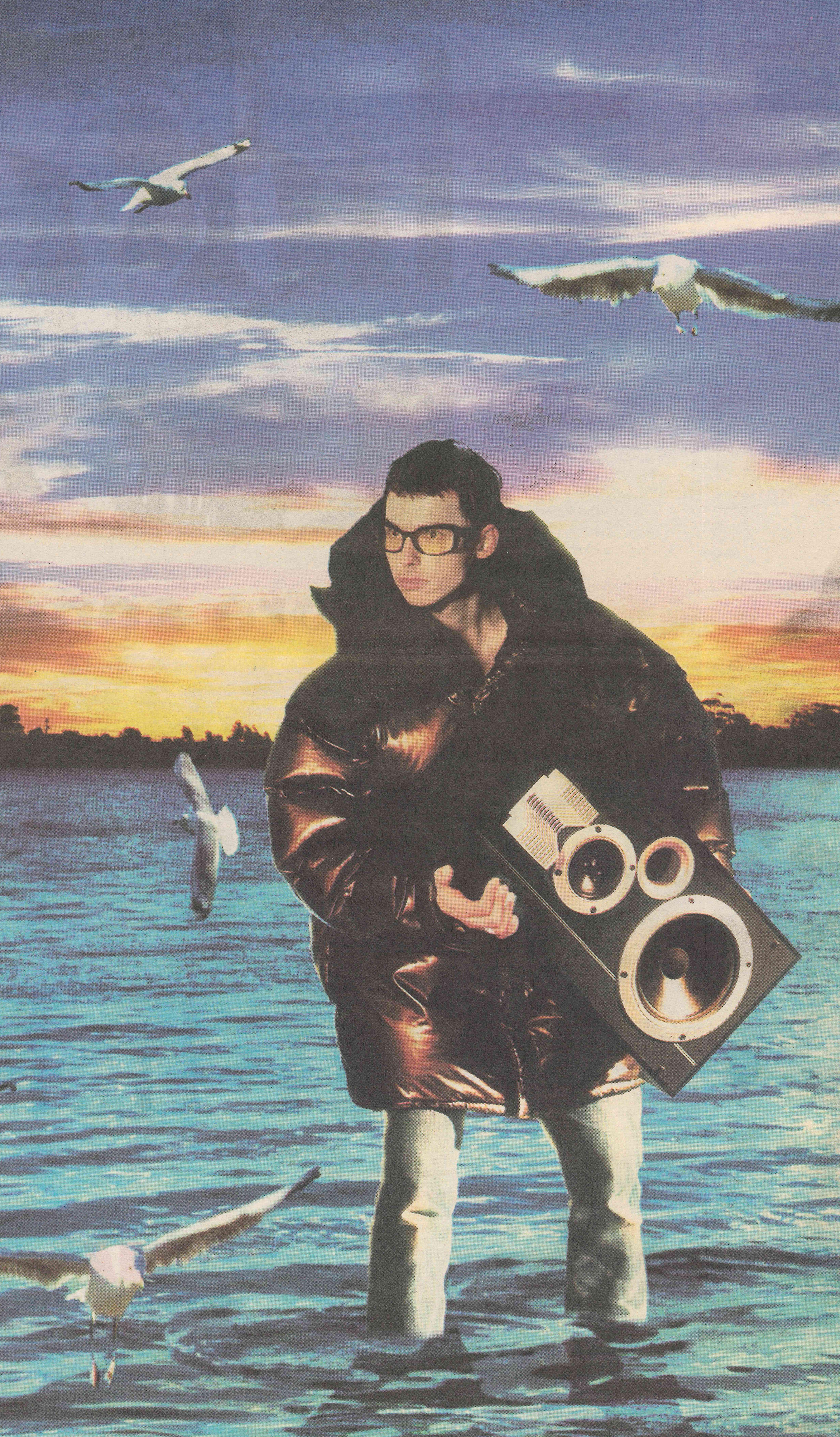
HERALD SUN, 1997
Kiva frontman Royce Doherty grew up in Winton, a tiny outback town in Central West Queensland with a dinosaur-sized footprint in the annals of Australian pop culture. Raised on the town’s single radio station’s classic country, soft rock, and pop playlist, he fell in love with music at an early age. In his teens, Royce started writing songs on his family’s piano, organ, and, later, a synthesiser his mother bought him. When he was fifteen, his mother entered him into the Charters Towers Country Music Festival talent quest. In an interview with Juice Magazine in 1997, he said, “I did two songs, a gospel song and Patsy Cline’s ‘Crazy’. As you do.”
Thinking back, Royce also remembered having a dead snake thrown at him in the shower during his first week away from Winton at boarding school.
Upon finishing his high school education, he relocated to Meanjin/Brisbane to study audio engineering. Outside class, he hung out in the city’s nightlife district, Fortitude Valley. There, he discovered dance music and club culture, and he embraced his then-emerging queer identity. "It was nice to find other people like me,” he told Blue Magazine in 1998.
Nine hours' drive away in Sydney, Paul McDermott, also known as Paul Mac, a classically trained pianist and a budding enthusiast of drum machines and synthesisers, was going through a similar process of self-discovery. Alongside attending events like the storied Sydney Mardi Gras, Paul found his way into the local counterculture by playing with the art noise band Smash Mac Mac and later leading a synth-pop group called The Lab. As the ‘90s dawned, Paul made his mark on Australia’s burgeoning dance music scene as one-half of Itch-E and Scratch-E, the influential bleep techno-inspired electronica group he shared with fellow Sydneysider Andy Rantzen.
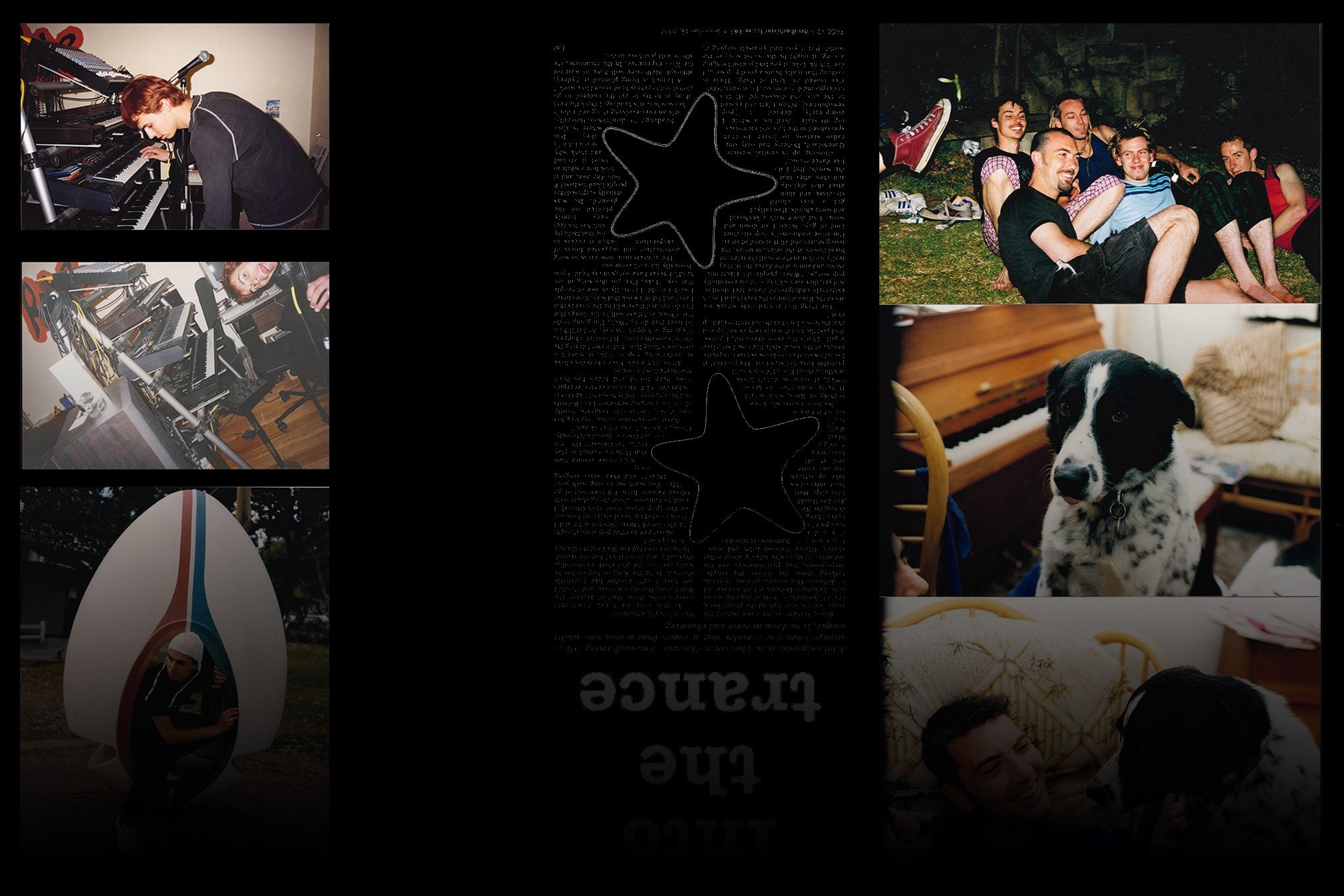
COMPILED: (1995) BOTHWELL STUDIO, (1996) PAUL MAC, (1997) HERALD SUN (ALTERED)
Several years later, the two future collaborators crossed paths after Royce accompanied his boyfriend at the time, a professional racing car driver, to Naarm. The relationship didn’t stick, but what did was Royce’s musical chemistry with Paul. After being introduced by the high-end audio specialist and former synth-pop songwriter and producer Dave Corazza (of Boxcar), Royce started showing Paul the cassette demos he’d been recording with an Ensoniq ASR-10 sampling keyboard, a couple of synthesisers and a 4-track.
Two cities removed from Winton, Royce’s musical tastes had become more cultivated while working in import record stores. As a songwriter, he balanced his love of Top 40 sing-alongs with art-pop and ‘90s alt in the vein of Kate Bush, Cocteau Twins, Tori Amos, and Stereolab. Soon enough, more outré ambient and electronica records by Harold Budd, Laurie Anderson, Mouse On Mars, and the first wave of artcore jungle producers entered the mix as well. “I loved ambient music and melodies,” Royce said. “It evolved out of that.”
Amid the confluence of styles consuming him, Royce found his signature, an androgynous falsetto which, as Blue Magazine put it in 1998, evoked “a pleasant feeling of ambient dissociation” by abandoning the gender binary. Despite having shifted his musical focus from The Lab to Itch-E and Scratch-E’s futuristic machine beats, Paul was still very interested in traditional songcraft and how the two worlds might meet. “When I heard Royce, I thought, what a beautiful voice and melodies, what can we do with this?” he remembered. In an act of forward-looking prescience, the combination of Royce’s angelic songs and Paul’s celestial production collapsed the boundaries between popular music writ large and the electronic avant-garde of the era.
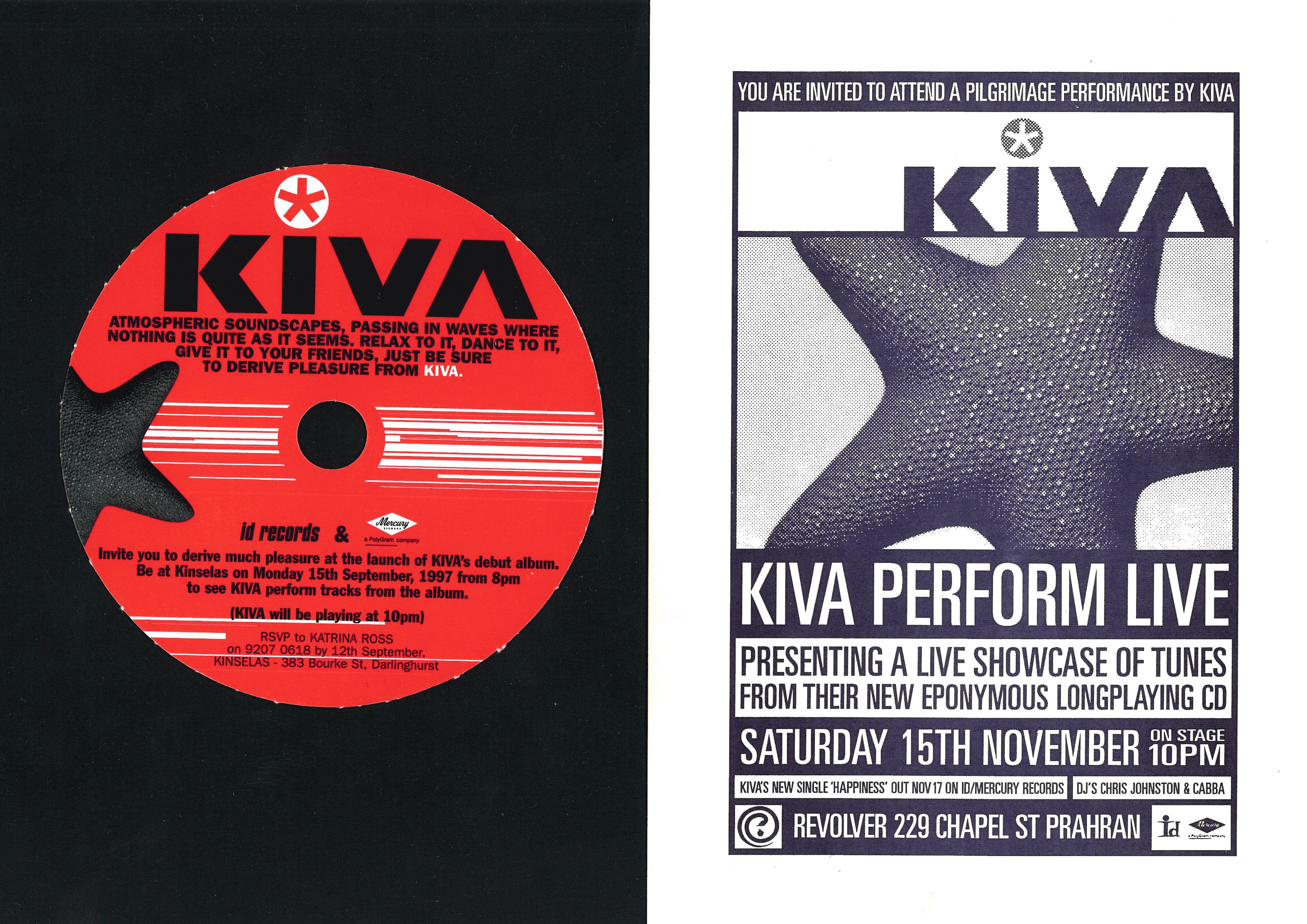
KIVA - 'KIVA', CD LAUNCH FLYERS
Having recorded several original tracks, dub mixes, and edits with Paul, Royce settled on the name Kiva, a term from the Native American Hopi tribe that refers to a chamber used for spiritual ceremonies and worship. In 1995, id/Polygram released Kiva’s debut EP, Into The Sun EP. While making that project, the duo formalised their creative formula. Royce would bring his demo multitrack sessions to Paul on a SCSI drive or hard drive, who promptly deleted everything but the vocals before rebuilding the music. “Royce would present an idea, and I would do my thing,” he said. “After a while, we got the confidence to go longer and get weirder.”
Over the next two years, Royce began commuting monthly from Naarm to work with Paul at his home studio before inevitably moving to Sydney. These sessions laid the foundations for a fortnight spent recording in an isolated oceanfront bungalow on Gerroa Beach near Kiama. “We’d have breakfast, do the dishes, and Royce would sing along to these early Olivia Newton-John country cassettes to warm up his voice,” Paul remembered. “It’s interesting. There is this gentleness and yearning in country music that came through in the Kiva songs.”
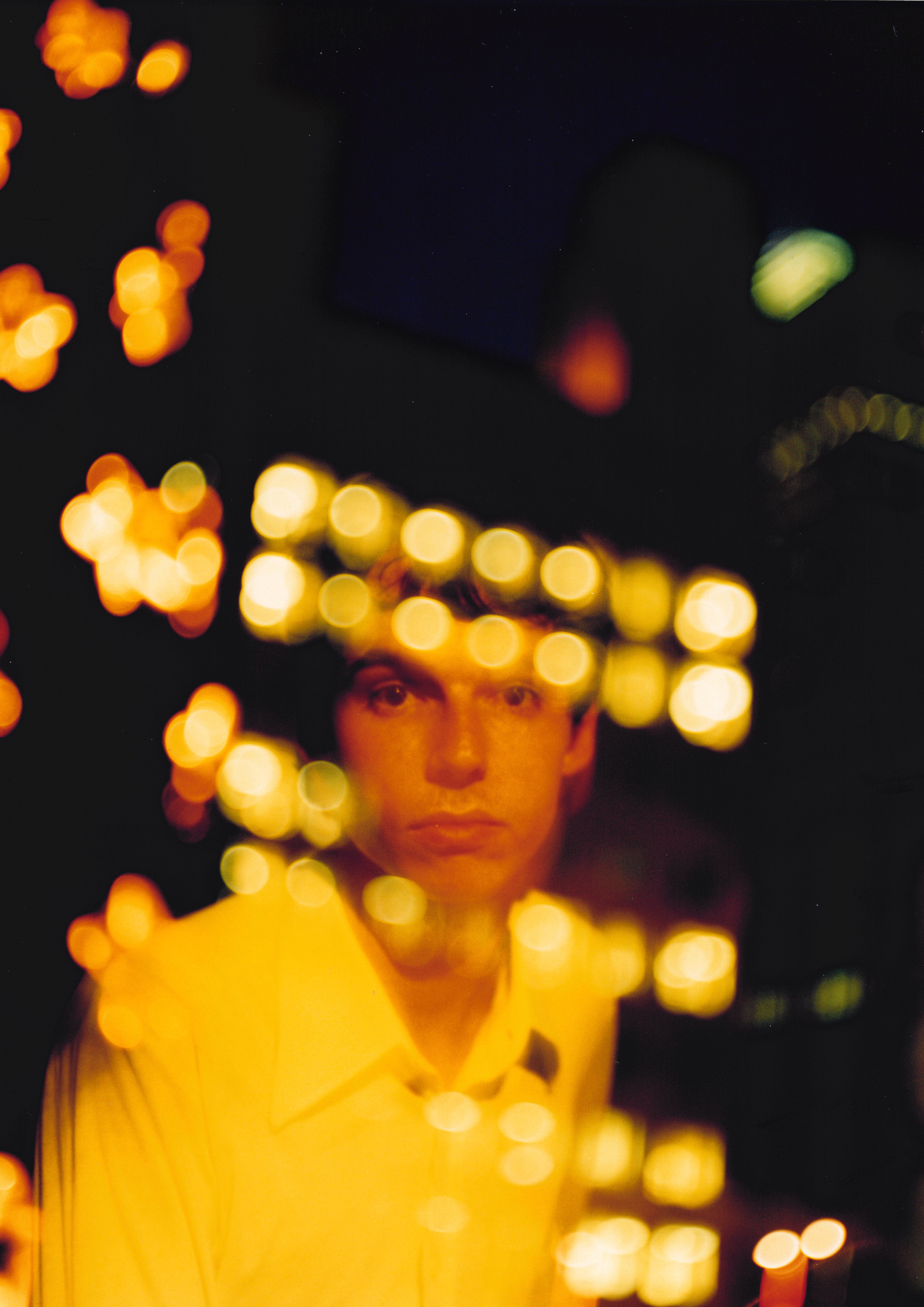
1998, JACK SHOOT
In 1997, they unveiled their second CD single, ‘Eternity Born’, the Kiva album and a third single, ‘Happiness’. At the time, Brisbane’s Brother Sister Magazine described the album as “one of the most lush and striking releases you can experience this year.” Similarly, Juice Magazine deemed Kiva, “a wonderfully strange mix of the accessible and the near avant-garde.” To support these releases, Royce and Paul teamed up with fellow Australian dub production specialist Anthony Maher, also known as Sheriff Lindo. They mounted a small series of live Kiva performances in Sydney and Naarm. “We haven’t mentioned this yet, but being a queer, outward-facing musician came with its own set of baggage at the time,” Paul explained. “Consequently, there was no second album. We just made this record as beautifully as we could and presented it to the world.”
“I can get anxious about things quite easily,” Royce admitted. “It would have felt like a huge pressure on me to try to do music full-time. I didn’t want to force it either. Writing music was an emotional outlet. It wasn’t about making money or being successful. I’d come home, fire up the ASR-10 and listen to loops for hours and hours. In a sense, it was meditation.” Although he gradually faded from view after the album's release, Royce continues to make music today, quietly uploading his songs to SoundCloud and sharing them with friends. As he told Filter Magazine in 1997, “My ultimate desire is to be able to live in dreams—you know the old thing—wanting what you can never have, I'd love to be able to just dream.”
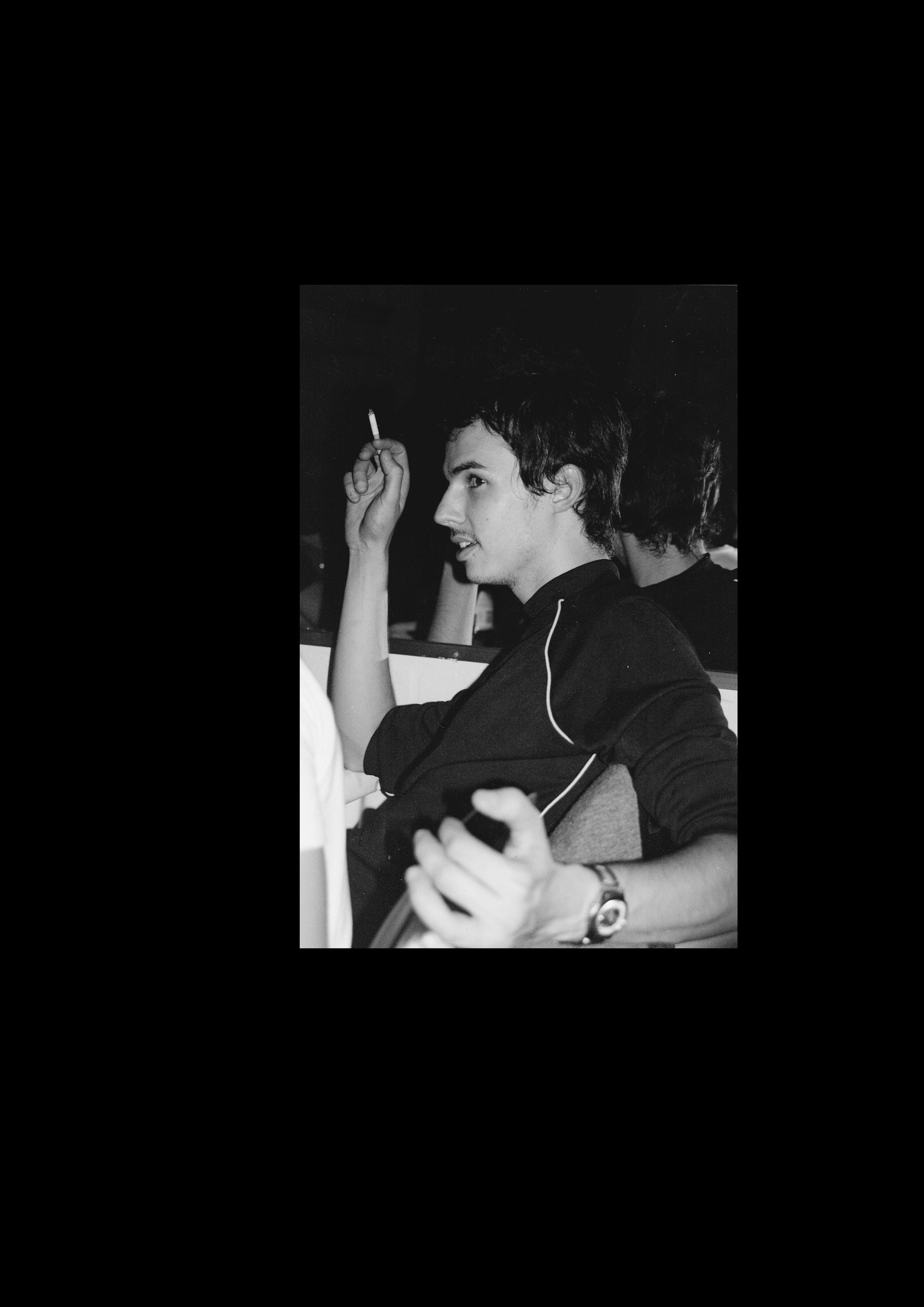
1997, 'PRE-PERFORMANCE CIGGY'
Paul, on the other hand, in his words, “Went a little bit harder.” “I didn’t want to be famous or anything,” he said. “I just wanted to make a living out of music.” The same year they released Kiva, he remixed ‘Freak’ by the Australian alt-rock band Silverchair, leading to collaborations with their frontman Daniel Johns. In the early to mid-2000s, Paul released two chart-topping dance-pop albums, 3000 Feet High (2001) and Panic Room (2005), picking up several prestigious Australian music awards.
Over the following years, Paul became increasingly involved in scoring music for films, television, and theatre, before returning to his alma mater, the Sydney Conservatorium of Music, for postgraduate studies. After graduating with a Doctorate of Musical Arts in composition, he took on an academic staff role. These days, he can be found teaching Contemporary Music Practice courses within the Conservatorium’s Bachelor of Music programme.
Nearly three decades after the fact, Royce and Paul remember Kiva as a golden moment of creative synergy. “When I listen back to this album now, it’s got such a vibe and feel that’s really its own,” Paul enthused. “There's so much of our version of dub on this record. It’s beautiful hearing Royce's core song ideas stretched out to eight minutes of trippy, acid kind of moments set over slow breakbeats and stuff. It felt so fresh being able to have this elastic sound, pull songs apart and stretch them into space.”
-
Kiva's re-release is available for preorder via Naarm's Gazebo Records, releasing digitally this Friday, December 5, with vinyl available soon.
-
Martyn Pepperell is a freelance journalist, copywriter, broadcaster, photographer and DJ. Find him on Instagram.
