


 INTERVIEWS
More Than Management: Hasvat Informant & Jordan Borg
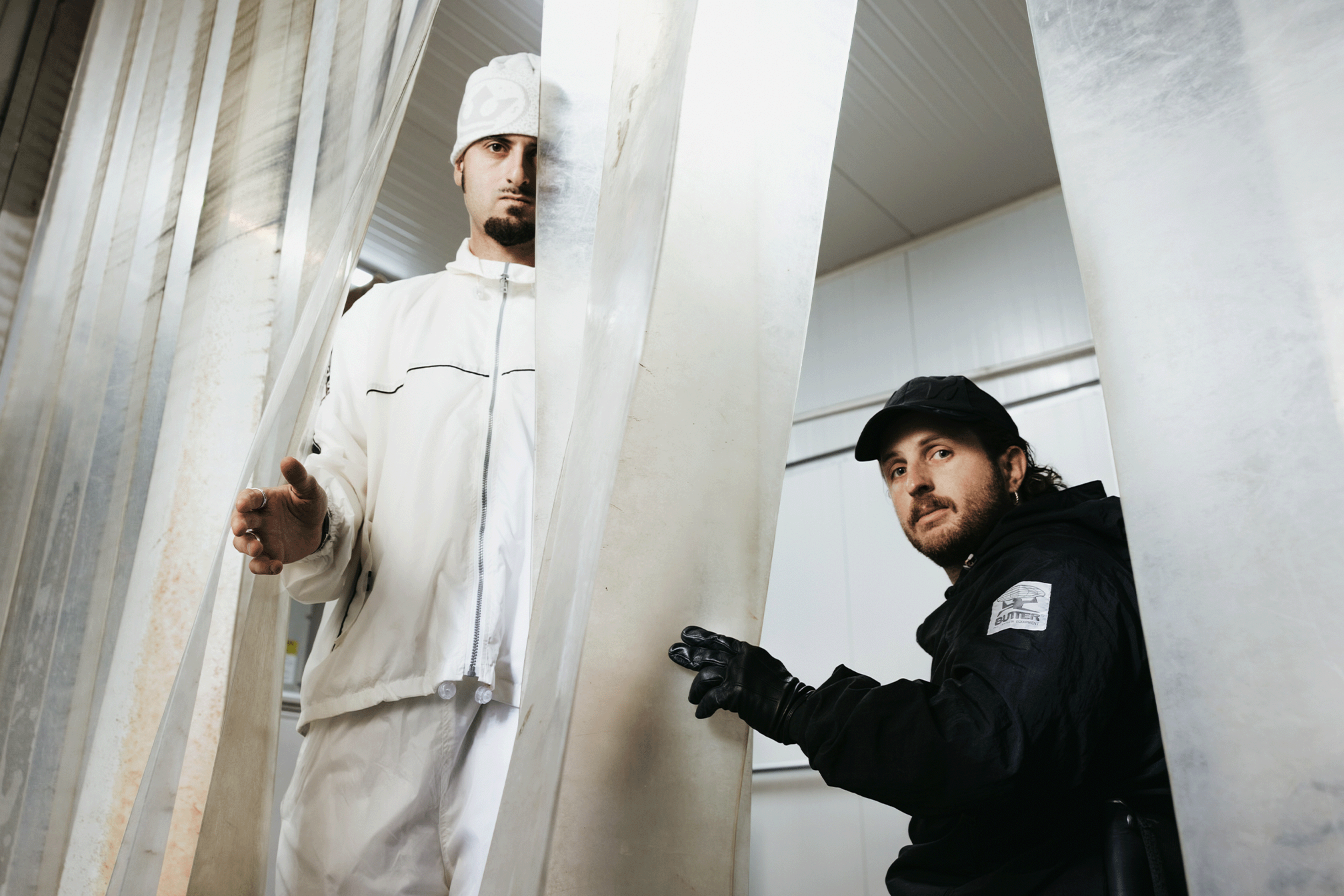
The pair have become one of Australian techno’s most recognisable power duos, working in total tandem to benefit not only their own careers, but the broader scene as a whole.
Hasvat Informant and Jordan Borg stand out as formidable characters in the global dance and underground scene. Their union as artist-manager excels beyond titles and through their lived experience, contributing deeply to the living culture of underground music. Their love for the scene is derived from the purpose and roots of dance music.
Jordy’s adult life has centred around the dance music community, based in Berlin for 7 years, with experience running a label, at agencies, and, foremost, with a deep understanding and genuine relationships forged by and thanks to the dance music community. Jordan returned to Australia in 2023 and continues to manage artists across both Australia and Europe.
Hasvat’s relationship with dance music began through music production, initially leaning into Trap-esque production, later finding his home in hypnotic techno, releasing on international labels such as Denmark’s Amniote Editions and Paris’s Mama Told Ya.
Both Jordy and Michael originally hail from the Western Suburbs of Melbourne, where they met a full ten years ago and united as the music powerhouse they are today.
Their approach to music is not limited to sound: As a wheelchair user, Hasvat’s experience-led approach and Jordy’s commitment to detail and execution provide a formidable force not only sonically but also through pioneering true accessibility in a scene too often curated with only able-bodied people in mind.
Q: You’ve known each other for about a decade through the scene, but more recently started working as an artist and manager. What was that shift like, moving from friends to working partners?
Jordan: We have been working together for over two and a half years now (officially) and have been friends for a good part of 12 years. It’s been a smooth shift working together. I’ve worked in the events realm since I was 18, so 14 years total! I started as a promoter, then operated Esoteric festival for 4 years, and then ran my own record label based in Berlin. I’m now representing a number of artists worldwide.
The experience was also there on Mike’s side; after being an artist for 5 or so years now, he had previously VJ-ed for years in clubs. I think between us, we understand each other, ‘cause we embody the epitome of underground culture here in Australia, and we strongly stray away from this new fabricated identity that the industry is forcing artists to dive into. We know the roots of this industry and care about upholding its foundations.
Q: Since teaming up, how has the way you both work changed? To Mike, has it influenced how you approach creativity and taking risks as an artist?
Mike: Unique industry experience and deep understanding of my artistic direction really enable me to just focus on the music. I suppose this isn't a unique type of professional interaction, though especially in the context of being an artist with a disability, Jordy deeply understands how to advocate for me and ensure the lines of artistic integrity and tokenism aren't blurred - both to promoters and audiences.
Working with Jords has taken a big weight off my shoulders, allowing me to focus more deeply on producing and refining my sound. He certainly pushes me to consider gigs, mixes, etc., perhaps ever so slightly out of my sound and sub-scene, but works with such promoters, stakeholders, etc., to ensure my style is contextualised and relevant in the proposed setting.
Q: Jordan, you spent years living in Berlin. And you’ve just returned from 3 months touring Europe with Hasvat, performing in some of the scene’s most influential spaces. What does it feel like to return in this new role, with artists you directly manage on stage?
Jordan: It’s been nice being back where I devoted my artistry in Berlin, where I created my family. Hasvat’s tour was a statement for someone of his stature, making new connects and reconnecting with so many old club owners, festival organisers and friends who run events. It gave new light to sharing moments with Mike outside of a club space, which will contribute to future tours.
In terms of returning to Australia, since joining Kromanti Agency, it’s exciting as some artists from the agency have been approached to come to this side of the world, and I can’t wait to show them what we have to offer here.
Q: At its core, your shared story is also about friendship shaping art. How does that bond influence the energy you share with audiences, and the legacy you want to build together?
Mike: I really feel and believe that Jords and I have very similar deep dreams and desires for our scene - both in Australia and abroad. It feels like a really great partnership to be tackling social change, advocacy, and community building - both in the general scene and in the disability space - from slightly different angles as an artist and an agent.
We each have different skills and ways of tackling things, but the overlap of our philosophy and intention really becomes apparent to me so, so often, where we just come to an agreement on so many things without even speaking a word. I suppose our different experiences and specialties, but similar principles, really mean we manage to cover many, many bases with how we move and operate. To me, it feels that everything we do is very thoroughly considered and always involves the larger goals of community, etc., not just me as a solo artist.
Q: From the inside, what are some challenges you deal with in the industry that partygoers, clubs, or bookers might not see but could actually help change?
Jordan: Generally, it takes planning to operate with Hasvat’s bookings; that said, we have never had to turn down an event due to access. The main challenge we have is people making decisions for us before speaking with us. It’s a never-ending story, either someone saying to Mike, “I love your music so much and want to book you, but we can’t, you couldn’t play at our club.”
You could imagine the initial compliment is outweighed by the unintentional insult. The only hurdles we have are able-bodied people making assumptions about people who have a disability, rather than asking and seeing what we could do to navigate the challenge.