


 FEATURES
Miss Kaninna: The blueprint is Black
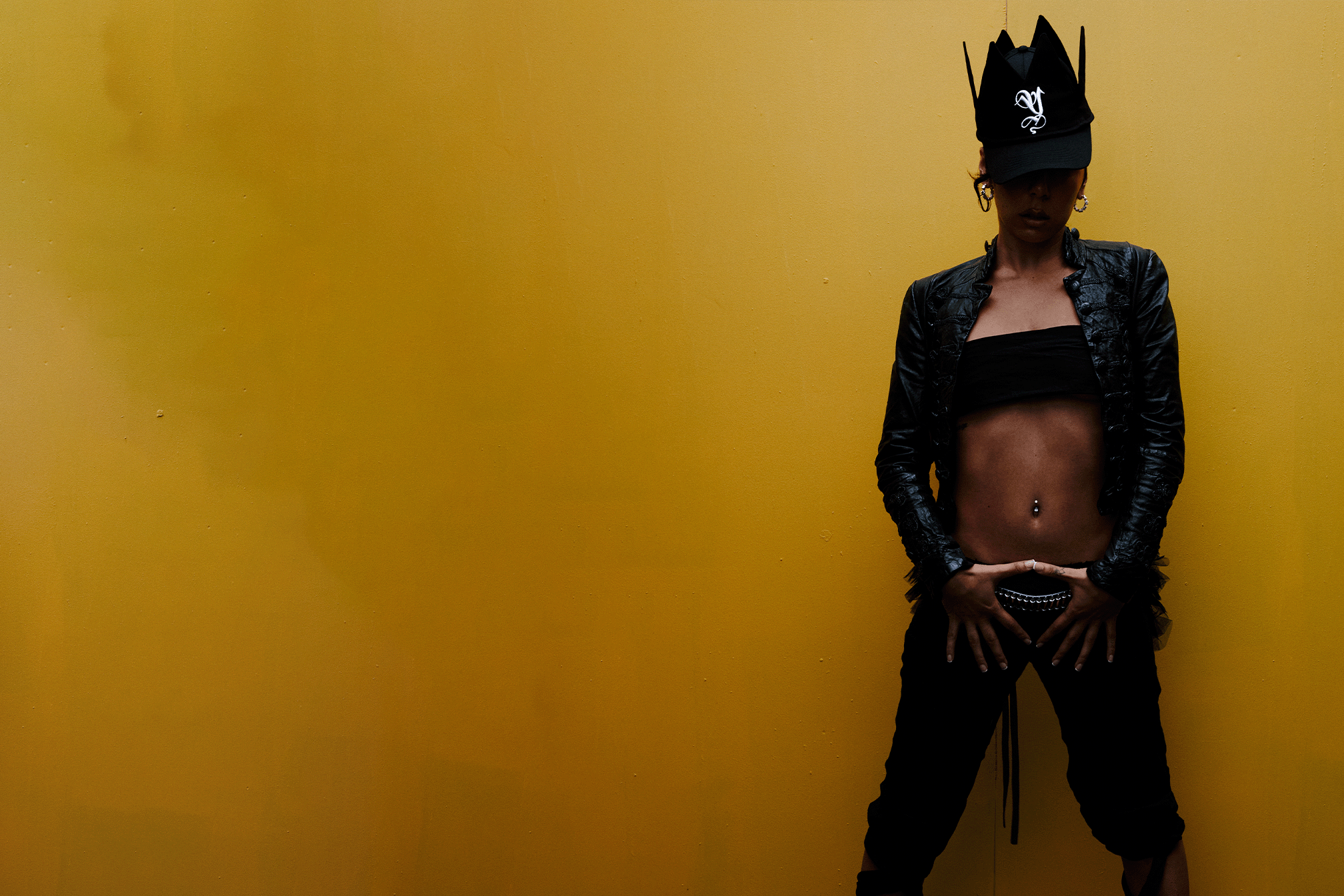
Taneshia Atkinson speaks with the artist right in the midst of a European tour, and fresh off the back of her latest release, 'BLACKPRINT'.
By the time Miss Kaninna reaches Belfast, the pulsating crowd is already locked in. “Always Was, Always Will Be, Aboriginal Land”, they chant back at her, almost hypnotically. It is a declaration of Aboriginal sovereignty, fiercely carried through generations of land rights struggles in colonial Australia. Now under Miss Kaninna’s command, it is being echoed throughout stadiums across the other side of the world.
It’s nearing 10 AM in Budapest when Miss Kaninna jumps on our call, four dates into the European leg of her BLACKPRINT run. She’s already moved through Glasgow, Belfast and Dublin, with Sziget Festival and the UK still ahead before she heads back home for a headline tour across the country.
Overseas, Miss Kaninna says she has the freedom to perform without the dissenting colonial gaze in so-called Australia. She shares that at home, being an Aboriginal artist on stage is not without consequence. “It is so exhausting as an Aboriginal woman [on] stage in front of Australia. Because you will always have people in the crowd who are fucking racist. They will make you feel like you [don’t] deserve to be there.”
The magnetic multi-award-winning rapper and Yorta Yorta, Dja Dja Wurrung, Kalkadoon and Yirendali woman has just released her debut mixtape. A 6-song project full of proper Mob anthems, ‘BLACKPRINT’ moves through R&B, rock, punk, garage, club and beyond. ‘BLACKPRINT’ arrives off the whirlwind success of Miss Kaninna’s 2023 eruption into the industry and the world she has been carving out for herself ever since, proving that she truly is a deadly bitch … a Blak Britney Spears.
With production from Miss Kaninna herself, Nikodimos and Lucy Blomkamp, the mixtape began without much of a blueprint at all. What started as freestyles, “off the fucking dome,” evolved into songs that have now travelled from her bedroom to stadium stages across Europe.
Inspired in part by Jay-Z’s ‘The Blueprint’ (2001) and Nicki Minaj’s ‘The Pinkprint’ (2014), Miss Kaninna wanted to create her own version of the idea, one that placed Aboriginal identity at its centre. The blueprint, as she candidly affirms, already belongs to Aboriginal people. “White history has demoralised and dehumanised us, and history has time again proven that the oppressor will change history depending on what suits them. I wanted the opportunity to educate people [all] over the world that Aboriginal people are the oldest living culture in the world, and we really do hold the blueprint and the blackprint.”
During the call, we have a laugh about a clip I watched where, during a performance, moments after asserting her solidarity with Palestine, Miss Kaninna introduces her next song and immediately starts twerking; an embodiment and invocation of rage and joy and a reminder that politics will always belong on the dancefloor.

She traces that duality back to growing up in lutruwita/Tasmania, where political consciousness and Black joy have always co-existed in community. She recounts being a child travelling to excursions on buses with older Aboriginal girls who were listening to heavy twerk rap, while the Aunties up front talked about land back and court cases. “You have this Black joy and this full reclaim of your body, and then you also have this like ‘we need to fucking take down the government’,” she says.
That memory helps understand why Miss Kaninna’s music can feel hard to categorise. It isn’t just because she moves fluidly and flawlessly between genres. As a sovereign Aboriginal woman, she refuses to stay within the white lens of palatability and will seek out boundaries to shatter. “You can reclaim your body, you can say what you want, you can shake your ass,” she says. “And you can also be staunch and say ‘fuck the government’.”
This tenacity in pushing boundaries, Miss Kaninna owes to her matriarchs. “We've spent a lot of time as Aboriginal women living in the shadows of white men, and we have been so fucking oppressed spiritually, emotionally [and] sexually. My Mum has worked very hard to push through that. Her Mum has worked really hard to push through that. The only reason I'm able to shake my ass on stage and say ‘fuck Israel’ is because [of] the people who came before me.”
For Miss Kaninna, the imperative to reclaim space is inherited, and so is the responsibility to make that space even bigger and safer for the people who will inevitably follow in her footsteps. She catenates that legacy back to her Grandmother, who moved from Cummeragunja on the banks of the Murray River down to lutruwita. “She helped create the first [Aboriginal] legal system down there. My Nan and Pop sold their sewing business to be able to afford a bus to pick up Blackfullas and take them to court. That's the family that we come from, where we put our own success on the back burner to be able to create success for all of us. When you think about Black excellence and Black success, it's not individualised. It's when you bring the whole Mob with you.”
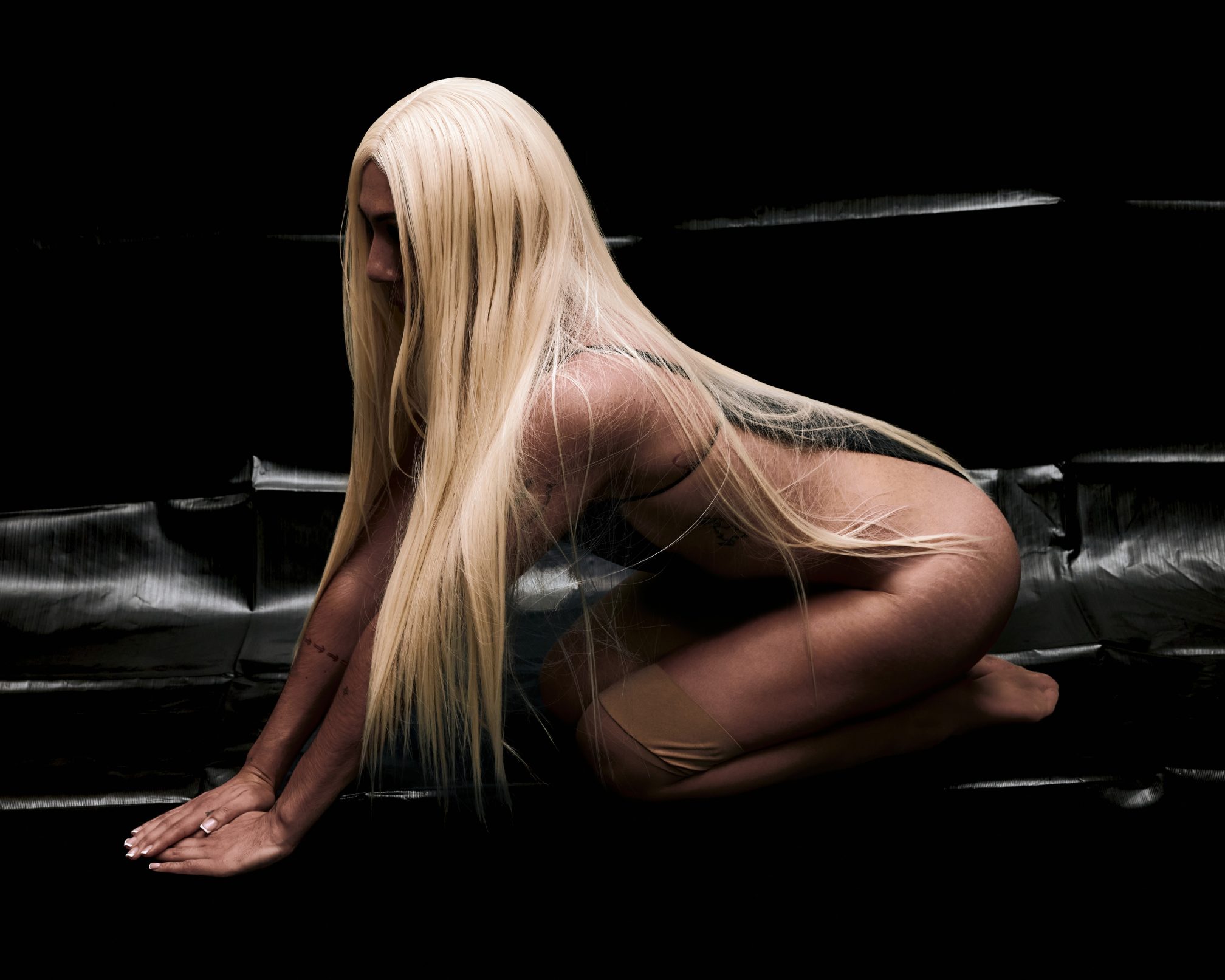
That sense of collective responsibility ruminates throughout ‘BLACKPRINT’, particularly through her synchronic collaborations with Kobie Dee and Jamahl Yami. Miss Kaninna shares that working with other artists is about reflecting on what relationships she has in her community and how she can make art with them. “I think it's really important to be able to get in the studio and learn from other Blackfullas,” she says. “I really see the value in partnership and creating with other Blackfullas, especially if I’m going to represent our community. I need to make sure I’m going to represent my community properly.”
Her collaboration with Gomeroi rapper Kobie Dee on ‘LOOK AT ME NOW’ carries a vigour of reciprocity and resonance. She describes him as a true storyteller and “one of the greats”, but also as someone who staunchly supported her when she was first making music. Bringing him onto ‘BLACKPRINT’ was, in part, a way of returning that love and paying homage while creating a record that reflects the magic that can happen when Black artists with an aligned fervour build something together. “I want [other] people who have been oppressed to be able to look at us and think ‘They've come from very poor communities’ and now we're able to feed ourselves, feed our family, pay our rent, you know, chuck our Aunty some coins here and there. That is such a great achievement for us.”
Waanyi and Gangaliida rapper Jamahl Yami holds a different place in Miss Kaninna’s story, having been part of her community and taking her under his wing when she first moved to Naarm/Melbourne. But her respect for him as an artist is just as strong. “I think he's one of the greatest rappers, not only in Australia but worldwide,” she says. “The way that he's able to get his ideas across is just so unique, and he has taught me a lot about rapping, a lot about flow, and a lot about a lot about the music industry.”
‘HANDOUT’ came together almost instinctively, from a shared understanding that Black joy is also about being staunch and holding people accountable. “We're not gonna let whitefullas dictate our happiness,” she says, “It's about taking what's ours and not waiting for someone to give it to you.”
That same philosophy perhaps underpins ‘BLACKPRINT’ itself: an incendiary and celebratory soundscape about reclaiming the blueprint and rewriting the narrative. Not to build something in isolation, but to make more room for everyone who comes after you. To take what’s yours. Bring your Mob with you. And, if you feel like it, shake your moom (ass) along the way.
-
Taneshia Atkinson is a Yorta Yorta and Bangerang woman living on Bundjalung Country. She is a freelance writer, music journalist and poet. You can find her on Instagram.
