


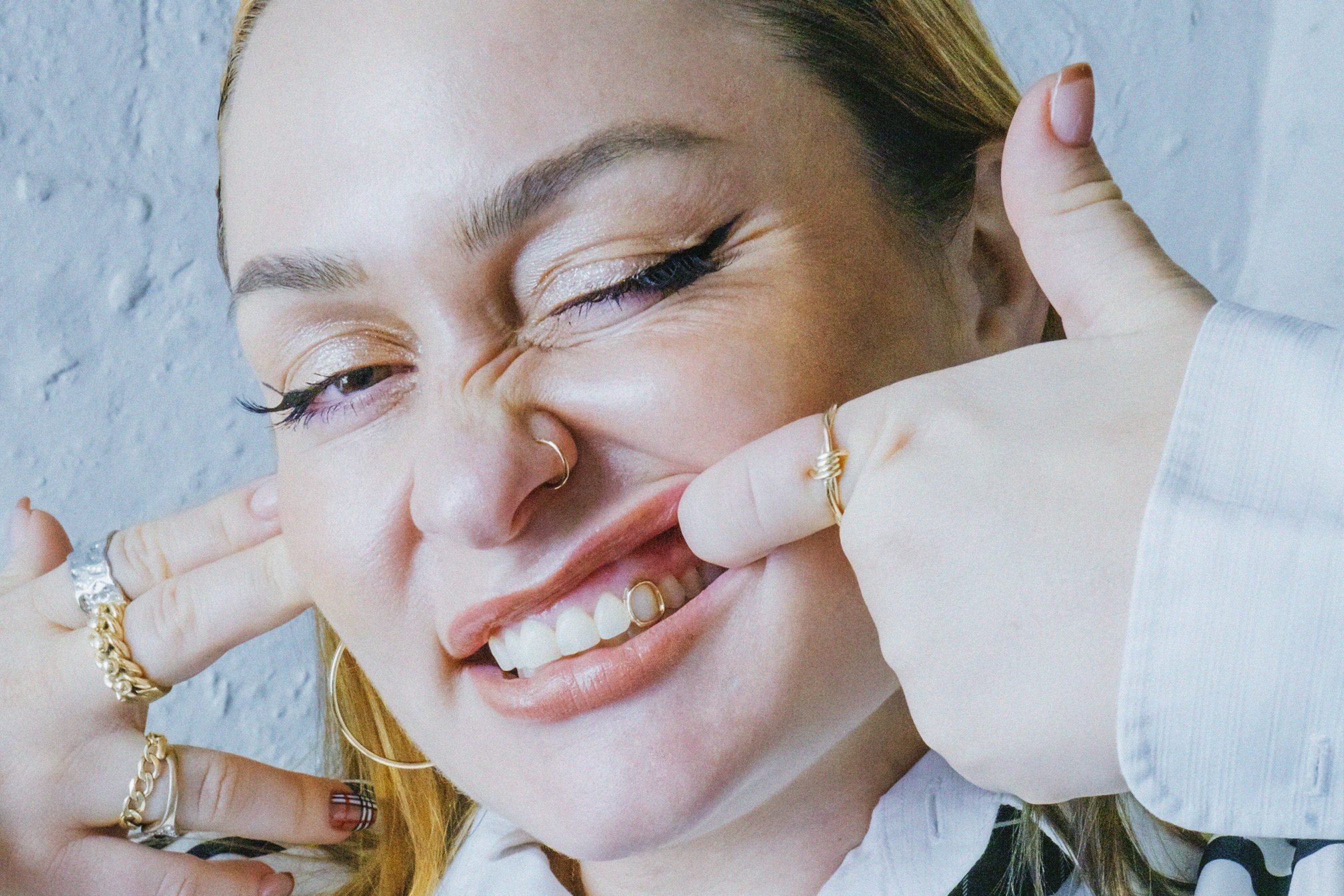
 COVER STARS
Mincy: Punter, Promoter, Producer, Pioneer
Gadigal Land/Sydney-based DJ, producer, Extra Spicy label head & Dayshift organiser is Mixmag ANZ's latest Cover Artist.
There’s a yearning for acknowledgement that often comes through in how people interact with modern dance music culture. While the clubs of yesteryear were places to escape, the clubs of today are increasingly places in which to be seen, with the DJ acting as the pinnacle of attention in such a vibes-based economy.
In a post-COVID world where many new punters’ experience of clubbing and dance music was delayed or, in many instances, placed into an online echo chamber, the trajectory of a new artist appears to grow shorter with every new addition. Artist biographies read less like statements of vision and more like a LinkedIn declaration, where any professional working in finance can ask ChatGPT to summon a reason to step up on stage.
The internet may, as it often is, be to blame for such a segmentation, especially in Australia. Dance floors across the globe have long been places for intergenerational connection, with the lessons learned by older punters being passed down to younger ones, whether consciously or not. In an environment where that intergenerational exchange grows less common, who can blame the less initiated but no less enthusiastic and new among the ranks for overglorifying drug use, putting their ego first, or not paying proper respect to a sample?
While such critiques of other dancers may not appear to be “very PLUR”, there remains an older guard of artists, promoters, and dancers who approach such a challenge not with dismay, but with a kindness that can only come from the quality of their own experience.
Mincy was a punter before she was just about anything else.
While it's difficult to pin her musical experience down to a single moment, she credits a 2013 appearance by DJ EZ as the one that changed her life.
“From that point, I realised I want to do this every weekend.”
For Mincy, long, long before she became a DJ, a producer, label head of Extra Spicy, and organiser of Dayshift, dance music culture was already everything to her, and in many ways, that’s what truly sets her apart.
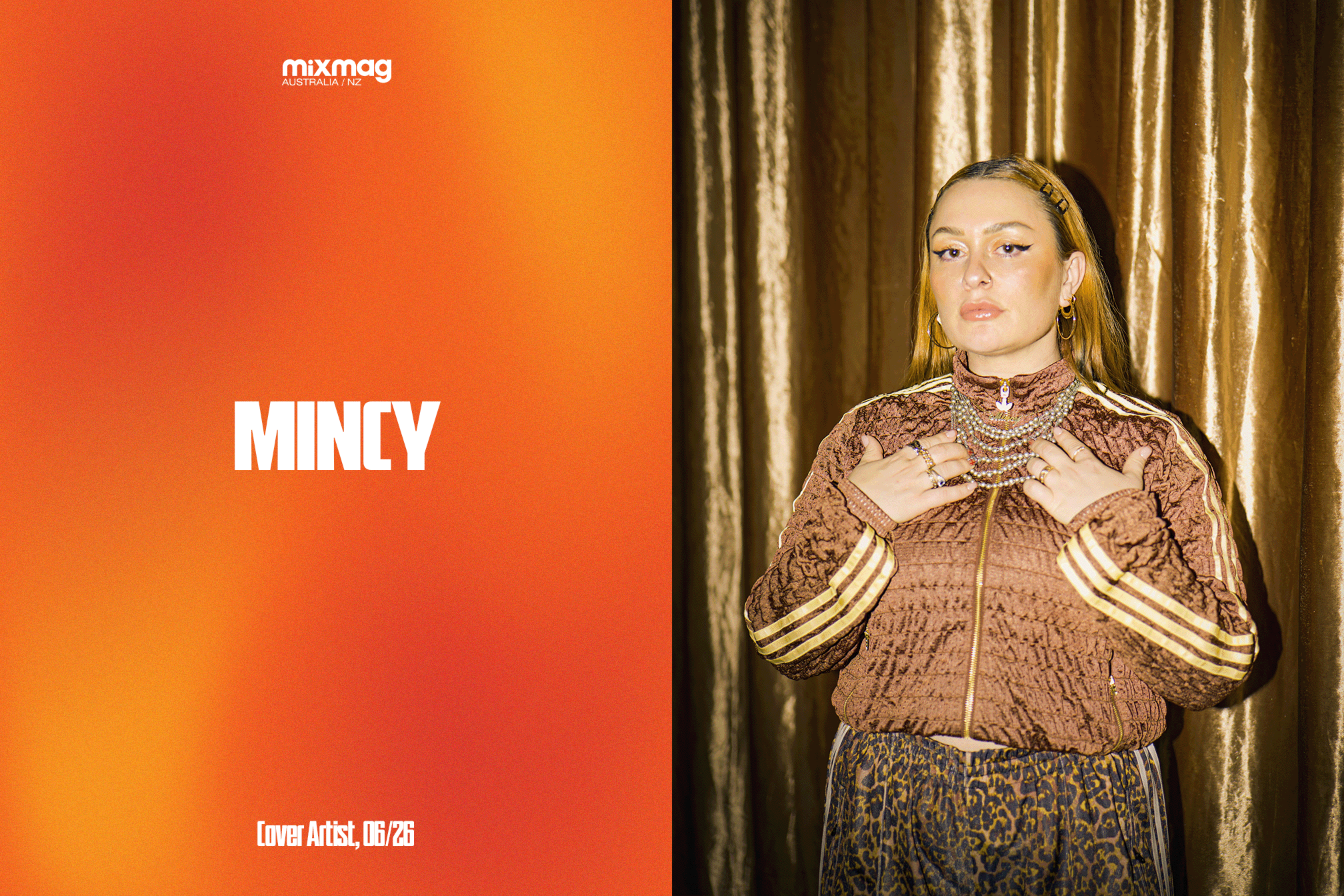
Mincy is Mixmag ANZ’s latest Cover Artist.

Ashlee Savins is a local to Gadigal Land/Sydney, having grown up in the South of its city, in a house influenced hugely by her father’s taste for off-kilter electronica and punk. At an early age, she found herself inspired by the likes of Killing Heidi and Skulker, women at the centre stage of gigs put on by the likes of Triple J.
At an early age, she moved closer to the city and had her world opened up to her in a way that would become so encapsulating of the 2010s. “I got a job at a clothing store in Newtown, and the girl who worked there told me ‘Hey, there’s this guy playing on Oxford St tonight, his name is Rusko. It’s this thing called dubstep, I think you’ll like it.’”
“That night literally changed the trajectory of my whole life.”
From that evening, as one of around 75 people in Phoenix, the basement of the long-closed Q Bar on Oxford St, Ashlee grew closer to a sound and a movement that she quickly realised was so much bigger than the world she’d called home for so long.
From there, she became a regular at many of Sydney’s gigs, jumping into a heyday of some of Sydney’s most iconic club nights and venues, seeing the likes of Bang Gang, Ajax, Starfuckers, and weekly sunrises at Club 77. Though many look back on that period of nightlife in Sydney with an incredible reverence, for Ash, once she had started listening to BBC Radio One, there was no place for her other than the UK.
“I had no game plan other than to just go and be at every rave I possibly could.”
In 2026, Mincy is an artist who very clearly prides herself on advocating for her city. Having lived through almost two years of her city post-lockout laws, even now her reflections on her decision to depart show it clearly wasn’t easy.
"I honestly felt like I was a bit of a traitor. I didn't want to leave, but I was in my mid-20s, my peak of partying and raving... I just remember thinking, I want to fight the good fight, but I have to. I got so much that I wanted to do, and it's just not happening here."
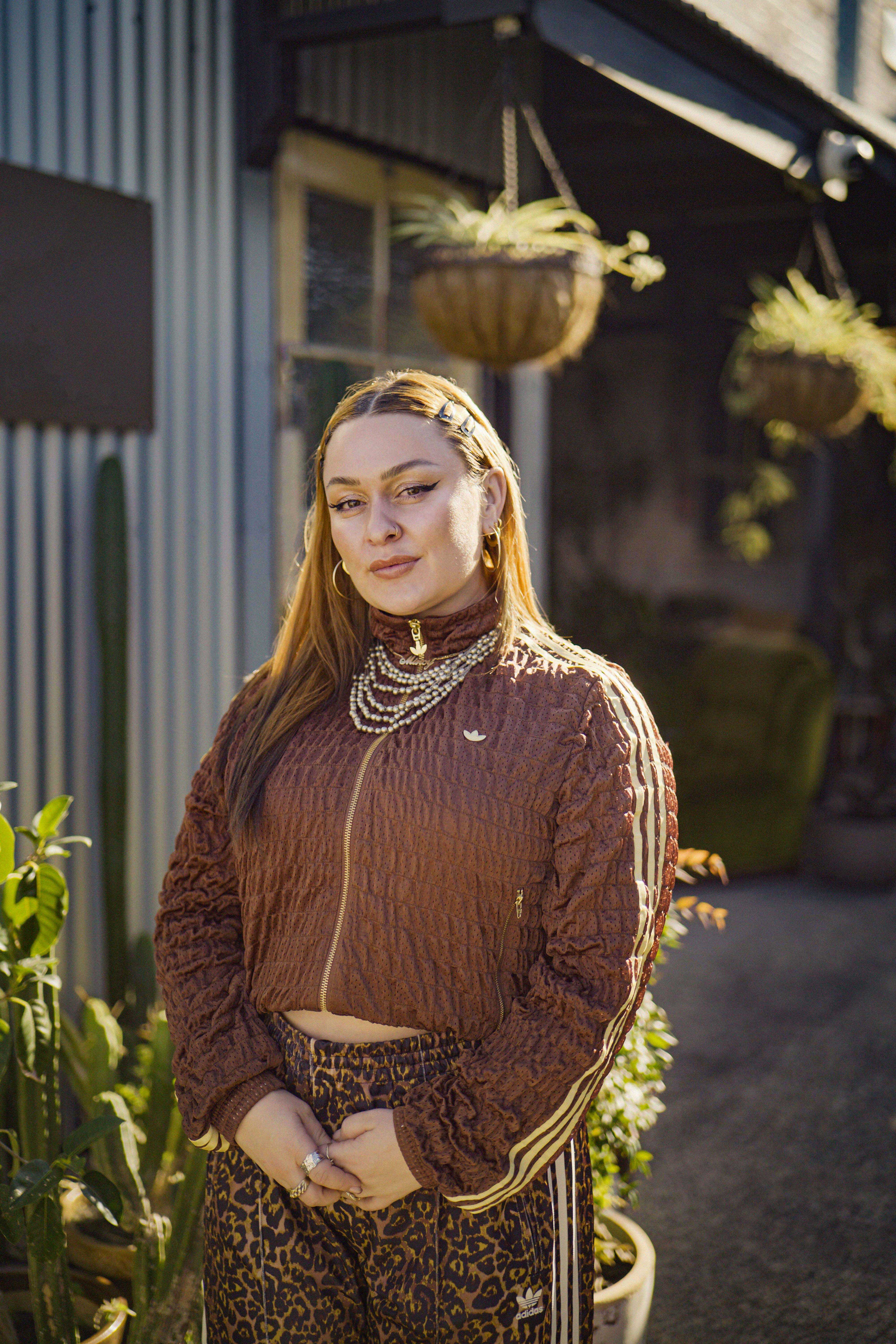
The idolisation of the UK and greater Europe’s dance culture isn’t a new obsession. For Mincy, at a time when her city was having its nightlife reputation rotted from the inside, an escape to the UK wasn’t only that, but an opportunity to better understand what it was about this culture that had made her so obsessive. Perhaps most notably, what she found in that obsession was something she could only engage with when she sought it out, rather than it being an inescapable cultural shift. “That BBC Radio One show was my only avenue for it before social media,” she explained.
Throughout this period, while she became further embroiled in the dubstep scene, grime and UKG, Ash was yet to make any musical moves of her own. Throughout her engagement with the scene up until this point, she acted as one of its most enthusiastic dancers, and little else. Perhaps in direct contrast with many stories of artists today, she didn’t immediately vie for the individual spotlight, instead feeling part of its collective.
It was a global change that pushed Ash, like almost everyone else alive, to reconsider her priorities. The UK had instilled in her a desire to play music, but at this point, like many around her, it remained a hobby. While her work was stable, having worked professionally in visual effects for many years to this day, it wasn’t her stability that begged a question of her. Instead, what COVID asked of her was something deeper than a career change: “How will I get my music fix now?”
“Before COVID, I was only DJing, and who’s to say, without it I might’ve done an edit here or there for fun, but there’s no way I would be where I am with production right now. It was eight months on my own where I just had to learn.”
Like many modern producers, Ash doesn’t have any ‘formal’ musical training, nor label experience. Regardless, that year saw the inception of her label, Extra Spicy, and the release of her first track, ‘Cute Thing’. Though Extra Spicy had existed as an event for a short time prior to COVID, the change forced Ash’s hand, and her ear.
"I had to think, ‘what are we going to do that's going to keep moving things along when we can't actually be out there running events?’ So yeah, on the Extra Spicy side, I was like: ‘Well, we start a label, we start releasing music.’"
In our conversation, Ash joked that Extra Spicy came about because she felt too insecure to release the song on any other label, but humble beginnings have made the label a mainstay for local modern club music and a hub for Ash’s growing international connections, too.
What she did have, in lieu of training, experience or background, was her intuition. Having followed her nose for many years prior and since, what Mincy holds closest is her ability to understand what makes the music ‘good’ across a variety of factors. "I spent 15 years clubbing before I even opened up Ableton. And something in you, subconsciously, knows what sounds good. I know when two notes aren't working together. I know when something sounds shit, essentially."
To some, that very idea might sound like a perspective literally every DJ could have. A substitution for a well-informed positive opinion is often a simply constructed negative one, particularly when it makes someone’s good graces look rare. Mincy herself has acknowledged that her younger self wasn’t as open-minded as she should have been, with an almost blinded positivity towards bass music and a deeply staunch anti-techno perspective. “I was 25 years old and loved getting messy and dancing around like an idiot,” she shared. “Techno at that point was too refined and just not for me. How the times have changed.”
In reality, Mincy is older, wiser and less individualistic as a result of such realisations. For her, the experience she’s had has informed her not only as a person, but as an artist.
In the years since Extra Spicy’s launch and the upswing of Mincy’s own career as an artist, she’s bounced between some of her city and the country’s less trodden stages, and onto its more publicised ones. As we sat in a Marrickville warehouse in advance of her next ‘all-night long’ show set to take place in its very walls, there was an air of scepticism in how Mincy reflected on what some of those bigger stages enabled, given how directly our conversation thus far had focused on the idea of an ‘underground’ or emerging culture.
From those very stages to performing on platforms like Boiler Room in 2024, Ash speaks on modern dance culture from a place of experience, rather than snobbery.
"I very much lost myself when I started getting booked for these really big festivals. I wanted the biggest crowd, the biggest reaction... I had all of that. And then I realised pretty quickly it wasn't authentically me,” she admitted.
The glitz, glamour and green associated with these commercial spaces are what’s understandably led them to co-opt the idea of the underground into a more accessible and aspirational place. To be underground is to exist within the last remaining countercultural elements of a space that has, whether we like it or not, become a core part of the mainstream.
"The underground can never really be a space, that's kind of one of the fun parts about it... It's this bubbling excitement of what's going to be the next cool thing. The cool people know what's going on, that vibe bubbles, and then it explodes, and that's how it becomes the cool new commercial thing."
Whether cosplaying in an Arsenal jersey or defining one’s personality by an affinity for UKG, there is in the idea of ‘underground’ culture a kind of individualism found in few other places. Feeling like a part of the ‘rave scene’ is the new “I knew that band before anyone else” mentality. Few musical subcultures have found the kind of mass appeal that modern dance music has, with roots firmly placed in the histories of black, queer and trans people utilising its underground nature as a means of protection.
Instead, as Mincy explains, modern dance music culture is one that far too often aligns itself with the same kinds of expectations of beauty, cool and profitability of every other ‘industry’ on earth. “We need to make more freaks and weirdos famous. That's what we need. Bring the freaks and weirdos forward — that's when we'll start to have the good sets again and have people dancing in the club."
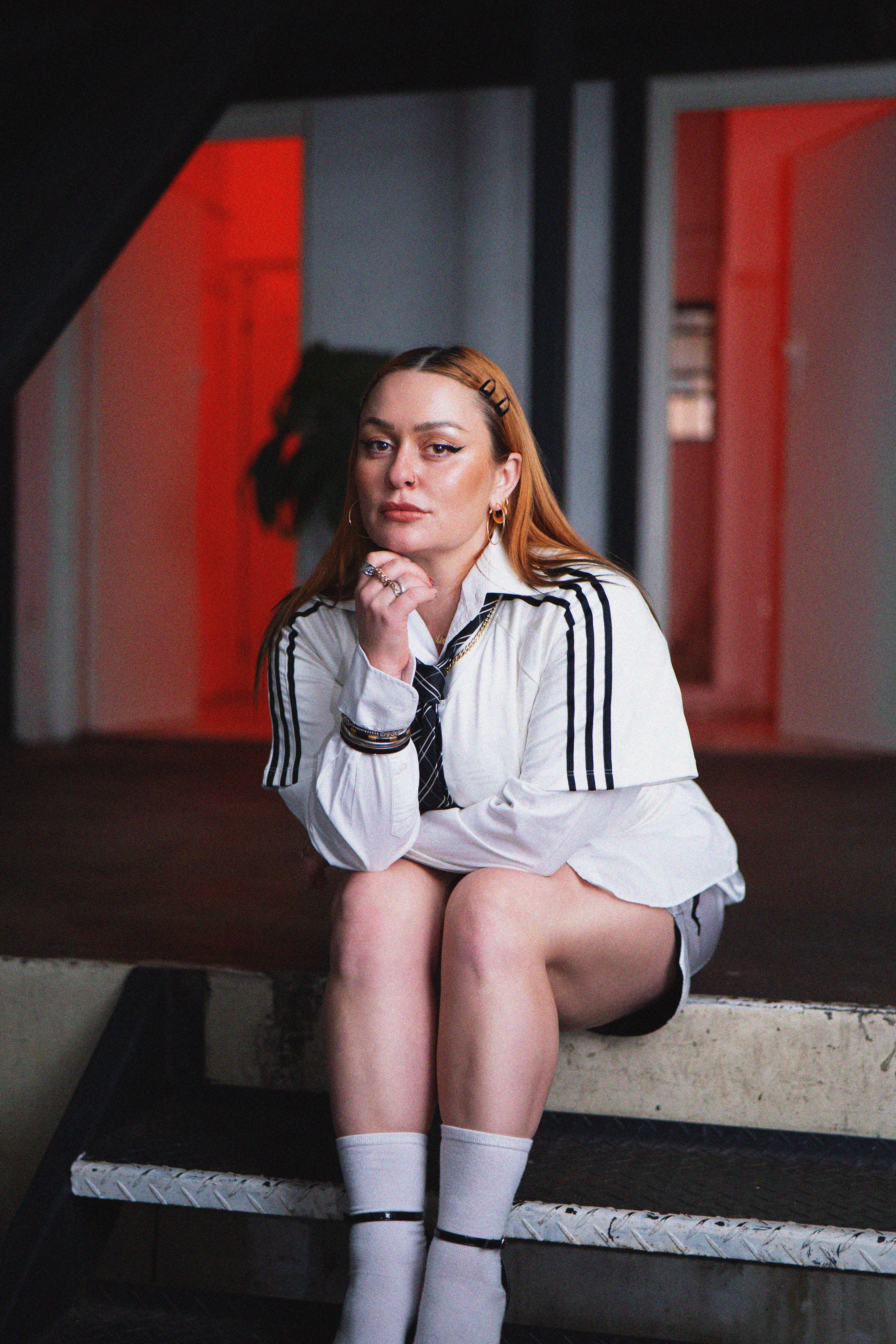
Having spent a lifetime, even before she started considering herself an ‘artist’ as just one of those freaks and weirdos in the crowd, Ashlee is able to consider her interaction with dance music from a place of idealistic reverence. Instead of trying to shape it in her own image, Ash, in some sense, seeks the space where her silhouette fits best. In many ways, this is totally at odds with the churn and burn nature of modern culture as a whole, where careers, scenes, events and festivals can often be over before they appear to have any chance at a long-lasting impact.
The notion that the older guard of any culture gets to decide how we define it currently isn’t a new concept by any means. One only has to look at the idolisation of 90s era house, trance and happy hardcore to see how influential the idea of “the good old days” can be when it’s reproduced en masse. "Everything cycles through this like 20, 30-year period. That had its big moment in the 90s, became a little more niche, and now it's having another big moment — it's just creating this next chapter in that world story."
In many ways, Mincy has been a victim of such nostalgia rather than a crusader of it. Having been so intrinsically tied to UKG at Extra Spicy’s inception, she’s found it increasingly difficult to escape the pigeonholing that can so regularly occur when friends and foes alike are all too keen to exercise their expertise via sweeping categorisations.
Instead, Mincy holds the idea of categorisation and the knowledge to do so in incredibly high regard, so much so that the needless pursuit of it by others is often overlooked. As a label head and someone with deep knowledge and understanding of the history of so much dance music, Mincy prides herself on her ability to discern why certain musical actions deserve airtime more than others.
To some, this idea and ones like it may be best described as ‘gatekeeping’.
“I would always say gatekeepers are important in every genre. I'm a big believer in that.”
Mincy points to resources like BlueDollarBillz and DaMetalMessiah, huge resources and knowledge sharers for UKG and Grime, respectively, who know every release, “and only the good ones” that make it through. “You need someone who has like a level of authority and respect to tell you who those people are to listen to”, she continued.
As a label head, Mincy is all too aware of how the availability of music has influenced perceptions of its success. While the expense of printing music on vinyl or burning it to CDs used to act as a barrier to entry for worse music, nowadays, she explains, anyone can have their music heard, regardless of how good their intentions are.
Speaking from experience, label heads, gatekeepers, and opinion leaders “just don't want to release your Shaggy bootleg.”
“Sometimes you just need somebody to be down to earth,” she continued. “There are plenty of things I make that aren’t good, but sometimes we have to say the hard things too.” Though when pressed slightly, Mincy herself admits that Shaggy-style bootlegs found a comfortable home on Extra Spicy not too long ago.
However, it becomes clear as we linger on this point that Ash is by no means discouraging action in the broader scene. She admits that everyone should be able to make whatever they want, and that a difference of opinion should not be militantly applied to anyone who sits down to make music. Where her concern sits most clearly, however, is the way in which culture is often misappropriated or misunderstood by people less initiated into it.
My exploration of this idea came at a time when I’d seen Kaskade use the term “IDs” on a TikTok to describe unreleased music in a recent six-hour set. The video had been promoted as an advertisement, meaning Kaskade’s account had paid to push the video across the platform. It struck me as a very real-world example of how a slight misappropriation of a term or idea can hugely influence the way that culture defines itself.
For Ashlee, this concern comes in the form of paying homage to the music itself.
“I’ve heard every ragga vocal sample you could ever think of. I’ve been sent everyone to Extra Spicy. You start to hear those over and over again, and you realise that these are people who just aren’t digging deeper. I feel like I can hear when an artist doesn’t know some of the history.”

At a time when so much of the culture of dance music is regularly being remade in the image of those who pursue it, Ash’s approach stands at a confident counter. It’s a growing rarity that an artist, still relatively new, would advocate for more of a look around, rather than a look at them.
While it might be easy to suggest that Mincy’s expertise is a convenient point to push, given the privilege of experience it brings to her, it’s clear through her actions that this is not a perspective she feels the need to gatekeep. Often pegged in conversations as “a female producer” first and anything else second, Ash has grown tired of having the same conversations around supporting women in music, when the writing has been on the wall for so long.
"I'm Mincy: label head of Extra Spicy, I run Dayshift, I do all these other things. Yes, I'm a woman, but I'm all of those things first."
It’s through this experience and her label work that Ash has clearly developed a strong desire to work with artists, DJs, producers, and promoters across the musical spectrum and to share her wisdom. Conducting DJ and production workshops, in conversations, and mentoring younger producers via Extra Spicy is now a regular part of her everyday.
In this way, she is actively working to address her concerns about the broader culture.
Perhaps what makes Mincy’s perspective so compelling is how totally unglamorous its origins are. Instead of finding culture through a carefully curated public profile, she arrived at her understanding of electronic music through a longer, arguably more meaningful way around.
For her, a career as a punter was set to be a lifetime of contributing to the culture in perhaps its most important way, through respect, through a keen ear and an enthusiastic foot. She isn’t interested in defining it as much as she is preserving it.
"You need someone who has a level of authority and respect to tell you who those people are to listen to.” This was a comment that I kept returning to throughout my writing of this piece. Slowly, I realised that what Mincy didn’t say, but has become implicit, is that she has become that person by virtue of never having stopped listening.
-
Jack Colquhoun is Mixmag ANZ's Managing Editor. Find him on Instagram.
