

 FEATURES
Independent Music Exchange is an algorithm-antidote
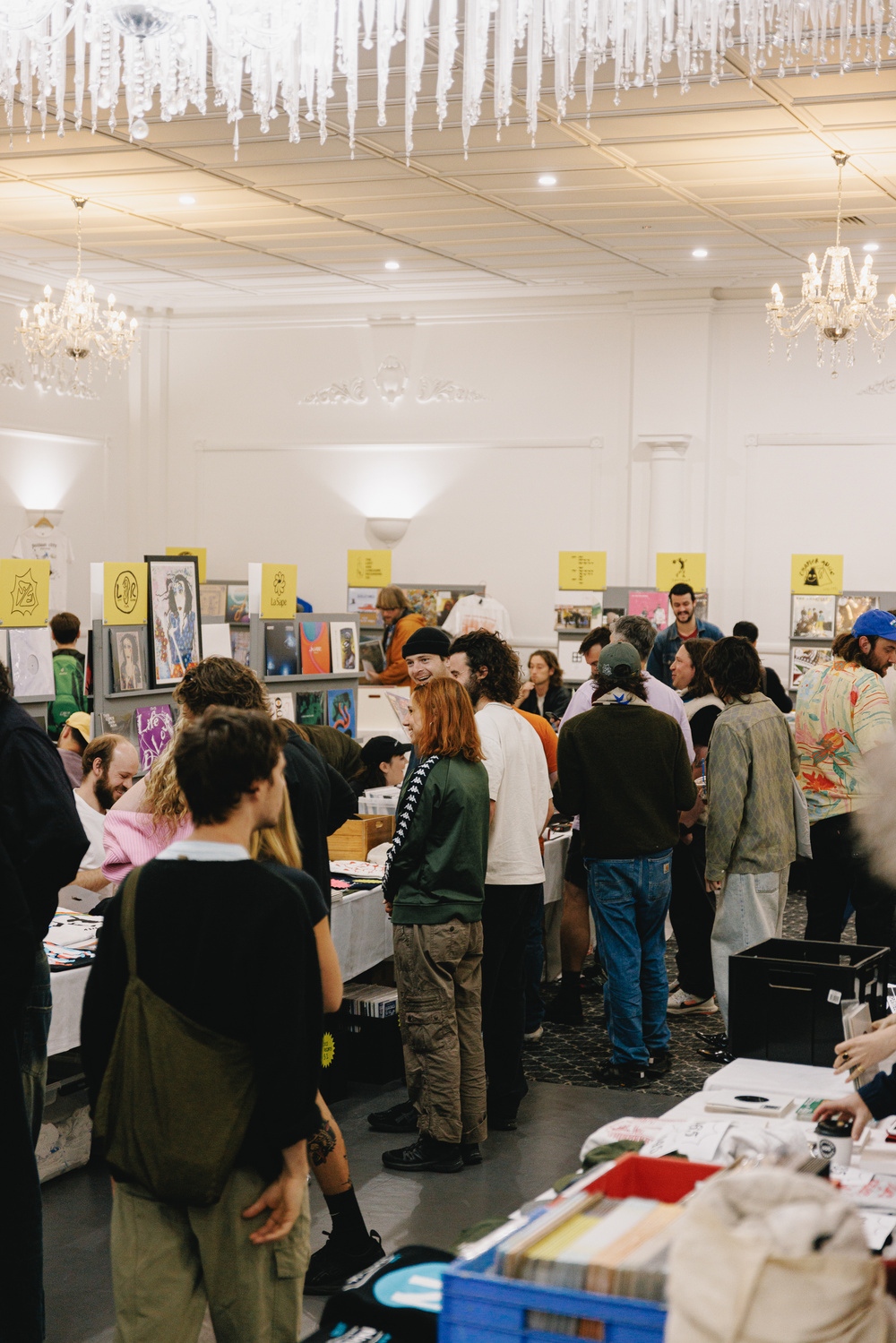
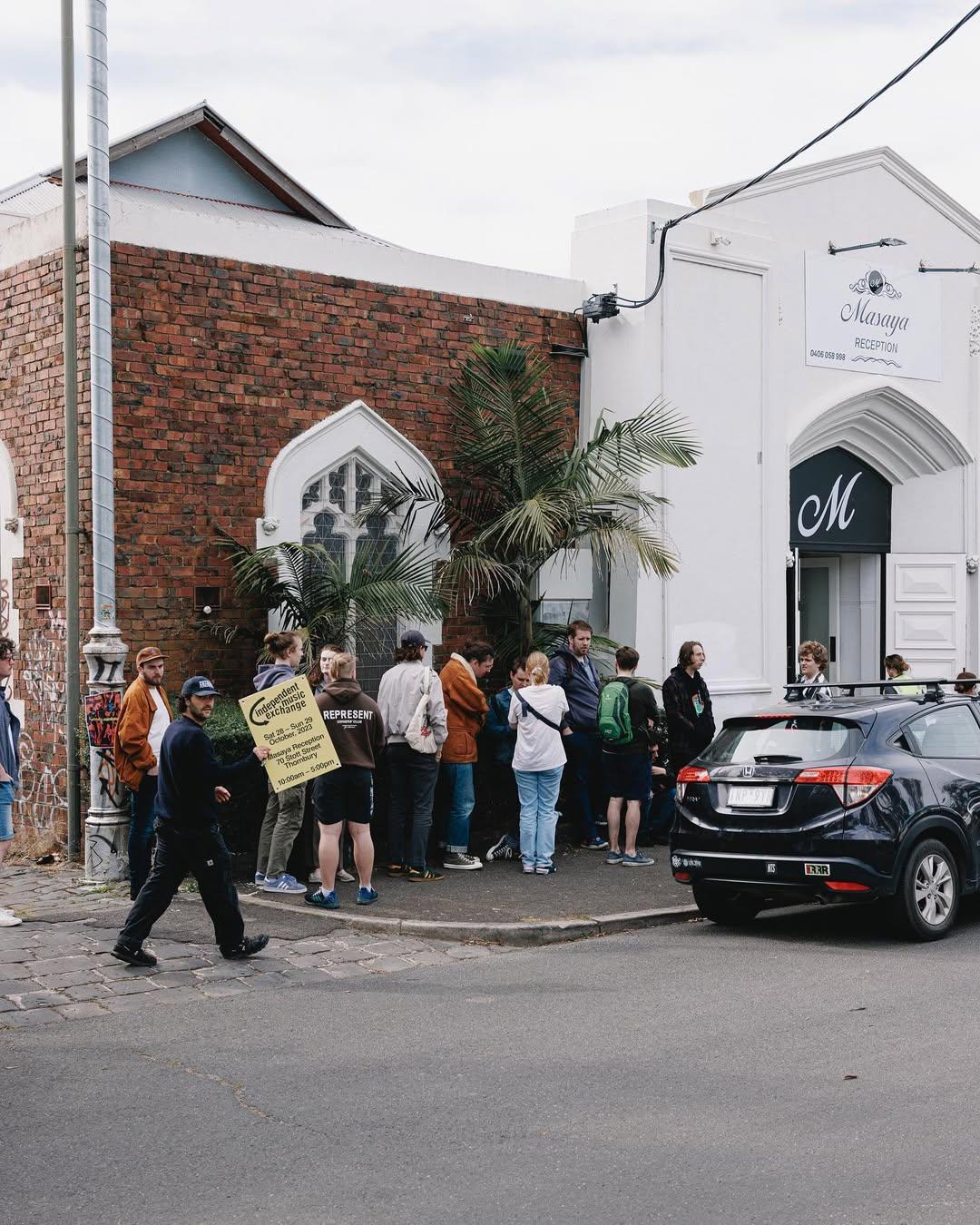
From 6-7 June, Northcote Town Hall welcomes the return of the Independent Music Exchange, a two-day celebration of local, community-minded releases and the people behind the action.
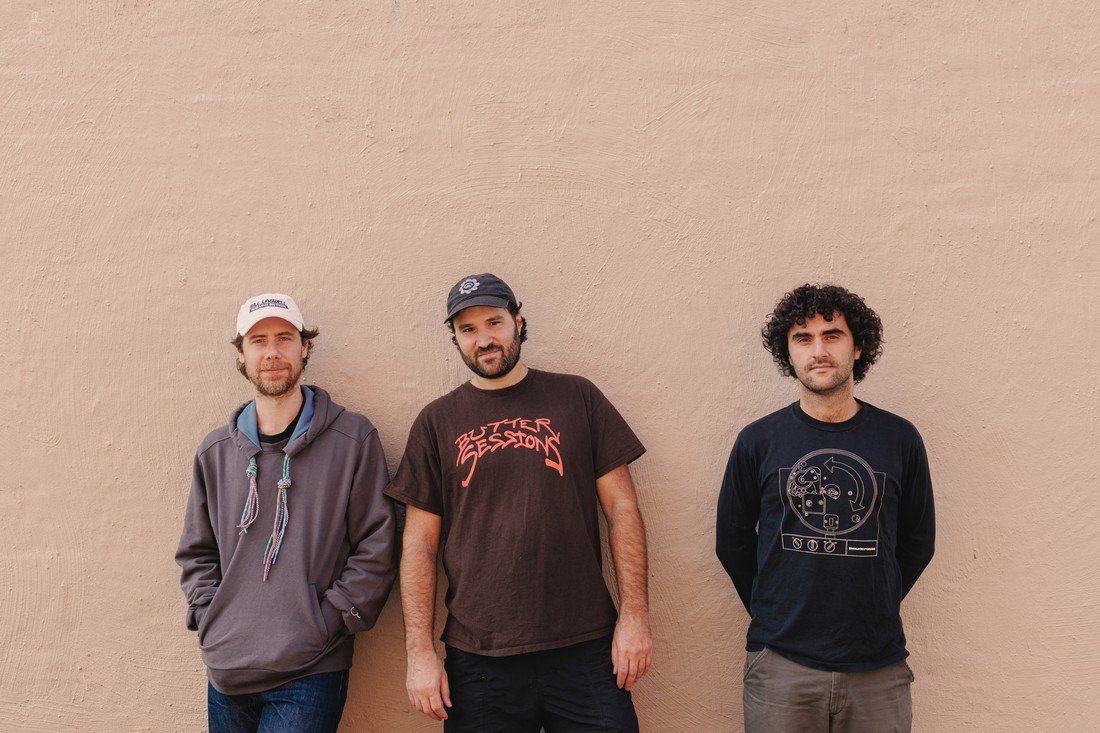
The Independent Music Exchange (IME) began as an idea between studio-mates, Michael Kucyk (Efficient Space) and Corey Kikos (Butter Sessions) in Carlton, Naarm/Melbourne. Unlike most ideas thought up during hallway chat, their goal, to begin the workings of an independent record market, actually came to be.
Aligning with the third member of the IME, Maryos Syawish (Butter Sessions/Research Records), the trio rallied a group of friends and fellow label owners, Chapter Music, Pelvis, and Animals Dancing, for their first in-person label fair.
“We all left that day feeling like we had achieved something special that we hadn’t experienced in the industry before. Not too long after that, we had the blueprint down for the IME,” Corey shares.
Four years on, the Independent Music Exchange has become its own fully-fledged event, held over the weekend of June 6-7 at Northcote Town Hall. Alongside an offering of information sessions, the Independent Music Exchange, for the first time, also brings together over 50 imprints spanning contemporary Australian music, from dance and experimental electronics to indie record makers: Anti Fade, NLV Records, Gallery Recs, and more.
Of its guest speakers, Corey is particularly excited to host producer Adrian Sherwood of On-U Sound, the effervescent dub label that has been circulating releases since the 80’s and, in many ways, a voice of longevity and promise for aspiring record makers.
“Sharing knowledge is a great way to strengthen the independent music scene, Corey highlights, “this felt like the right thing to do when gathering so many heads.”
Always free and operating on a first-in, first-served basis, the weekend presents an opportunity for fans to meet the teams behind their favourite music, ask questions, and relive the childhood thrill of gorging on a Bertie-Beetle show bag by buying too much merch.
“I'm excited about IME mostly because of its physical nature, full stop,” shared Nina Las Vegas, artist and founder of NLV Records, home to some of the last calendar year's biggest breakout releases. “Ninajirachi's vinyl and merch were a big part of that journey for me,” she shares. “I’ve mailed vinyl, picked up vinyl, spent hours packing vinyl, visiting Program Records, posting tees and handing out flyers.”
“There's something about a real, tangible connection with art that you just cannot replicate on a screen.”
Among the returning parties is the IME’s Broadcast partner, Skylab Radio, a relationship that feels natural, if not, speaking to community broadcasting more broadly, essential to the promotion and distribution of independent music. In a recent study, Monash University estimated that community radio generates over $153 million for local music each year. Even so, Australian community radio has faced what might be its most challenging twelve months yet.
If anything, the Independent Music Exchange feels wonderfully at odds with today's virtual framework, where everything we need, from prescriptions to intimacy, is available online. In the context of art, it’s an ebb and flow (or rather a tug of war) of releasing work with social marketing at the forefront of our minds. I am mindful of this even as I stamp these words into a document for a digital platform, while a nonsensical TikTok repeats over and over in my palm.
Given a budgeting focus on online community building and efficacy, it’s even more wonderful that this event aligns with considerable sponsor backing and government support: Music Australia and the Victorian State Government. In these contributions, an air of exhaustion and an ever-present need for physical connection reverberate amid the rapid sanitisation of the art we consume.
It’s an ugliness slowly being aired by fellow independent voices like journalist Shaad D’Souza. In a more recent work published in The Guardian, he uncovers the astonishingly grim ‘fake hype’ manufactured by bots and the influencer tactics of major labels. Effectively, creating noise and audience attraction that does not exist. This, alongside other recent news, including the sudden closure of artist-first online music marketplace Nina Protocol, does little to soothe my suspicion that the internet might just be an evil, vacuous place.
Echoing a feeling of general ‘flatness’ towards the current state of affairs is Kavil Patel, the founder of Naarm experimental label, radio show and mix series Absorb. Kavil is also a voice behind live event ABSORB(ED), curated alongside Miscellania’s Sasha Logan, which hosted its final edition this year.
Like Nina, he shares a balanced relationship with their online world, and its ability to merge geographically isolated scenes through social media, noting the wonderful buffer an email can create against the anxiety of a first meeting.
“At the same time,” Kavil notes, “I think the current use of social media as a bedrock for the music industry tends to flatten many experiences. So much music culture now happens through documentation, branding and constant circulation... Truthfully, I probably won’t have enough energy to adapt to a new social platform if Instagram collapses - that app is technically and ethically exhausting enough already,” he highlights.
“Putting on shows is real, and releasing physical media is something I value because both necessitate physical presence.”
On Saturday 6 June, Kavil will appear on a panel alongside Billy Gardener (Anti Fade), Kate Reid (It Records) and Penny O’Brien (Companion). Their session, ‘how to run an indy label,’ is the first panel of the weekend, moderated by Ethan Holben, with a focus on sustaining an independent label.
“There’s no real guide for a lot of the accounting, logistics and marketing work involved in operating a label (which is a business, it turns out).”
“Further to this,” Kavil shares, “most micro labels that I know are run by one person alongside a part-time or full-time job, and finding the time to complete administration is hard enough, let alone educating yourself and getting ahead of what is immediately ahead.”
In the same way, 10 years on, Nina reflects on the scope of the NLV Records, how its communities have evolved, and, with foresight, some of their earlier wins. “When I started in 2015, it felt almost accidental in the best way,” she shares, speaking to the label's early online resonance. “A post on my Instagram page could put a relatively unknown artist in front of someone in the US who'd never heard of them, but followed me,” she continues.
“That reach felt organic and real. Now we have to work a lot harder for it.”
Alongside the ‘running a label’ session is a panel on ethics and responsibility. The panel, moderated by Isobel D’Cruz Barnes and featuring guest speakers including Kamna Muddagouni (Music in Exile), opens a dialogue on how labels might genuinely support the work of underrepresented artists over the long term.
Closing out Sunday afternoon is a discussion on ‘taking independent music overseas,’ breaking in and engaging with listeners from new markets, with appearances from leading artists and curators. Among them is Kate Durman of the hugely successful indie-electronic export Acopia and the solo project Purient.
More than a record market, The Independent Music Exchange is uncomplicating our approach to community building; inviting a way forward for future record makers by offering tangible resources and skills.
The growing success of IME is also a reminder of our most important, and at times, undervalued resource: community, and the opportunity and energy that can be found from taking time out to simply say hello.
You can learn more about The Independent Music Exchange via their website and Instagram.
