


 FEATURES
How Strawberry Fields leaves its surroundings better off
Ahead of its 17th year on the banks of the Murray, we speak with the people behind Strawberry's waste, rewash & campground crews about why looking after a site takes everyone on it.
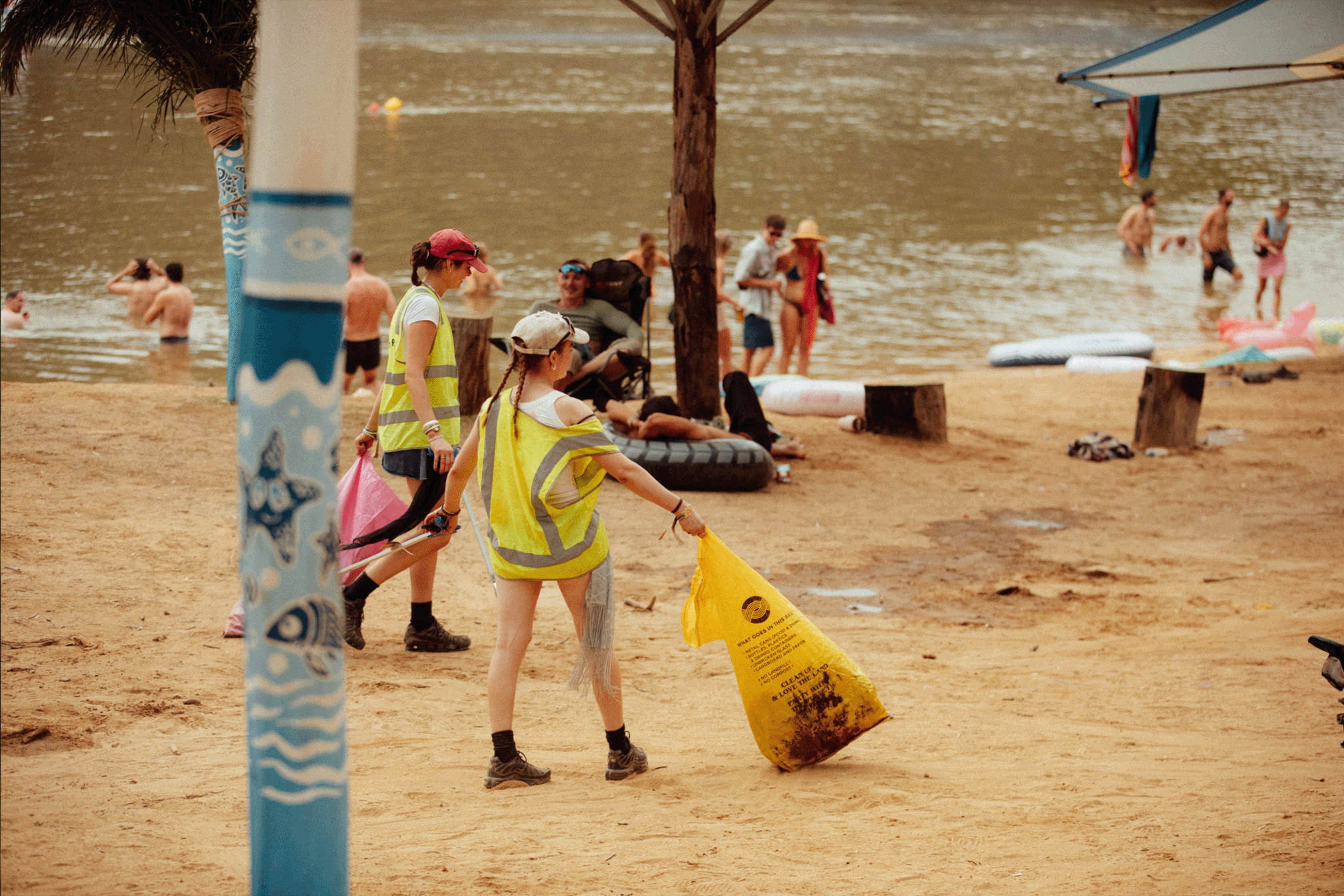
In the early hours of any Strawberry Fields morning, most of the campground is either asleep or working out how to get there. Griffin Shakesby, Director of Gum Leaf Environmental Services and his team are already at work, however.
"Our first shift starts at 6 am," says Griff. “We'll have a team- there are various names: Pick It Up Pixies, Litter Bugs- and we will swarm throughout the festival, picking up any leftover trash from the night before. Our primary focus is just to clean it up and, in Strawberry's case, to make sure nothing has gotten in the river."
Gum Leaf is one of Strawberry Fields’ sustainability partners, responsible for recovering and sorting trash, recycling, and other waste. The river they’re hoping to protect is the Murray, known as Dhungala to the Yorta Yorta people, on whose Country Strawberry returns from Friday the 20th to Sunday the 22nd of November this year. It’s a huge reason the site looks the way it does, and a big part of why Strawberry approaches waste in the way it does.
Festival culture has drifted somewhere more individual in recent years. You bring your own gear, make your own mess, and too often leave both for someone else. Strawberry's answer has been to treat cleaning up as something a crowd does together, and to build the systems that make it possible.
"Sustainability has been a core part of Strawberry's DNA since its inception," says Vicky Keeler, General Manager of Strawberry. "We are grateful to be able to bring community together in such a beautiful part of Australia on Yorta Yorta Woka (Country). The privilege to celebrate in such a place comes with a fundamental commitment and responsibility to protect the natural environment and ensure sustainability is a top priority in all aspects of event design."
That commitment has seen Strawberry demonstrate its dedication to the environment not only through existing waste management structures, but also by pioneering new programs and techniques.
"We were one of the first Australian festivals to introduce our Rewash Revolution reusable crockery system and cashless system in 2019, which was a huge undertaking to introduce and implement," Keeler says. "We also moved to powering 100% of the festival through biodiesel fuel and other alternative green energies. We were the first Australian festival to fully offset all patron and artist travel and have continued to grow our SF Bus offering to reduce emissions and make roads safer and less busy."
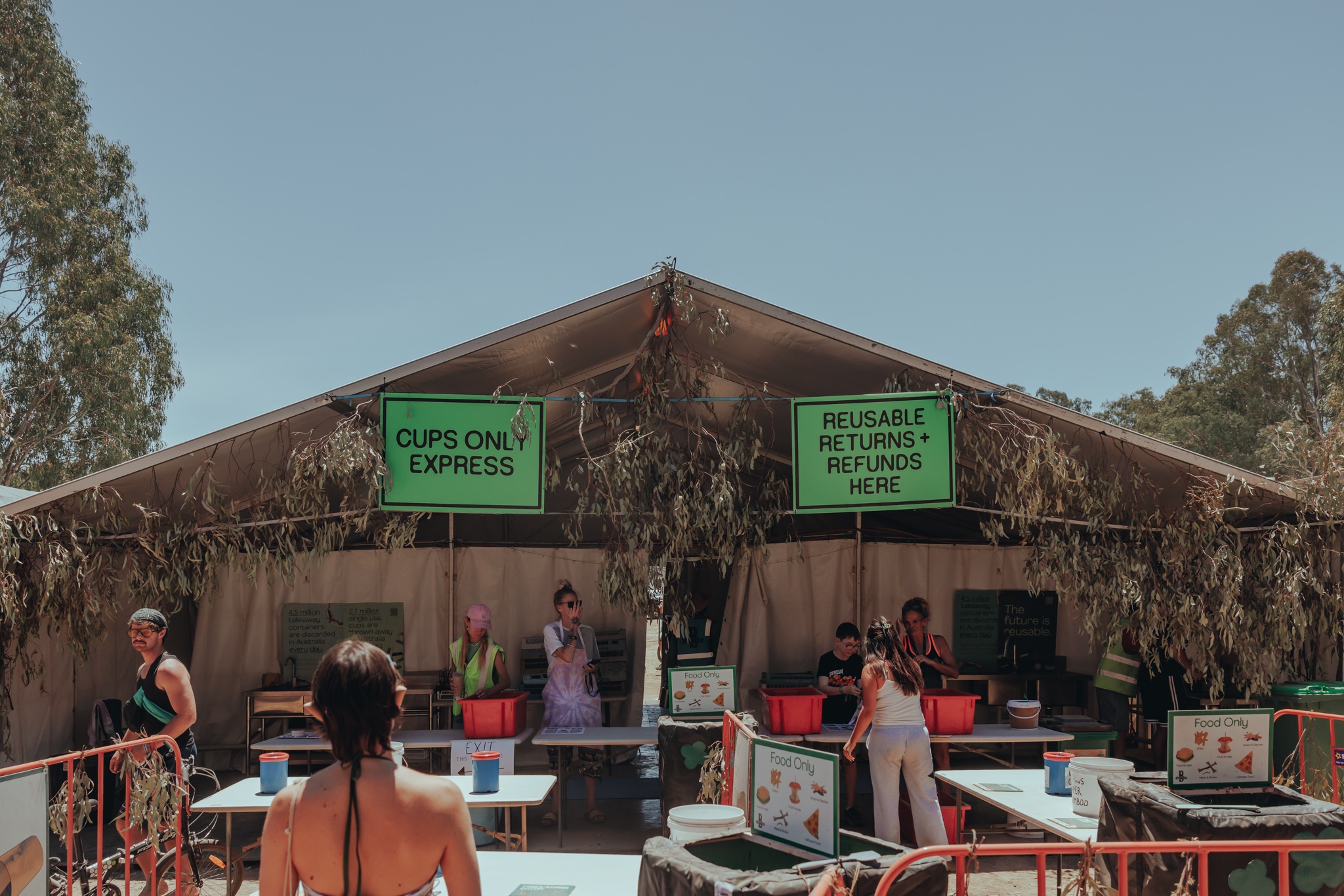
The Rewash Revolution is run by Ripple Projects, a crew patrolling Strawberry in blue vests that regulars may know by its old name, B-Alternative. Every food truck, bar and vendor on site serves on Ripple's reusable dishware, with punters handing it back at the Rewash Tent.
"Last year alone we washed just shy of 50,000 dishes on site," Abby Strangward shared. "The morning coffee rush brings a flood of cups, the bars get busy all afternoon, and our five commercial dishwashers rarely stop running."
The knock-on effect is obvious, with Griffin taking notice at the Gum Leaf sorting line immediately. Compostable plates sound like a fix but, as he puts it, "Australia is not quite up to date with having a seamless commercial compost system." At Strawberry, his team doesn't have to pick plastic-lined paper plates out of the waste at all. "[Strawberry's] support of the reusable crockery just says so much to me, because that's such a financial burden for them," he says. "It's been really instrumental in showing that it can be done at a large scale."
Gum Leaf’s on-site presence is crucial to this process, says Griffin, with many other waste operators taking it away without 100% certainty about how it’s treated or where it’s going. "They just whisk it all away to the unknown and, hopefully, it's recycled, but we'll never know. Whereas we like to engage staff, patrons, everyone in the whole system and get their hands dirty, metaphorically and physically, and show them the waste that's been created."
Engaging with Strawberry’s punters is ultimately the potential biggest impact. Ripple's Camp Care program does that by educating on foot, stopping at camps throughout the festival’s duration. On a windy morning, the team heads out with tent pegs, mallets and spare guy rope, securing camps before they become landfill. Its Good Intentions Camping project recovers abandoned gear, repairs it and hires it back out cheaply at future festivals.
While a sea of empty beer cans is by no means a pleasant view, it’s not the most harmful piece of waste at any festival, and vapes and nangs don't make up a huge percentage either.
"We don't actually create that much waste at a festival compared to industry or home. It's a minuscule amount, but it's a microcosm that can influence the rest of society. A large majority, like 70 or 80%, of the waste we deal with is from the campgrounds," Griff says
That lines up with research commissioned by Green Music Australia, which found campsites generate 50 to 80% of festival waste.
"Campsite waste is a massive challenge, and one of the biggest contributors is abandoned or broken camping gear," Ripple's spokesperson says. "Each year, camping gear seems to decrease in both price and quality. The market is flooded with tents as cheap as $13, made from flimsy materials and essentially designed to be discarded after a single use."
For many, access to quality camping gear is a socio-economic issue. Kmart tents are undoubtedly the most affordable way for people to attend a festival like Strawberry, when other costs take priority. For Griff, he hopes that with enough effort and discussion, change will be made gradually among punters themselves.
"We can't demonise them. We can only educate and go, ‘please spend a little bit more and think of your whole summer of festivals’. We've got 10,000 young people at Strawberry Fields in a few weeks, and they all go back to 10,000 different houses," he says. "They can change that behaviour."
Strawberry is adding a carrot of its own. "This year we're introducing a new Recycling Refund scheme where each Vehicle Pass buyer can return one full bag of recycling to receive a $10 refund," Keeler says.

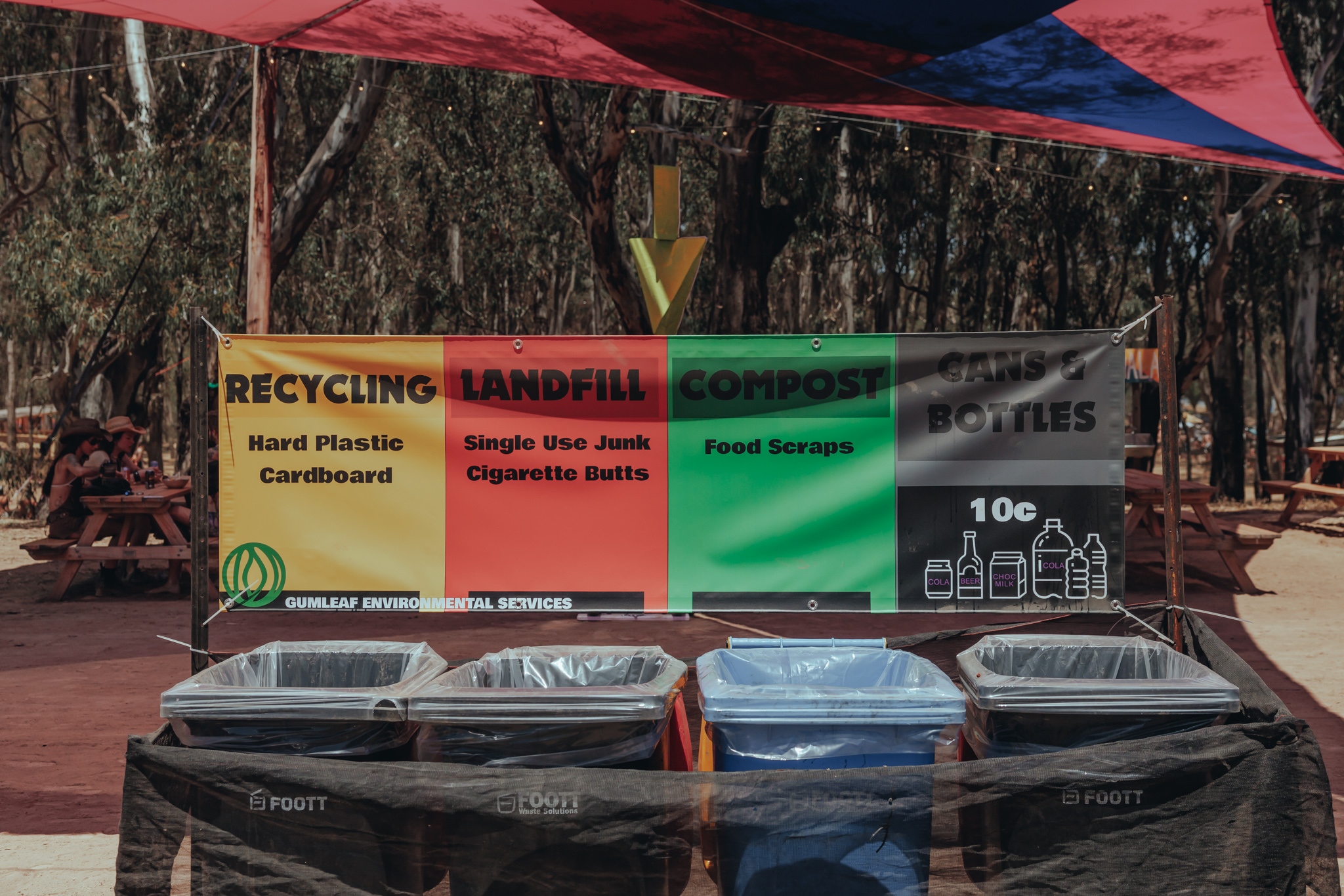
For Griff, schemes like that change the default. "There's a big old linear chart of, the smaller the festival, generally the cleaner," he says. "The less individual people feel at Strawberry, the more likely they are to just follow the status quo, which is why I'm trying to make the status quo a system of, here is a waste disposal unit for you where you can put your cans, you can put your cardboard."
The trick is, clearly, to do it without wagging a finger or giving lip service, rather than real opportunity for good. "'Sustainability' isn't something that can just appear in a marketing campaign; it needs to be reflected in the decision-making, budgets, infrastructure and operations of an event, right from the start,” Abby adds. "When the campgrounds are cleaner, the patron experience is better. When there's less waste to send to landfill, costs are lower. And when you create a culture of respect and care, patrons notice, and they come back for it."
Keeler knows the costs are rising, but she also knows other promoters are watching. "Strawberry innovated and invested early to make this part of our culture, and we're proud to show other festivals what you can achieve," she says. "The more we all embrace this mindset, the greater impact we can have as an industry and on society.
We want people to have fun, feel inspired and break free from the trappings of everyday life at Strawberry, but for us to be able to keep coming back to this beautiful place we call home, we need the community to play their part in leaving the land as they found it when they arrived."
As the next iteration of Strawberry is only a week away, and with a brand-new way to ensure punters feel rewarded for their goodwill, the festival's lasting legacy appears to be only on the rise. At a time when our environment is in greater need than ever, thankfully there are those with the soul, means, and time to help leave our surroundings better for everyone.
-
Jack Colquhoun is Mixmag ANZ's Managing Editor, find him on Instagram.
