


 INTERVIEWS
Doppel’s ‘Harvest’ is a progressive seed, planted over years
The artist’s first LP in five years shows that there’s still far more to progressive sounds than the main stage lets on.
Of all dance music's moves toward mainstream appeal, few are more well-documented than the rise of progressive and melodic sounds in the early 2010s. While faster sounds have since made their way into that space, artists like Avicii and Alesso brought a sound to the main stage that has never truly gone away.
As a result, it’s left the genre with a complicated legacy, and one that often leaves it out of the more self-consciously cool conversations on where dance music is headed.
That way of thinking may, to a culture whose music is increasingly co-opted by less-initiated or less-informed crowds, appear entirely hypocritical.
In actuality, the appetite for progressive house has never been stronger or more purposeful, particularly in Australia. Doppel is a producer who’s been at the helm of the country’s more grassroots progressive house scene for many years, with a career spanning over a decade and now countless releases to his name.
After a comparatively quiet few years, he returns with 'Harvest', his second full-length LP following his debut record ‘Eucalyptograph’ in 2021, and his first new LP in five years, released via Stone Seed.
The release is a fusion of Doppel’s progressive and melodic house credentials with blues and jazz roots, providing a very human touch to a genre that has felt increasingly sanitised as its history has gone on.
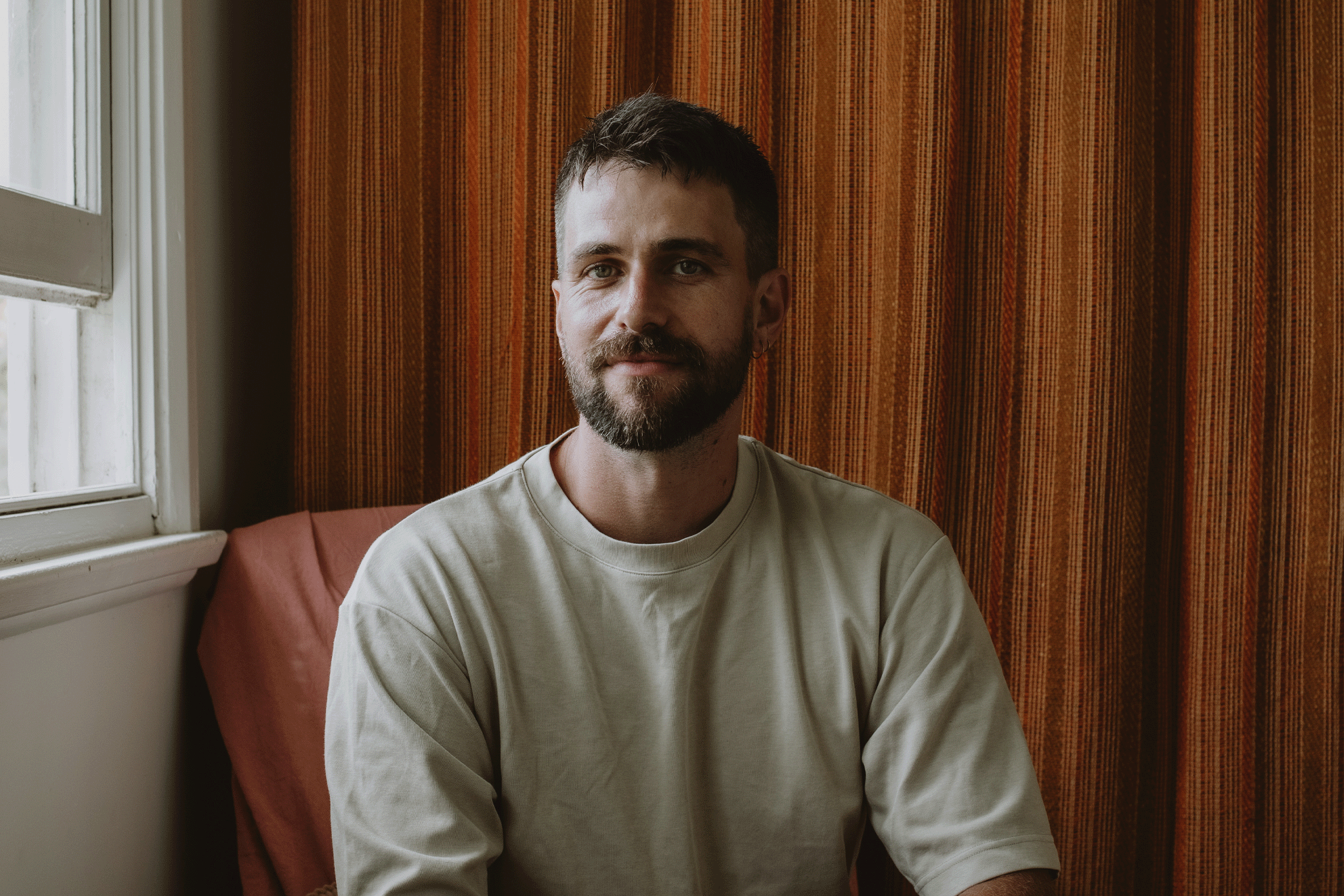
Q: Andy, thanks so much for taking the time to speak with us. In reading about ‘Harvest’, I understand that there’s been a really big period of transition as you wrote the record. What was that time like for you personally, and how do you think it has found its way into the music?
DOPPEL: Thanks so much for having me! That is certainly true, it has been a period of huge change in so many ways, challenging and rewarding in equal parts. I think what we create is ultimately a reflection of us and our experiences, so it's an interesting exercise to look back on a release or a tune and have it bring back a feeling or memory. This record is definitely a collection of those experiences and feelings, seeds planted over the years, ready for harvest, so to speak!
Q: The record was recorded on the mid-north coast of NSW, on Gumbaynggirr Country. In what ways has that space been reflected on ‘Harvest’?
DOPPEL: The title of the album isn't entirely in reference to a literal harvest, but it is certainly appropriate for the area that I live in. It's fairly rural and remote as far as places on the east coast of Australia go, I reckon it's a bit of a hidden gem. I'm very lucky to live here, it's extremely naturally beautiful and abundant, a perfect place to truly stay grounded and strip things back. 'Harvest' is absolutely a celebration of those things.
Q: This is your second full-length album. How did that come to feel different from the first? What are some aspects of your music that you understand better now than on that first record?
DOPPEL: The first album was written towards the end of the COVID lockdowns which put a completely different spin on the process and mentality, as you'd expect. I think album one was a little more gentle, intricate and introspective whereas this album - while it does retain a lot of that same character - is a little more raw and unrefined and has a bit more low end dancefloor juice to it.
I'm in a different studio space and have definitely evolved technically as a producer as the years have gone on. I think I have a better understanding of myself and my process and maybe my overall creative vision, but I still don't want all of my music to fit only one mood or emotion or moment so the tunes I write often change from day to day. I've always just written music for me and I'm very lucky that it seems to resonate with a few people regardless of which direction it goes in, so I try not to overthink it.
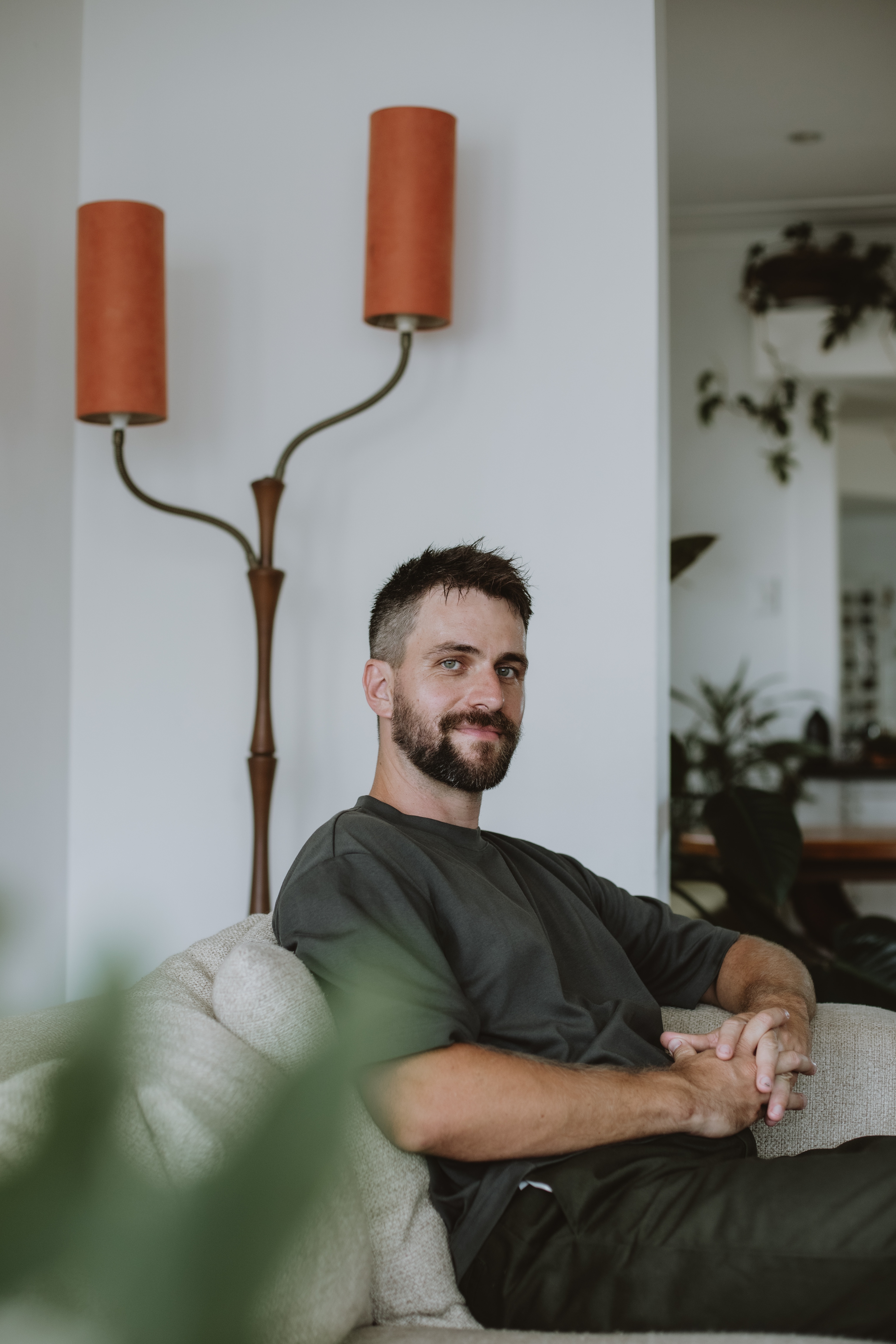
Q: I’d love to know how you approached this record, given how many genres you seem to touch on within it. There are a lot of jazzier moments, for example. What was it like incorporating that into a more ‘progressive’ tinged piece of work?
DOPPEL: Stoked to hear the diversity comes through, as that was definitely the intention despite the fact that it's all 4/4 music still! I think I've always tried to have the texture and humanity of live music floating around the edges of the more precise electronic stuff. I'm always looking for sounds that are a little more interesting than the traditional 'progressive' palette but it's also important to me to keep it grounded and not just have whacky sound design thrown around just for the sake of it - it ideally should serve the songwriting.
Q: What was your setup for recording this record? I’d be keen to know what kind of gear you were working with & how it created what sounds like a very diverse workflow.
DOPPEL: This record was honestly mostly produced in Ableton. I use a few controllers and keyboards but I just love writing by busting samples up. I have found that using tools like granular synthesis and heavy resampling I can create sounds and textures that I just can't with a synth or in any old sample pack. There's something about discovering something beautiful in what is often a chaotic process that is really satisfying to me, or creating the chaos and writing a tune around it!

Q: Progressive and deep house have both had significant moments of “mainstream” crossover in recent years. How do you feel about where those genres sit culturally right now, and where do you see them heading?
DOPPEL: It's an interesting time for sure. I was actually recently going through old top 50s from the 90s and early 2000s and every time I go back there I'm reminded just how present dance music has been in pop music since that time (and we're obviously seeing a recycling of heaps of those hits today) but it feels like there's more of an appetite for acceptance and understanding of the culture in mainstream society now as time has gone on for various reasons. I think that's led to some of the slightly more underground sounds and genres receiving a bit more attention and respect, and has created an environment in which people listen to things with a more charitable ear rather than just dismissing them because they're electronic music.
While I do think that that's a positive thing, and I love how accessible music production is now, I don't love how oversaturated the landscape is now and how much music that feels a little soulless is out there. It's hard not to be cynical about it, especially with AI music coming in hot among other things. On the same token, there are absolutely people pushing things forward in a really creative and amazing way, and there are even people who are writing fairly formulaic tech/deep/prog house but have just crystallised and perfected the sound and sometimes that stuff is just undeniably amazing. I guess I do still love the music and am glad I'm still surprised by it, even the stuff that isn't groundbreaking, so my hope is that continues. I could probably go on and on about this so perhaps I'll leave it there.
Q: You've drawn early support from some well-respected names, including Eelke Kleijn, Anthony Pappa, and Kasey Taylor. What does that kind of validation mean to you at this stage of your career?
DOPPEL: The whole thing is pretty wild really, it's been a while since I started going to parties and writing music but time does also fly, so it feels like only yesterday that I was a kid who couldn't have dreamed of the career that I've already had. I've been lucky to have the support and mentorship of some of those guys and I'm very grateful for it.
Q: The record’s found its home on Stone Seed. Why was that the right place for it? Given the kind of ‘cycle’ that the record seems to touch on, what’s next in that cycle for you?
DOPPEL: Stone Seed founder ZigMon and I have been working together pretty much since the very beginning of both of our careers, which is really amazing. I've released a whole bunch of music on his imprint but never an album. I owe a great deal to him and the people around Stone Seed and the Australian scene, and that support has been a huge push to finish and release records, so it made sense to do the album there. I think the sound of this record is a bit more in line with the label as well, where a lot of my other music maybe isn't so much, which definitely helped.
Next up - I have a whole bunch of shows lined up to celebrate the album, with more on the way, and I'm sitting on a whole bunch of new music and stuff that didn't quite make it onto the album so I think I'd like to just keep the releases rolling on.
Thank you for the thoughtful questions!
-
Jack Colquhoun is Mixmag ANZ’s Managing Editor. Find him on Instagram