


 INTERVIEWS
Dance Therapy Records' 'Kanikani Therapy' & vying for local sustainability
Martyn Pepperell speaks with label head & promoter yourFlatmate about what local enthusiasm can really mean.
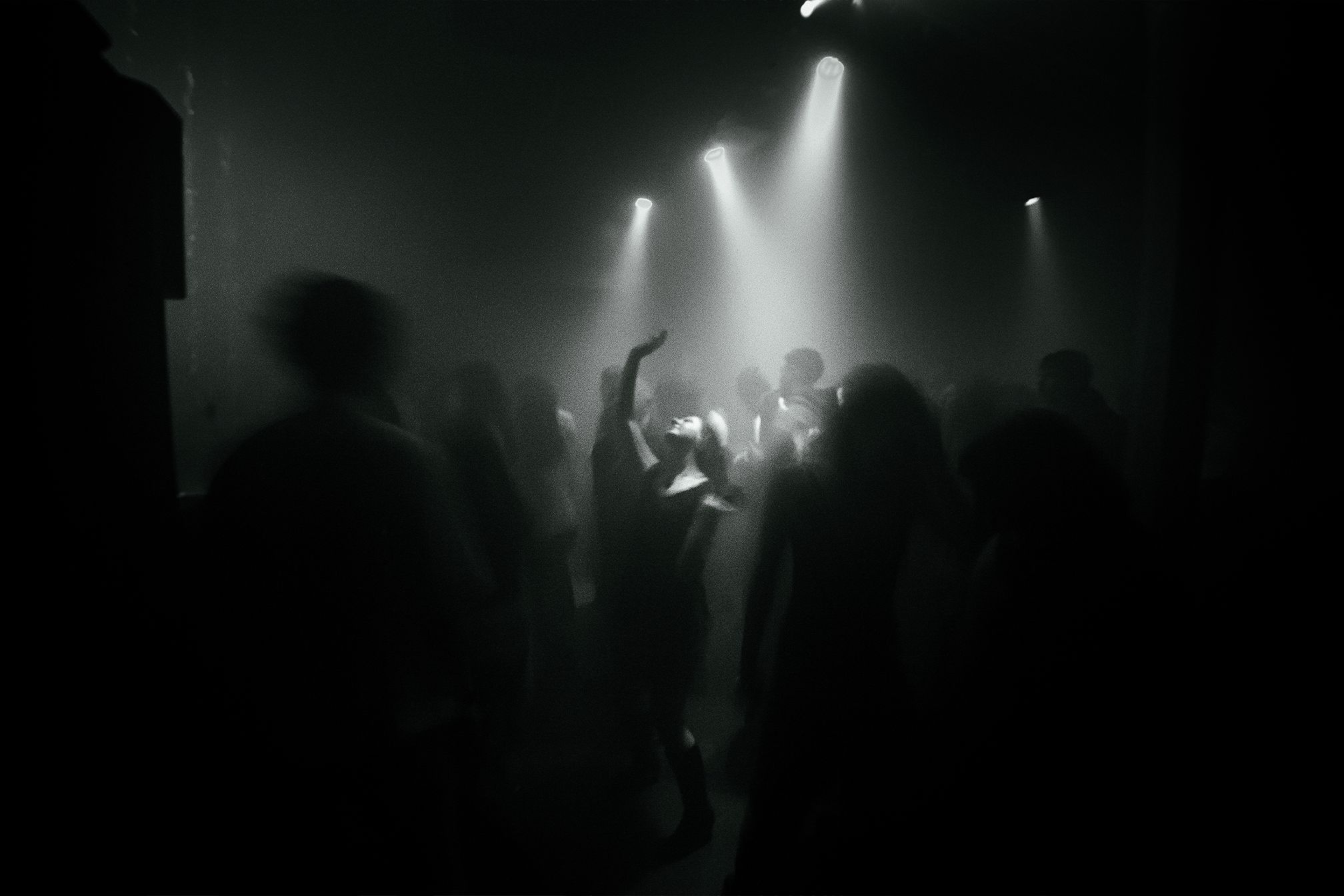
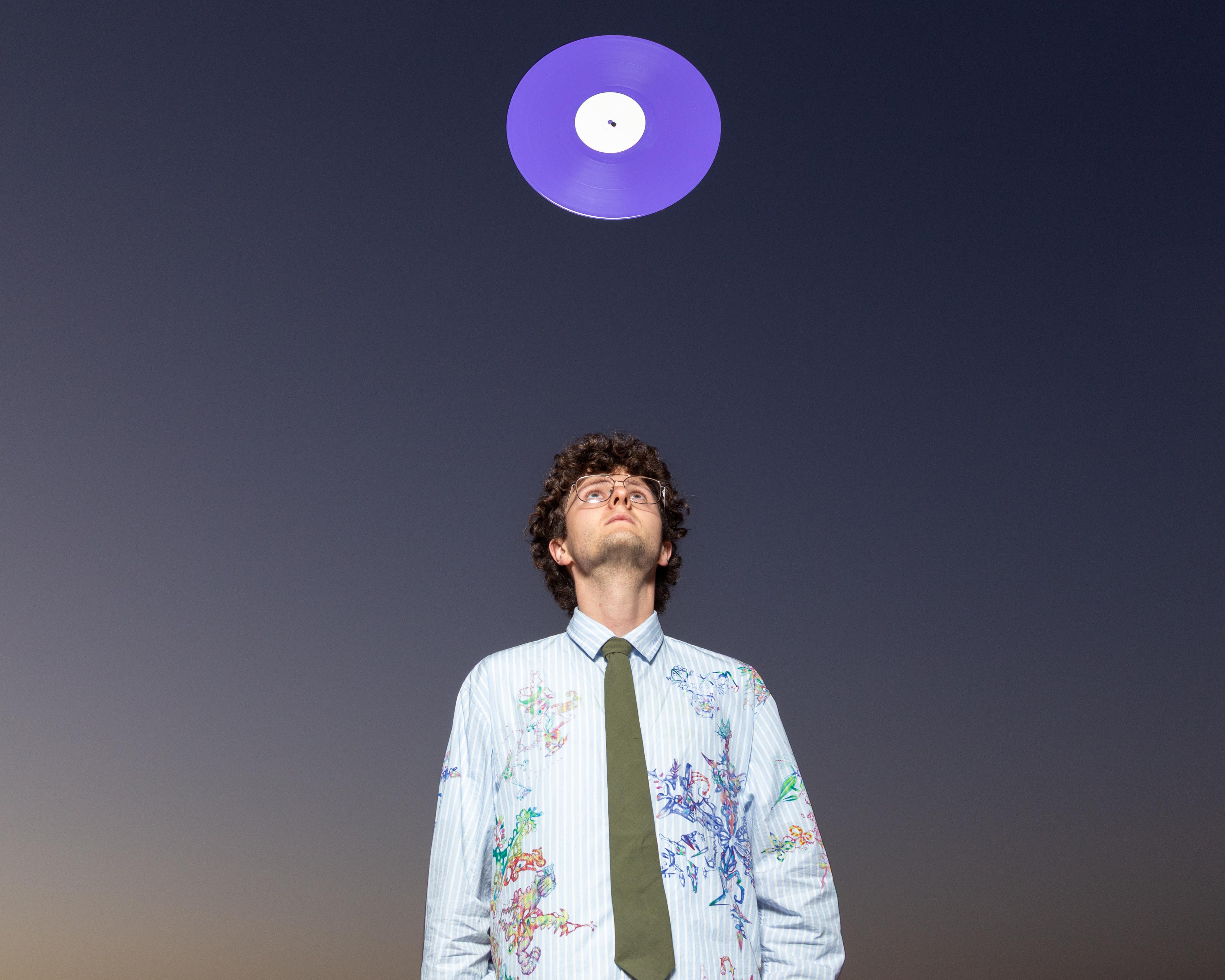
Over the last year, Reuben Romanos, aka yourFlatmate, has emerged as one of the most active figures in the Te Whanganui-a-tara dance music scene. He’s accomplished this through several activities: playing floaty full-spectrum DJ sets at the free outdoor parties that sprung up across the city over summer, producing as yourFlatmate, and running Dance Therapy, a party, record label and mix series defined by a warm feeling that runs through his favourite trance, prog, disco, house, dub techno, acid, jungle, dubstep and drum & bass 12”s.
At Dance Therapy, a single selector plays a five-hour set. Romanos sees it as an opportunity to allow his guests and the dancefloor to embark on epic musical journeys. As an outgrowth of the momentum he’s built, Dance Therapy has also expanded to encompass a record label, Dance Therapy Records and a SoundCloud mix series, Dance Therapy’s Chronic Happiness.
In May, he launched the label with Fort Ballance, a 12” EP of progressive house and trance by his actual flatmate, Te Whanganui-a-tara producer Yendor. Over three expansive tracks, iridescent synthesiser pads, psychedelic melodies, rolling percussion, and otherworldly voices curl around driving machine beats and bouncy bass stabs. It's confident, slowly-smouldering and deeply hypnotic.
Later this month, the Dance Therapy story continues with the label’s first Various Artists compilation, Kanikani Therapy, due on August 19 in CD and digital formats. Across pre-release tracks like ‘Nunuk’ by cellphii, ‘In Your Body’ by Yendor, and ‘David’s Fundamentals’ by Jamie Doesn’t Like Salad, a playful and dreamy sensibility emerges that effortlessly cuts across genre and style lines. Similarly, the rest of the compilation is an abundance of riches.
In the Q&A below, Romanos talks about his background and the origins of the Dance Therapy party and label. He also explains why, rather than a commercial project, it made more sense to release Kanikani Therapy as a fundraiser for two conservation charities, Trees That Count and Forest & Bird.
Q: CAN YOU TALK ABOUT YOUR BACKGROUND AS A DJ?
RR: When I first answered this question, I said I went to 121 Festival and had an epiphany. I thought, “Oh my god, this is how this music is meant to be enjoyed.” When I thought about it, I realised my DJ career started when I used to get on the aux cord at house parties. Then, when I really thought about it, DJing actually started for me in high school.
I used to spend my pocket money on iTunes vouchers and buy albums and singles that had just come out. I’d get to class five or ten minutes early because a few teachers would let me plug in my phone and play the new songs I’d bought while people were coming into class. I didn’t even really ask; I just started doing it. I’d been quite a disruptive kid, so I think it helped me integrate and express myself. Here I am, doing my thing. I felt validated and seen. I really took pride in it.
Q: HOW REGULARLY WERE YOU BUYING MUSIC BACK THEN?
RR: I'd buy two albums a week. I'd listen to those albums five, six or seven times before the next weekend rolled around and I bought a couple more. I’d carefully think, what album do I want to listen to in its entirety? This was on the cusp of when Spotify became widely used. I’m so glad I had that little window. If I’d been on streaming from the get-go and not had that personal relationship with music, I don’t know if I’d even be DJing now.
Q: SO BY THE TIME YOU STARTED DJING, YOU ALREADY HAD A LAPTOP FULL OF MP3S?
RR: I actually have a sing-along playlist on my USB. It's all my MP3s I bought when I was 13-14. If I want to close out a night with Fleetwood Mac, or, halfway through my set, I want to play Outkast, I can do that and shake up the room. The funny thing is this: in high school, I never really clicked with the more repetitive side of electronic music, which is dance music.
Going back earlier, there are video clips of me as a kid dancing around the living room to dance music. It was only really when I started going clubbing at 121 and heading to Twisted Frequency that I married that five-year-old version of myself with the grown-up version of myself that loves music. As an adult, I’ve come back to my inner child while marrying my cerebral love of music with physical expression and the shifting energies of letting something go.
Q: CAN YOU THINK OF ANY OTHER MEMORABLE MOMENTS WHEN THIS LOCKED IN FOR YOU?
RR: When Marcellus Pittman played in Wellington for the second time, there was an older crowd who were dancing like crazy. The people my age were like, “Who are these people?” I thought, “Nah, they’re onto something.” I remember dancing like crazy and having one of the best nights of my life. I had one beer. When I left at the end of the night, I went, ‘Wow, that’s what I want to get into.”
Q: WHEN PEOPLE SAY THINGS USED TO BE BETTER, THEY’RE USUALLY THINKING ABOUT HOW NIGHTCLUBS FELT BEFORE SMARTPHONES. I THINK THERE WERE GOOD AND BAD POINTS IN BOTH ERAS, BUT IT DID FEEL EASIER FOR THE AUDIENCE TO STAY IN THE MOMENT.
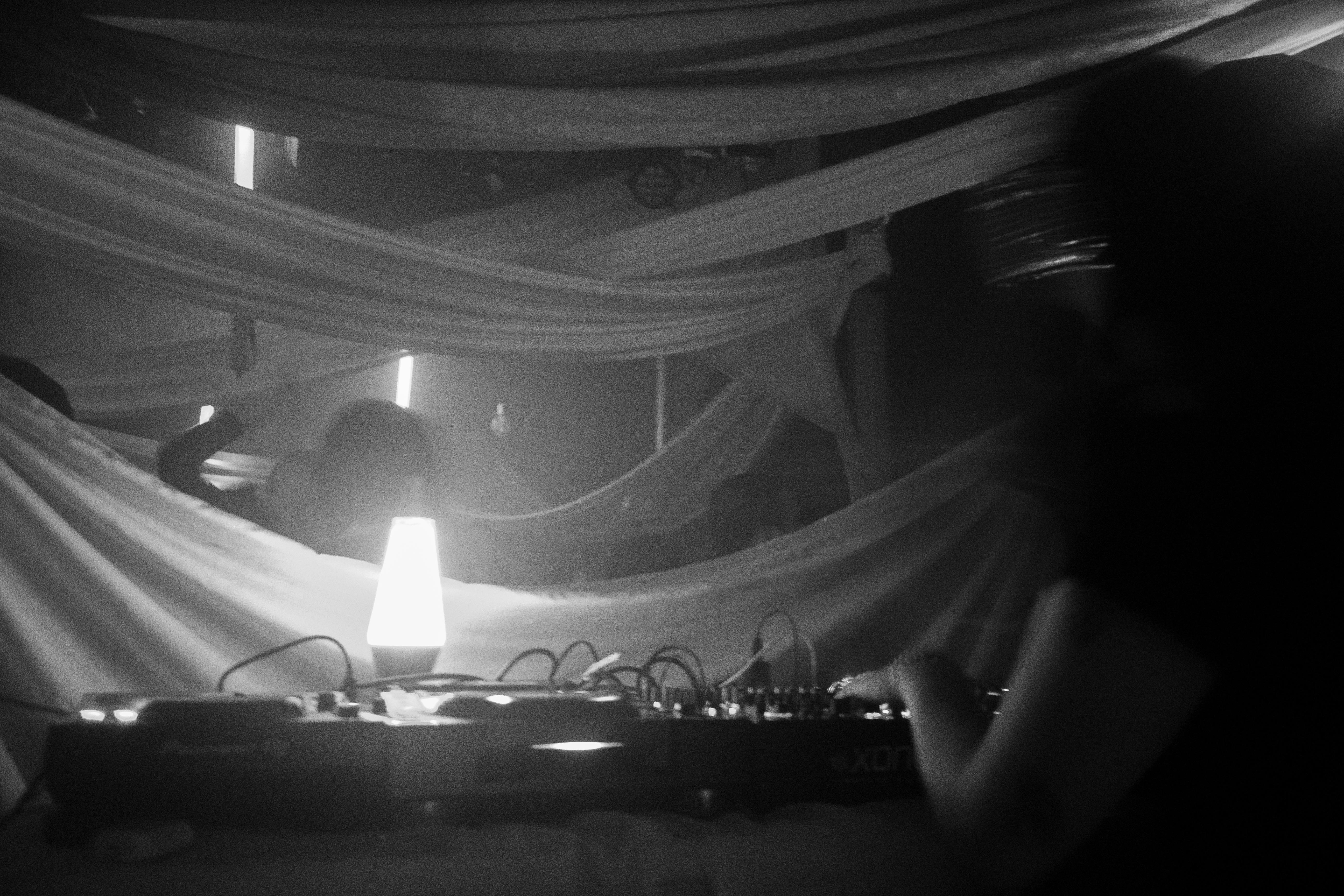
RR: I’m going to do a phone-camera stickering thing at the next Dance Therapy. After I finish this series of all-nighters, I'm not even going to have gig photographers. I’d like it to be something you have to be there for. No documentation at all, just relying on word of mouth. I'd love to see if Dance Therapy can just grow from people advocating for the feeling, being like, "I can't show you, but I can just tell you I had the night of my life."
Q: AT YOUR DANCE THERAPY PARTIES, ONE DJ PLAYS ALL NIGHT. CAN YOU TALK ABOUT THE ETHOS BEHIND THIS?
RR: Well, just as I loved seeing Marcellus Pittman play all night, and everyone loves seeing Christopher Tubbs play all night, there’s a certain scope and freedom the DJ has at an all-nighter. Everything slows down when it comes to the pace of the mixing and the experience, and it becomes this much more drawn-out, epic adventure.
In many ways, it’s actually easier than playing a one-hour set. You have way more freedom and less pressure. If you’ve got enough variation in your tunes and enough clarity about what you want to do and what story you want to tell, it’s way more enjoyable and way more fun. I wanted to do something my generation hadn’t really experienced yet.
YOU’VE BEEN HOSTING A DANCE THERAPY SERIES AT MOON WITH DJS LIKE FOXTROT, COB, MONDAY SUCKS AND CEE. FOR OUR READERS WHO AREN’T FAMILIAR, CAN YOU DESCRIBE THE VENUE?
RR: Moon is a pizza restaurant and bar. Up until recently, people thought of it as a band venue.
The smoke alarms there are heat-sensitive, so they’re not set off by smoke machines. You can put as much smoke in there as you want and black out all the windows. The bar and the team there are also very gentle.
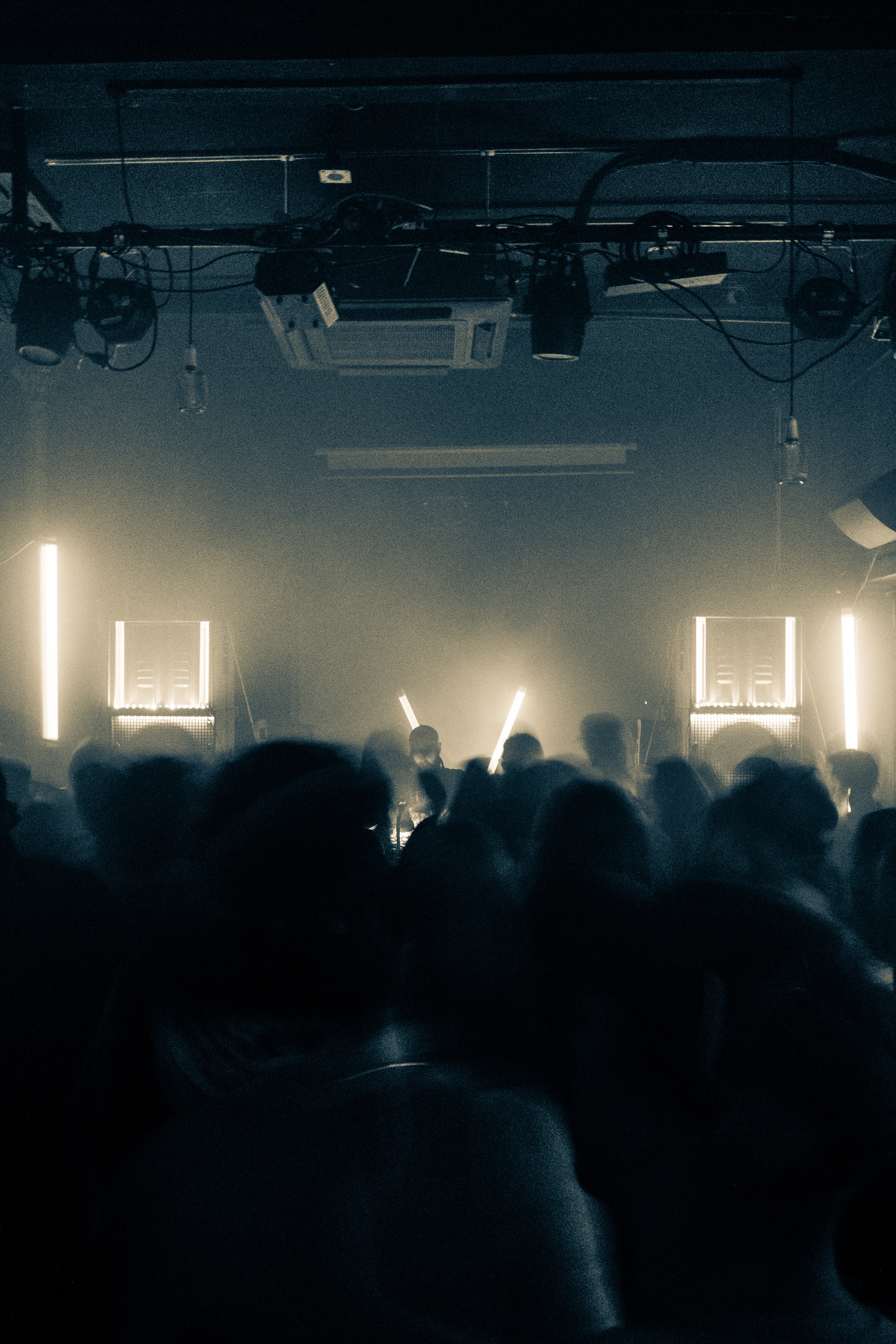
I overlooked Moon for ages. Back in February, we did a gig there with Cousin. We got this rig, Torque Sounds. The plan was to just smoke it out, make it as dark as possible with really minimal lighting, and put the DJ on the floor. The rig would be the main thing you could see. The idea was to make people feel anonymous, but as safe as possible. The music was the centre of attention.
At this point, it’s the only place I throw gigs in Wellington. It’s really intimate. I like seeing the same faces pop up. It feels like a nice little community hub.
Q: HOW DID YOU GO FROM THROWING PARTIES TO SETTING UP THE LABEL?
RR: I kept throwing those nights, and then it got to the point where I thought I could do more. It was a beautiful moment because Rodney [aka Yendor] was trying to find a place to release his EP. He’d sent it to a few places overseas and hadn’t heard back. I was just like, “It’s really good. I love it.” I’d been around him while he was making it, and I thought, “It’s got a lot of juice to it.”
I said, “Let’s just make Dance Therapy a record label. We’ll release it, get it pressed on vinyl, and do the whole shebang.” Australia has a few labels that I relate to, like Butter Sessions and Animalia. They've made it big, and they push a similar sound. I want that for Aotearoa.
When I started throwing parties, I didn’t really know the extent of the mahi involved. It’s been similar with the label. By the time I realised, “Oh man, this is a big thing. I’m starting an enterprise,” it was too late to turn back. It’s been awesome, but there’s been a lot of learning.
Q: CAN YOU TALK ABOUT THE SOUND YOU’RE CHASING WITH THE LABEL?
RR: It’s the same stuff I look for when I’m looking for tunes to DJ with: that middle ground between new, fresh sounds and music that honours the warm origins of dance music. You can take it all the way back to disco and house, but even with techno, trance and drum and bass, there was that warmer, looser quality. It had a bit more soul, for lack of a better way of putting it. I just want it to be a home for dance music with a bit of soul.
What I like about vinyl DJ sets is they’re never going to be perfect. That’s why we’re pressing all the EPs. It’s about really honouring their origins. When you mix vinyl, there will be scratches. There will be moments when it pops. Sometimes, when I’m mixing vinyl, one track falls out of sync with the other. It’s about embracing that human imperfection.
Q: THERE’S ALSO THIS THING ABOUT MUSIC BEING MADE IN RESPONSE TO SPECIFIC ROOMS OR OUTDOOR SPACES.
RR: It’s pretty amazing how much spaces, both subconsciously and consciously, influence the music that gets made. Yendor called his EP Fort Ballance because every tune he produced, he was thinking about the bunker raves up at Fort Ballance. He was just thinking, “I imagine playing this there. What would I want to hear there?”
Q: WHAT WAS THE VISION FOR THIS COMPILATION?
RR: I wasn’t going to do a V/A for the label so soon. I was going to press vinyl, but pretty quickly after launching the label, I started hearing all these tunes and thinking, “Oh my God, there’s so much good stuff already in existence in the country.”
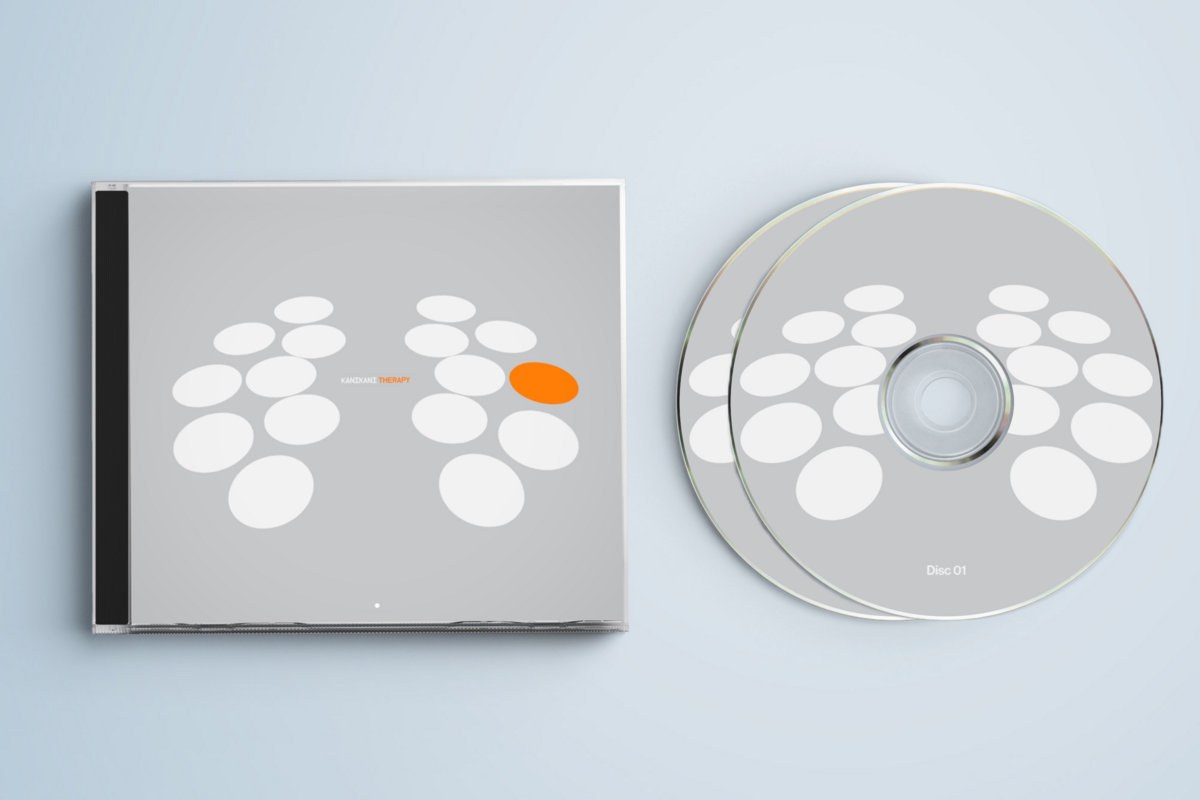
Q: THE PROFITS FROM THIS RELEASE WILL BE DONATED TO TWO ENVIRONMENTAL CHARITIES: TREES THAT COUNT AND FOREST & BIRD. WHAT’S THE STORY HERE?
RR: I thought, “Well, even if it sells really well, if we’re spreading those profits between 17 producers, the label, and covering all the costs, it’s not going to go very far. Why don’t we just pool that money together and see if everyone would agree that whatever money is made gets donated to a good cause?” It took less than ten seconds to decide it needed to go to conservation charities or trusts. There had already been a bunch of news about conservation land being threatened by drilling and mining. There was a big pushback against it.
Over the years, I’d also heard about the negative environmental impacts of festivals and doofs. I thought it just made sense to offset some of those negative impacts with whatever money we made. Even if it’s not a huge amount of money, I think awareness is just as important. Big outdoor parties can impact the environment in so many ways, from the obvious stuff like rubbish and pollution to smaller things like soaps polluting waterways.
Q: WHAT HAVE YOU LEARNED LATELY ABOUT THIS?
RR: I recently found out that noise pollution can disrupt the breeding cycles of animals. There are all these really difficult-to-negate negative impacts.
When you’ve been at Twisted Frequency for six years in a row, DJing and just attending, you end up having so many conversations. You’re sitting there, having an amazing time, and you think, “Man, I’m so grateful for this. We live in this country with this amazing wildlife, these clean rivers, and all this incredible nature.” That’s what I’m trying to get at.
Q: IT’S AN INTERESTING DYNAMIC. RAVING CAN BRING YOU CLOSER TO NATURE, BUT IF WE CAN’T MANAGE OUR FOOTPRINT IN THESE LOCATIONS, FUTURE GENERATIONS WON’T GET TO ENJOY THEM.
RR: I love it when you’re at a rave, and you can feel that bigger awareness. Pork Crackle pops into mind here. She’ll always be picking up cans off the dancefloor while she’s dancing. It has a trickle effect. Other people start to pick up rubbish. These little actions can have a big ripple effect.
This interview has been edited and condensed for clarity and readability.
-
Martyn Pepperell is a freelance journalist, copywriter, broadcaster, photographer and DJ. Find him on Instagram.
