


 SCENE REPORTS
The Breakfast Club: Freedom from the 9-5 since 2014
As the iconic Naarm/Melbourne-originating after-hours party celebrates a dozen years, writer Hugo Hodge reflects on its enduring and hedonistic legacy.
Monday is undoubtedly the worst day of the week. The fun of the weekend is over, and a new working week beckons, filling us with an all-too-familiar feeling of dread.
Musically, Monday is represented as a day of heartbreak and mourning. It’s the day we are rudely thrust back to reality and are forced to face the consequences of our indulgences. Songs like ‘Blue Monday’ by New Order and ‘Monday Monday’ by The Mamas & The Papas capture the collective malaise the start of a new week brings. In The Bangles hit ‘Manic Monday’, the singer wishes it was Sunday “'cause that's my fun day”. It’s a relatable sentiment, longing for the weekend just gone, but what if the fun doesn't have to end?
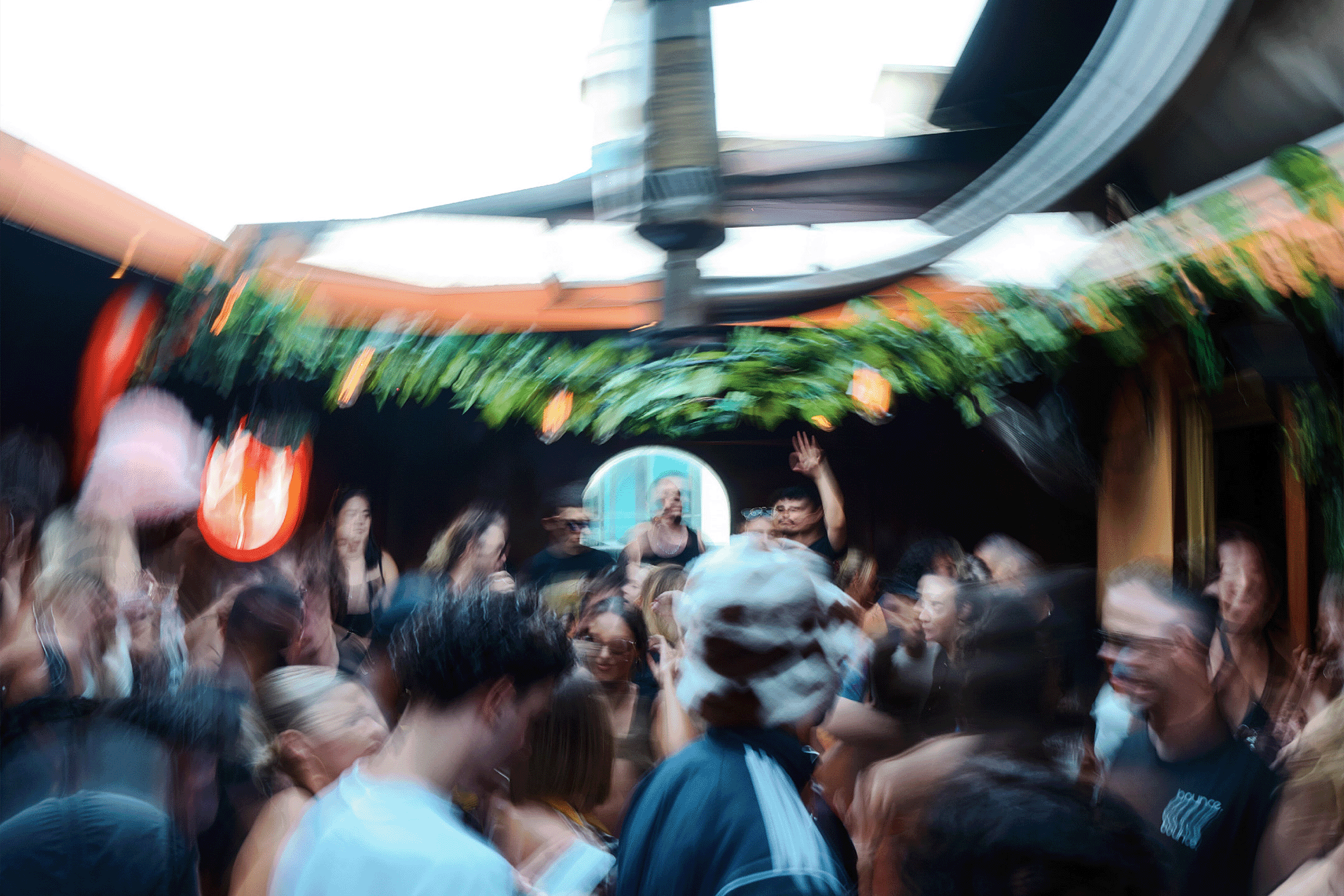
Enter The Breakfast Club, a singular and infamous party on the Melbourne music scene that takes a wholly different approach to Mondays. Founded by Ethan McLaren, Lee Lawless and Gabriele Terlicher in 2014, the party has grown from a “grim” kick-on with mates into a weekly staple that hosts leading local DJs and international acts. At its longtime home, OneSixOne in Prahran, the party usually starts on Sunday night and wraps up on Tuesday morning, traversing multiple stages and levels inside the club.
“Every song ever written about a Monday is a sad song,” Ethan says.
“We want to turn society's saddest day of the week into the happiest day of the week.”
On first hearing about The Breakfast Club, you would be forgiven for hardly believing something like it exists in Australia. After-hours partying to this extreme is a rare treat on a summer spent in Europe. As it turns out, it’s been here all along, and you can have it every week. Whether punters know it or not, their attendance is a sleep-deprived act of defiance against the 9-5 status quo, a central ethos of the event. “We've always held on to an anti-conformity, slightly rebellious spirit,” Lee says.
This month, The Breakfast Club is celebrating 12 years of ‘freeing you from the padded cell of a 9-5 society’, as the tagline goes. On Sunday 24 May, the celebrations begin with a stacked line-up of 23 resident DJs and guests, including Wallace (UK / Rhythm Section), DJ Jnett, Andy Hart, Hannah D, and Techworld DJs. Ethan and Lee are tight-lipped about what else is planned for the celebrations, but promise a surreal surprise, reminiscent of previous birthdays when they’ve had cabaret performers and an Elvis impersonator. “It's the perfect match of trash and treasure,” Ethan says. The birthday celebrations don’t end there as the party hits the road touring Wallace across the Asia Pacific with dates in Byron Bay, Hobart, Singapore, Tokyo, Bangkok and Cebu. Each year, the party goes on a European tour showcasing some of their resident DJs, and this year is no different, with summer dates in Barcelona, Berlin, Vinuesa, and Edinburgh.
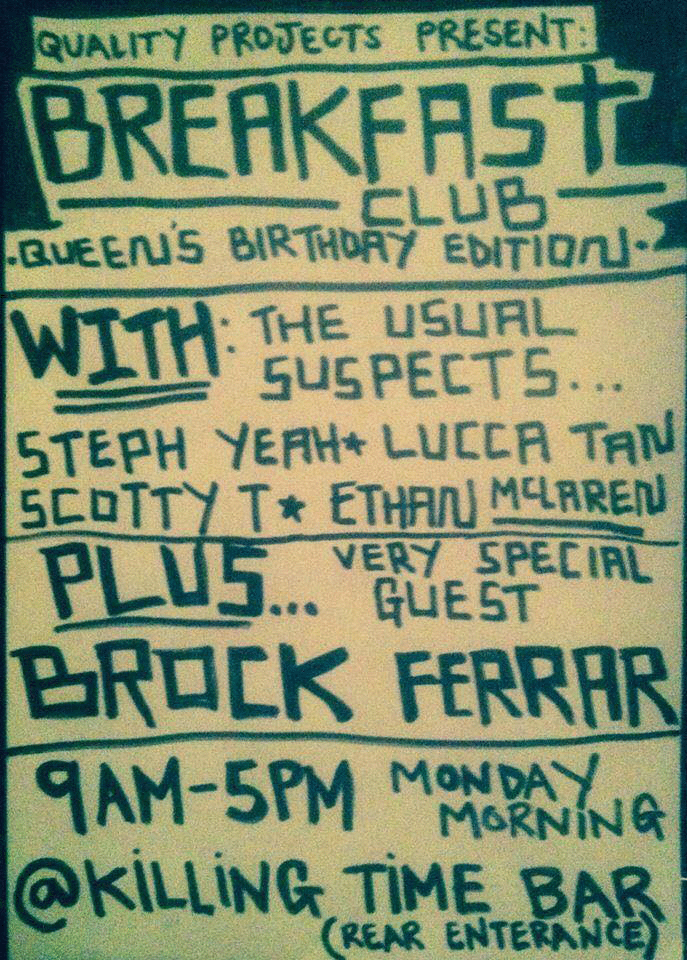
PICTURE: BREAKFAST CLUB'S FIRST EVER FLYER, 2014
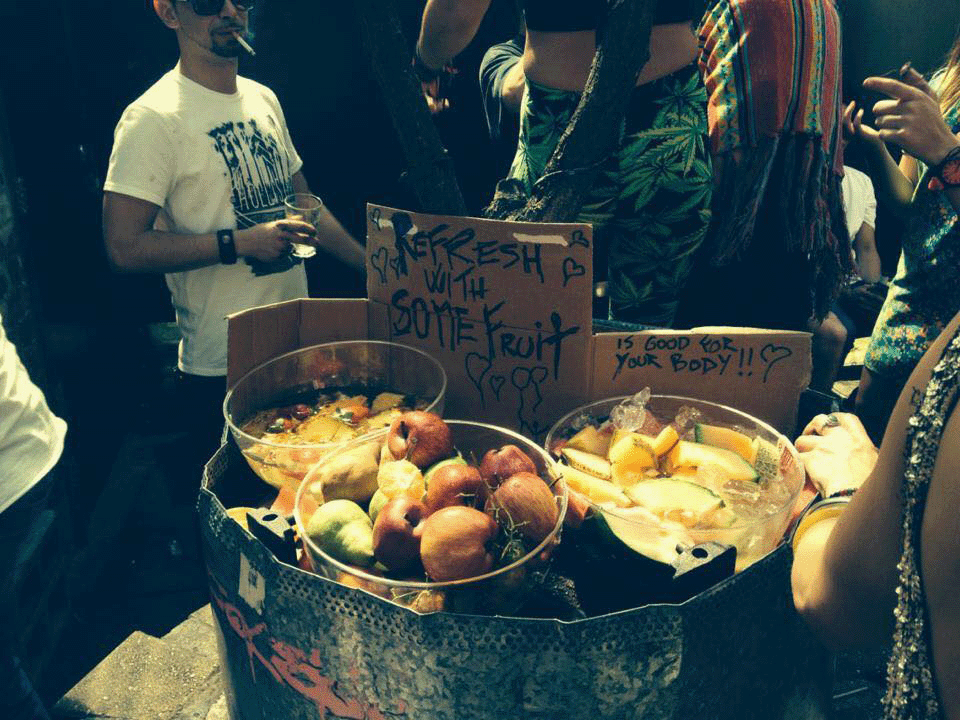
As you might expect, running a multiday kick-on party comes with unique challenges. “There's always little spot fires and stuff to put out when people are getting really buck-wild and loose. The space needs to be curated in a safe way, so we're always there to do that,” Ethan says. This includes providing abundant fruit platters to nourish dancers running on empty. The duo like to make sure there is always at least one of them present at the party, which is mentally and physically demanding week in, week out. “Self-care does come second to our love of the event,” Ethan says.
Ethan and Lee have a crew of friends who regularly help out, and the party has a natural way of taking care of itself. “There’s a lot of trust in each other on the dance floor, it’s very self-policing,” Lee says. “I don't think we would have made it this far in a lot of other cities where people aren't willing to be so open during the daytime, especially on a Monday.”
Yet after twelve years of near-weekly parties, Ethan and Lee have not run out of steam. “I'm feeling more comfortable with where The Breakfast Club is now than at any other point in its history,” Ethan says. The party has entered a new era with DJs from Melbourne’s northside now making regular appearances. Opening up the floor to new DJs has been a concerted effort in recent years to attract new punters and alleviate pandemic-era damage to the local nightlife. “We noticed post-COVID that Chapel Street started becoming very ‘King-Street-ified,’” Ethan says, in reference to Melbourne’s commercial clubbing district.
Underground music culture “died there on Chapel Street at that time” and moved elsewhere to places like Miscellania, Ethan says. The duo say they have since introduced themselves to the new music community that popped up post-COVID, which is bringing a fresh injection of energy to the party. “We strike a balance between engaging in new music communities and still speaking to our own music communities and putting them together because the ideals and the sounds are actually very similar,” Ethan says.
“This isn't our Breakfast Club. It's Melbourne's Breakfast Club.”
The ethos of The Breakfast Club is come one, come all. But breaking free from the societal demand of a 9-5 day is easier said than done. In the party's early days, Lee noticed that people who didn’t even have work on Mondays still felt apprehensive about letting their hair down. “They would still feel that they are out of place or doing something wrong by going to a club on a Monday,” he says.
So, how did these two kick-on faithfuls break the chain to create one of the city’s most anti-capitalist parties?
Growing up in St Kilda in the 90s and working in the hospo scene, Ethan saw firsthand the area becoming gentrified. “St Kilda was the land of Bohemia. Monday night was the biggest night because nobody worked. You didn't have to. You could just focus on your art.” From the outside, The Breakfast Club may look like a bender, but inside lies a mission to uphold ideals of hedonism that are diminishing in the culture. “I feel like it’s my personal duty to keep some vestige of that Bohemian culture alive,” Ehan says.
On the other hand, Lee moved to Australia from Ireland in 2011, where he’d grown accustomed to strict 3 am lockout laws. The pair quickly bonded over a mutual desire for long-haul partying. “There was so much happening on Chapel Street on Sunday nights that it rolled into Monday mornings, and it was just basically kick-ons,” Ethan says.
There were already a few recovery-style parties in the CBD and on Chapel Street, but they were mostly on Saturday and Sunday, Lee says. “They had a different vibe, especially in the city. It was very dark, and it was kind of like just coming off the back of the Melbourne bounce era. They had different ‘usages’, let's say.”
Ethan, Lee and Gabriele Terlicher, who decided to exit the partnership in 2025, saw the need for a new style of recovery party. “There were a few of us who got together, and we said we can't really be having these kick-ons in people's houses anymore. It's getting out of hand,” Ethan says. A non-negotiable for the group was that it had to be an open-air party in a courtyard, taking people out of the dark club and into the morning light. They went around to bars and clubs in the area, pitching their idea for a Monday kick-off party, with mixed results.
“We were pretty much laughed out of every venue except for Killing Time. Cam, the owner, who is just as crazy as us, said ‘I fucking love it. Let's do it.’” The owner, Cameron Coley Smith, took a punt on a wild idea and The Breakfast Club found its first home on Chapel Street, but it wasn’t an instant hit. In those nascent months, the event resembled a “pretty grim sort of kick-on”, Ethan says.
After a couple of months, watching their mates drop like flies one by one in the afternoon sun, they started to notice a promising trend. People were rocking up fresh, having not gone out the night before. “That just sort of changed the game,” Ethan says.
The party moved to a venue called Less Than Zero, the precursor to Glamorama in Fitzroy, where they started drawing crowds of over a hundred to monthly parties in the courtyard. Things got a little out of hand on one occasion, and the venue owners soon found themselves under the microscope of liquor licensing. Ethan and Lee needed a new location, ideally a bigger, more permanent home.
They bumped into an old hospo mate who was working at OneSixOne, who told them to come check out the venue as a potential new location. At first, they weren’t convinced. “It was always this kind of pretentious, high-heeled miniskirt sort of nightclub,” Ethan says. But they decided to give it a go, and in October 2015, the party moved across. Things really took off from there. “It just went absolutely bonkers from out of nowhere, and from there, we felt like we were passengers in a car that was being driven by some fucking other force, you know?”
It’s easy to assume The Breakfast Club identity rests less on the music than on the bender, but they are part and parcel. “There was kind of like a bit of an identity crisis of which way the music would go,” Ethan says about the early days. The party was trying to cater to the Rainbow Serpent crowd who were into their melodic techno, the Europeans who were into Romanian minimal, and the “big, bad Chapel Street tech house” scene, Ethan says. It was a steep learning curve programming the party in a way that kept everyone happy. “Keeping your Riccardo Villalobos lovers happy while you've got some dreadlocked Rainbow Serpent fucking prog dog going nuts,” Ethan says. “That's where a bit of the passion comes into it, I guess,” Lee laughs.
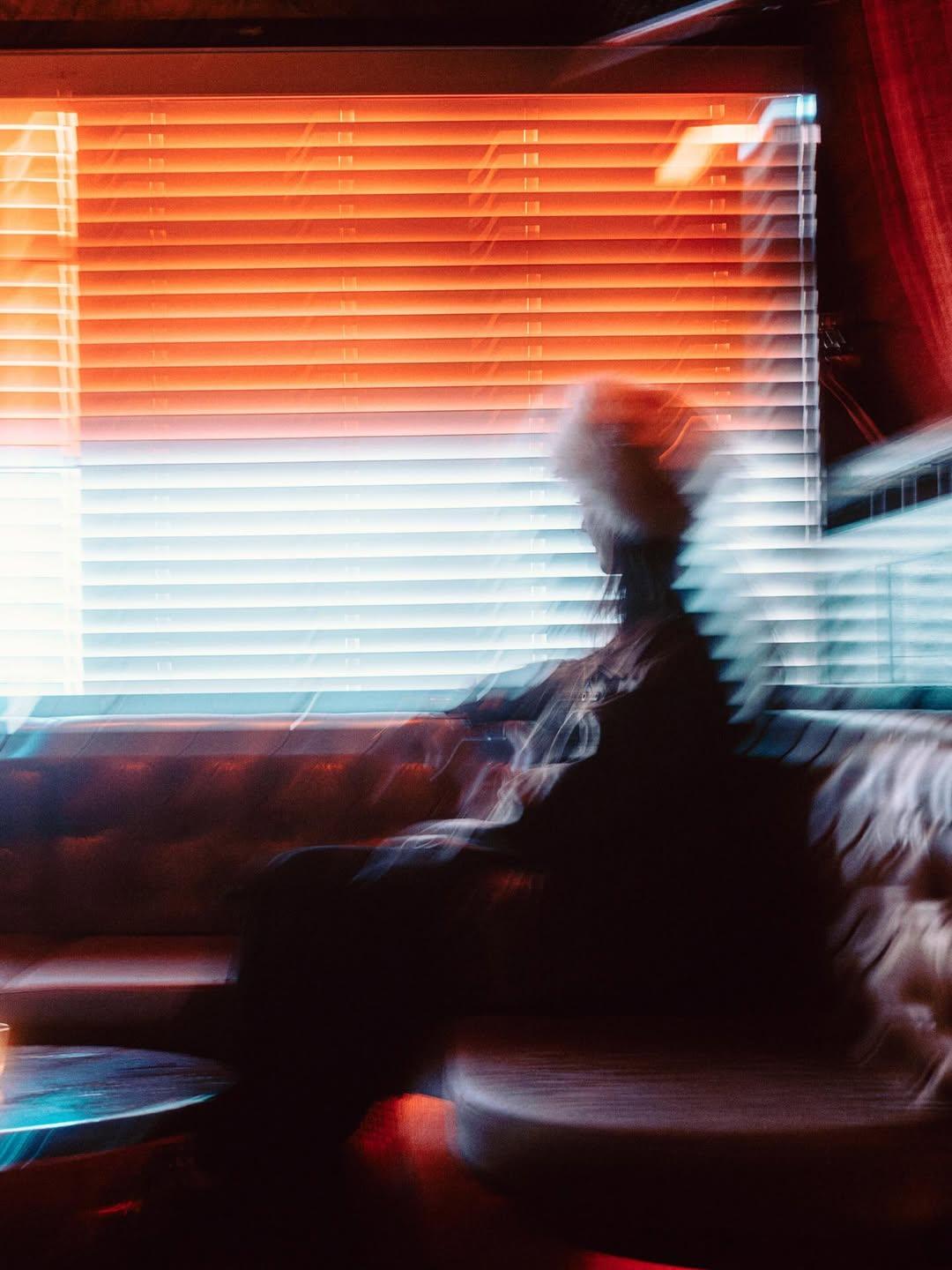
The length and format of each party varies, but on any given week, hundreds of regulars pour through the doors to escape the Monday melancholy. The party kicks off inside, and as the sun rises, smoky beams filter through the venetian blinds, lighting up clubbers gathered in Chesterfield booths. The kitsch 80s aesthetic of the club, paired with European tech house is an unexpected match. From 10 am, DJs play upstairs on the limited-capacity rooftop deck. Upstairs has a sort of nautical, spaceship aesthetic, where you experience what it’s like to cruise against the stream as you peer down from the circular windows at the normal world passing by on Chapel Street. If you’re still there Monday night into Tuesday morning (hats off to you), there’s a final trick to keep you stimulated on the dancefloor. The third and final room is equipped with a light-up disco floor.
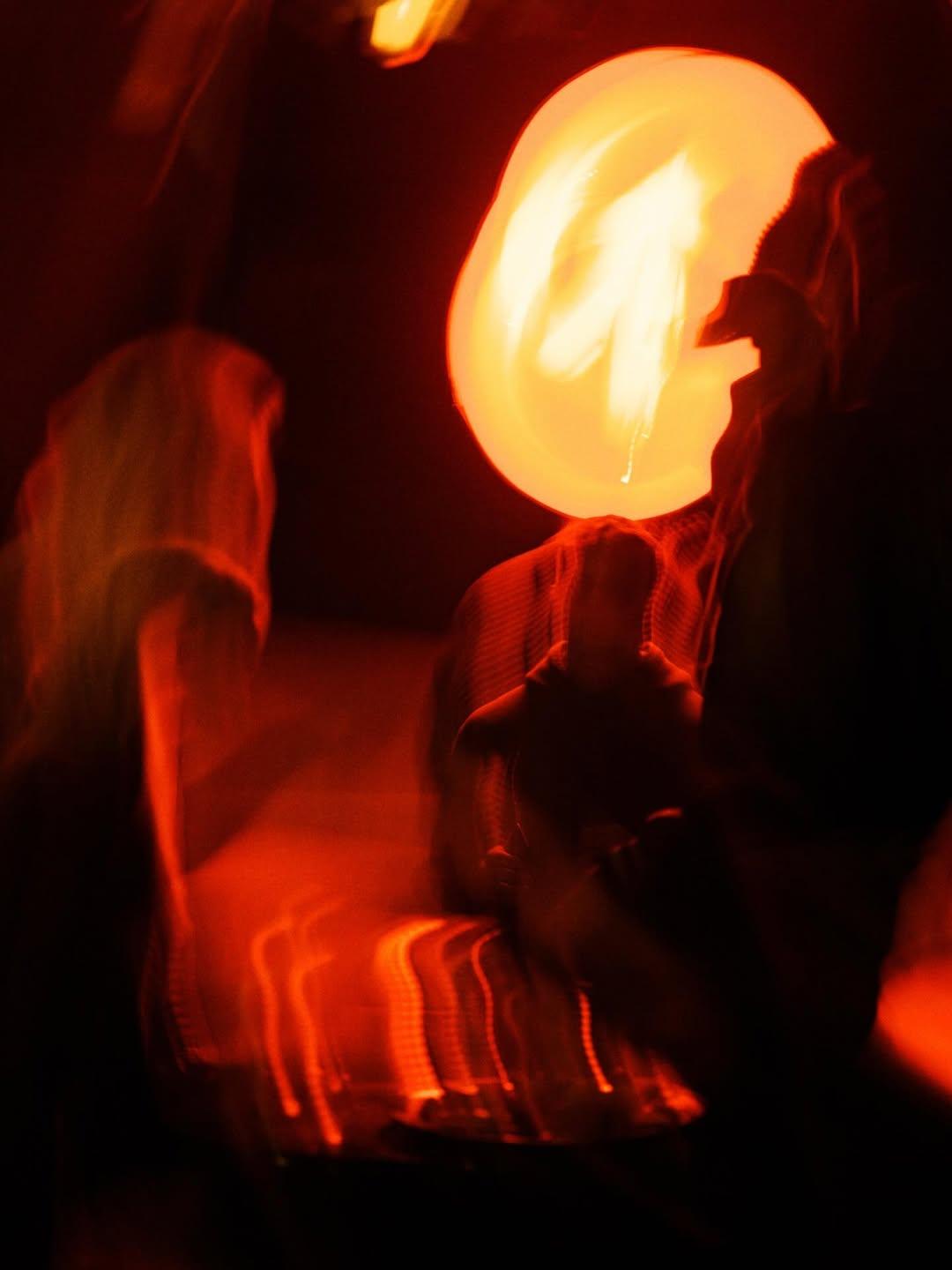
Choosing a highlight moment from the last 12 years is not easy. “The fact that we're a Monday party, we've had a lot of wacky moments,” Lee says. Sometimes international touring artists will play a last-minute set off the back of a festival appearance, leading to some memorable moments. One such time was when Denis Sulta played unannounced and stayed incognito during his set, wearing a hat, before revealing himself to the crowd. But in terms of “a watershed moment”, the most affirming day was when Archie Hamilton, Dana Ruh, and Fuse label heads shared the bill in 2018. “They were all plonked onto this random rooftop at like one o'clock on a Monday afternoon on a hot summer's day, and the vibe was just ridiculous,” Ethan says. “I was just like, what the fuck is going on here?”
Now nearing their 40s, Ethan and Lee know they’ll eventually hang up the towel for the next generation. “Whatever it comes to, we're happy for it to evolve,” Ethan says. “Passing the torch down is super important to what you do. That's the whole name of this game. That's what culture is about.” But for now, they’re not going anywhere. The duo’s sense of stewardship for Melbourne’s secret after-hours party has never been stronger.
“People from around the world come, and they go, ‘Oh my god, these crazy fuckers are still going on a Tuesday morning’, and that's important to us as a cultural legacy,” Ethan says.
-
The Breakfast Club would like to thank their crew for all the support over the years. A massive thanks goes to Gabri-L, Steph Yeah, Tahl, Lucca Tan, Blake, Dayle, Viktor, Scotty Pesticide, Nox, Gonzo, Apolett, Just Alice, Tommy, Pauline, Danielle, Souade, and Yarra.
-
Hugo Hodge is a freelance writer, originating from Naarm/Melbourne and recently acting as a reporter in the Asia-Pacific, but now enjoying a sabbatical in Mexico City. Find him on Instagram & X.
