


 MUSIC
MUSIC
Imagined nostalgia & the pull of early-noughties tech-house on ‘2004 Speculation’
Ikigai's debut release pairs Royston Bassmann's hardware-driven tech house with stills from Riley Hart's 16mm film about land speed chasers on Lake Gairdner.
Dig far enough into tech house, through YouTube channels endlessly featuring some of its most obscure works, time-machine-like blog forums or a particularly good Discogs seller, and beyond its sonic language, a visual one becomes clear.
It's a strange kind of nostalgia, given that most of today's dancers, DJs and producers were too young to experience that era themselves. Back then, when mainstream attention was pointed firmly elsewhere, the parties shared a visual language: lens flare, early-noughties tech and real photography, made before the internet started dictating how everything looked. There's an irony in that. Nearly a quarter of a century later, this music has shaped a far more futuristic culture, in a world that relies less and less on that human touch.
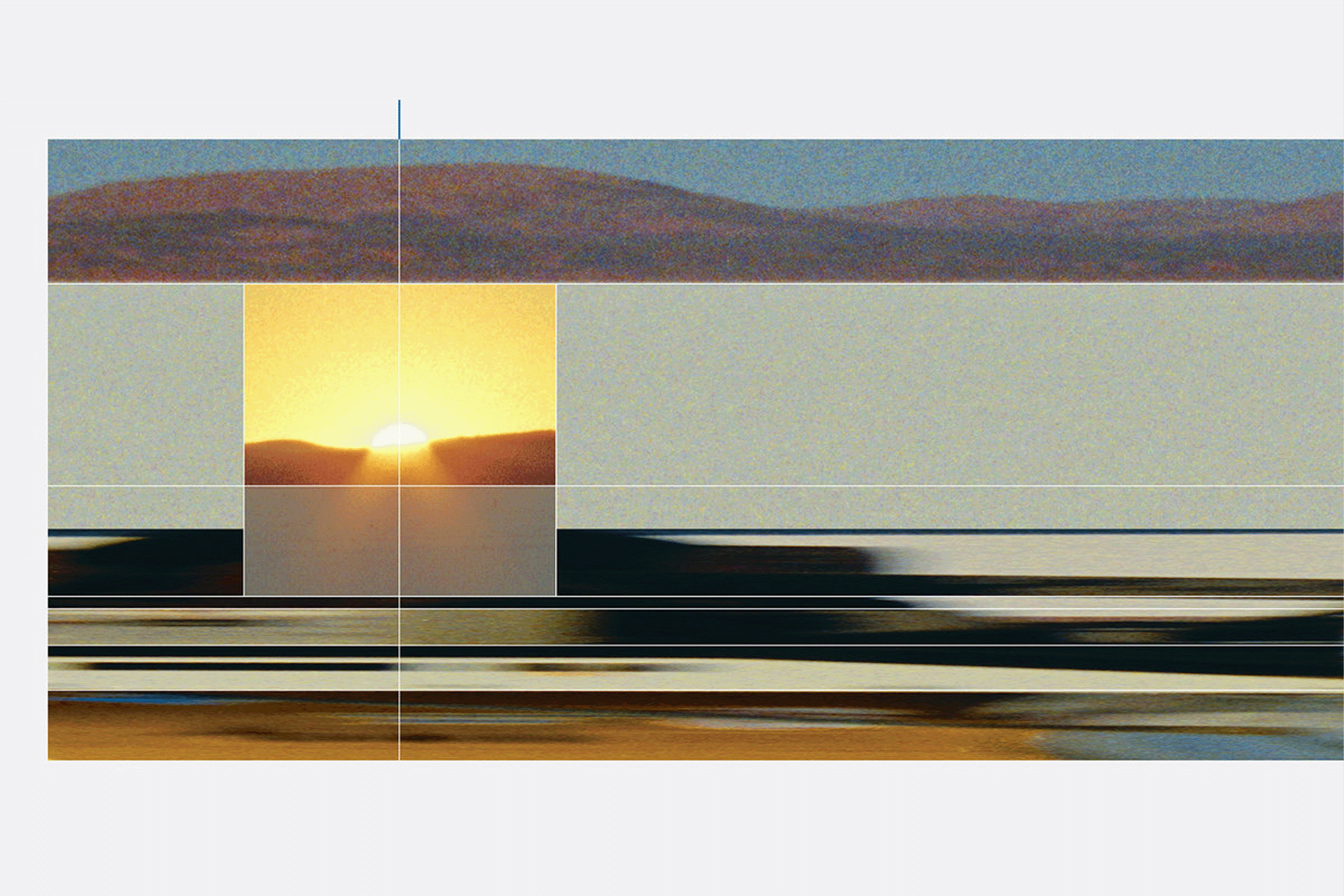
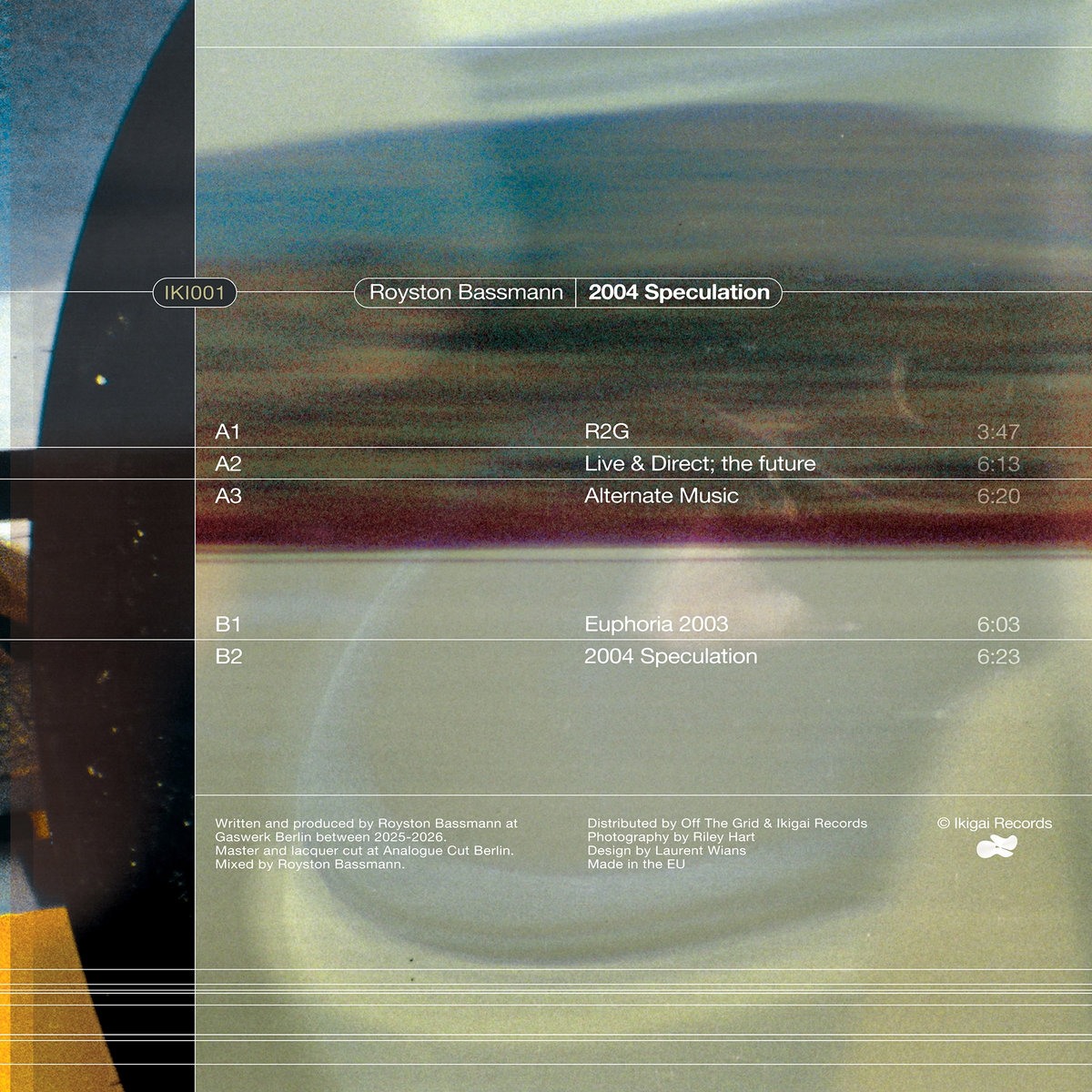
'2004 Speculation' wears that influence openly on its cover. The debut release from Ikigai, the Naarm/Melbourne promoter-turned-label, comes from Berlin-based Australian producer Royston Bassmann. Its artwork is drawn from 'Where The Grass Don't Grow', a short film by Riley Hart, whose work has screened at the Melbourne International Film Festival.
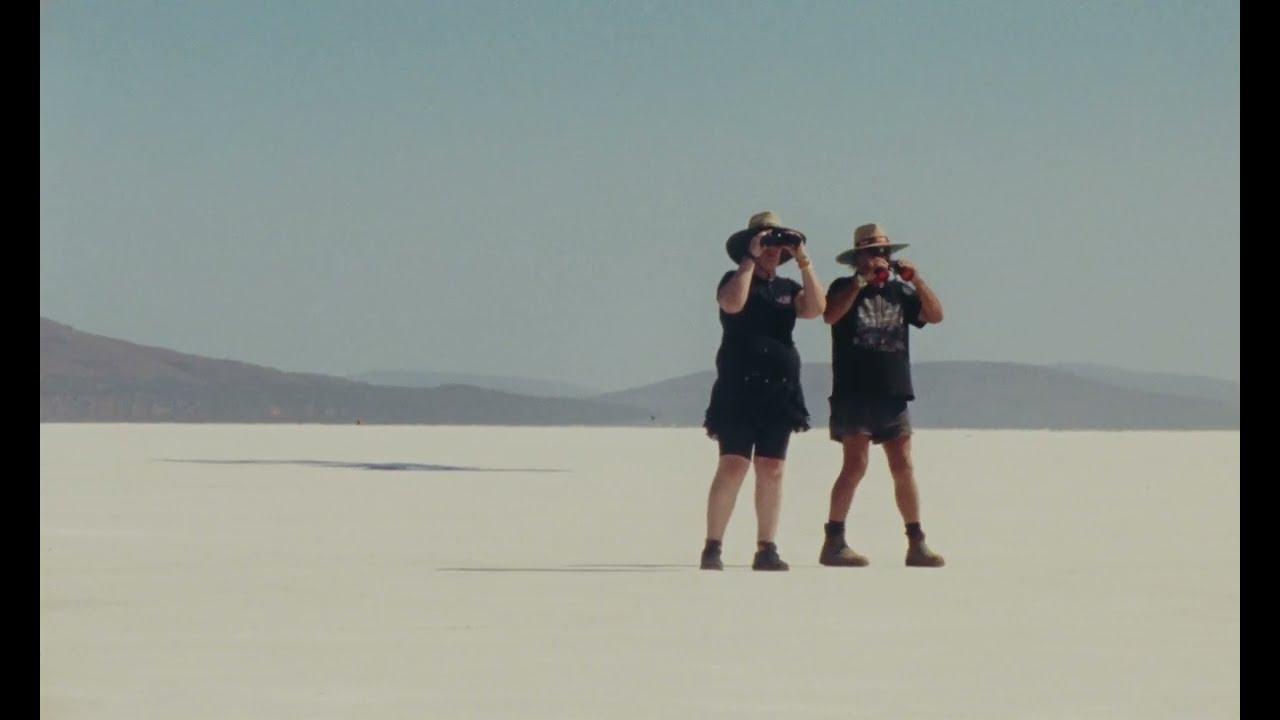
The film is far from the beaches of early-noughties Ibiza. Shot on 16mm, it follows drivers chasing Australia's land speed record across kilometres of hard-packed salt at Lake Gairdner in South Australia, set to music by local producer Alex Abrecht.
The film's ethereal, near-silent mood doesn't quite match Bassmann's punchy, off-kilter take on tech house and electro. What they share is a nostalgia for technology that is stuck in the past by nature, yet feels all too relevant in 2026.
To mark the release, Mixmag ANZ spoke to Royston Bassmann and Riley Hart about where their work meets, unlikely partners as they might be.
ROYSTON BASSMAN
Q: Royston, thanks so much for taking the time to chat. ‘2004 Speculation’ leans really hard into the sounds of early noughties hardware. What pulled you back to that era, compared to the sounds you might be hearing now that you’re based in Berlin?
ROYSTON: First of all, thanks for taking the time to chat about the record; I really appreciate it! Yes, for sure. The record was definitely made with that era in mind, and I’m fortunate to own quite a few pieces of hardware with those characteristics. I think what’s really drawn me back to this sound is my love for digging and playing records. I’m very fond of the 00s era of tech, electro, and everything in between, and that’s naturally influenced my production.
That’s not to say I don’t take influence from current music either. Being based in Berlin, and in Europe more generally, you’re constantly exposed to such a wide range of sounds and ideas. I think that’s one of the things I really enjoy about being here - there’s so much versatility in the music, and I’m always hearing things that influence me in some way.
Q: In the production of many releases, imagery is now regularly planned alongside the music, but in this instance, Ikigai let me know that Riley’s stills were chosen after the fact, based on how they felt. When you first saw the art, did it change how you listened to this music?
ROYSTON: Imagery has always been an important part of a release for me, especially with records. The artwork is often your first introduction to the music, so it naturally shapes your first impression. From the beginning, we wanted this release to have a hardcover sleeve and a strong visual identity that told its own story while still connecting with the music. Riley and Lolo had listened to the record and were briefed on the ideas behind it, and I was fortunate to be involved throughout the creative process. It felt very collaborative, while still giving them space to bring their own perspective. I wouldn’t say the artwork changed how I listened to the music; rather, it reinforced what the record was already trying to do and pushed the 00’s feeling even further. When I first saw the cover and inner print, it immediately felt right and brought the release together naturally.
Q: There’s a lot of timestamping happening on the record. Is this an homage or some kind of imagined nostalgia?
ROYSTON: I think it’s a bit of both. There’s definitely an element of homage in the timestamping - I have a real love for that period and the music that came out of it, so referencing specific years feels like a way of paying respect to that era. At the same time, it’s very much my own version of it, or perhaps a romanticised interpretation. I’m not trying to recreate the era exactly as it was, but rather capture how it feels to me now through the records I’ve collected, the sounds I’m drawn to, and my own experiences with that music. So there’s a certain imagined nostalgia to it, even though the references are rooted in something very real.
Q: Riley’s film is about people obsessively building and operating their own machines. Does that align with how you use hardware at all?
ROYSTON: There’s definitely a connection. Much of my relationship with hardware comes from spending time with the gear, understanding how it works, and gradually finding my own way to use it. You learn its limitations and imperfections, but also how far you can push it and what unexpected results you can get. That process can get quite obsessive. You make small adjustments, repeat things, and keep refining without always knowing exactly where it will lead. It’s very physical and intuitive, and the gear itself often shapes the direction of the music.
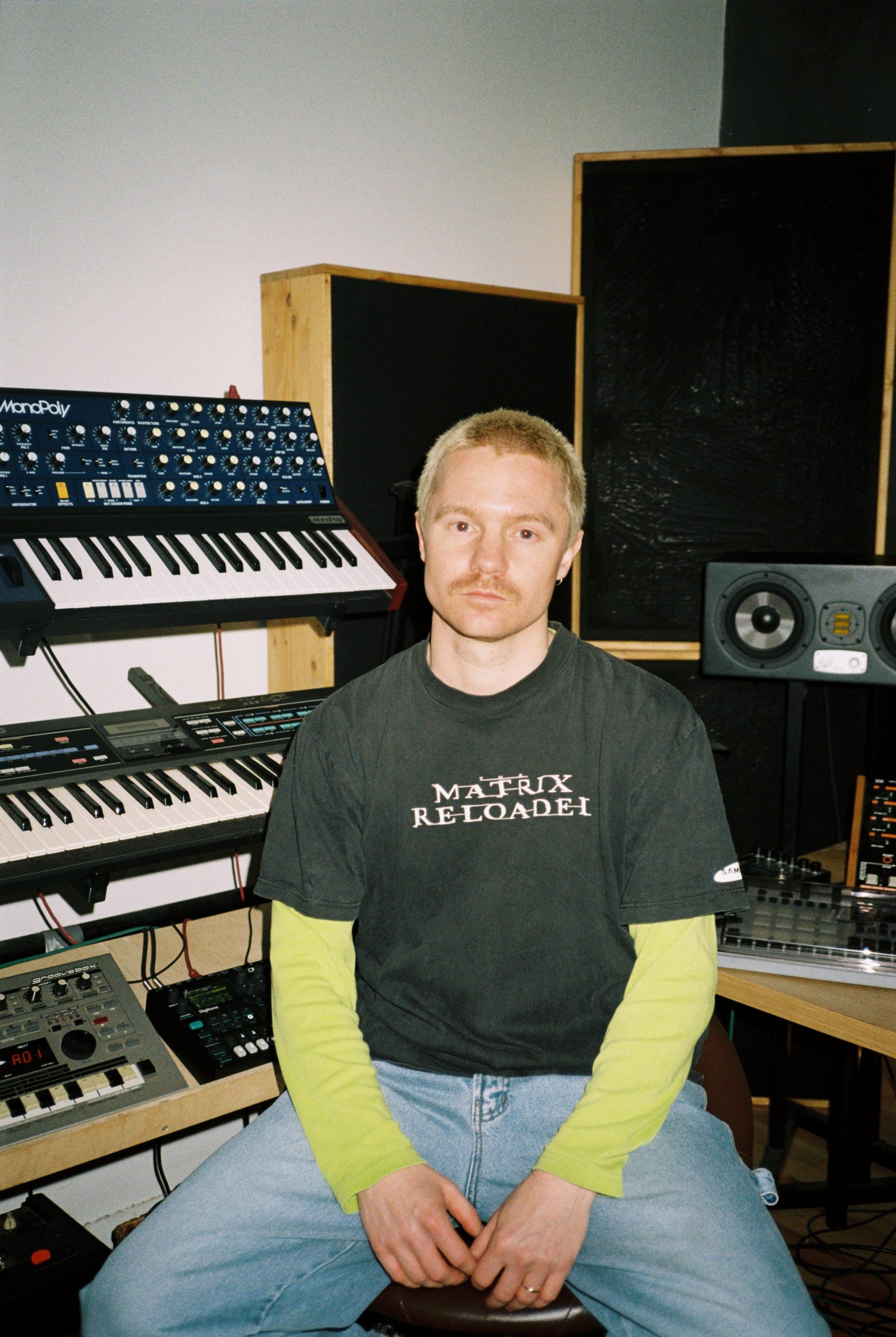
Q: As I understand it, everyone who touched the record is close: you, Riley, the graphic designer Lolo, and label heads Jack and Kristian. What do you think closeness does to a release compared to a more transactional kind of arrangement?
ROYSTON: We’re all quite close, which made the whole process feel very natural. The guys at Ikigai have been long-time friends of mine, and Riley and Lolo are both people I really value creatively. Everyone already had a sense of trust and familiarity, so ideas could develop openly and organically. Collaboration is a really important part of my creative process. I value the different perspectives people bring to the work, and I think that openness can create new artistic approaches and push the work in unexpected directions. Since this was also my debut release, having that support around me made the process even more meaningful. I think the shared care for the music, and for each other’s work, added something very personal to the final release.
Q: What did you have to let go of, if anything, handing the visual identity of the record over to Lolo and Riley's material?
ROYSTON: When music only exists as sound, it leaves room for interpretation. I’ve always felt drawn to the way different creative forms can shape how we experience something, particularly images that find something unusual or abstract in everyday surroundings, so the visual side of a release is naturally quite important to me. After spending so much time with the tracks, I thought opening them up to someone else’s interpretation might feel like letting go. In reality, the process was very collaborative, and I was fortunate to be closely involved throughout. Lolo and Riley brought their own perspectives while understanding what the music was trying to do. The final artwork feels like a natural extension of the record and gives it a visual identity I really connect with. It feels like a great visual representation of the body of work as a whole.
Q: Ikigai is named after the Japanese concept that describes one’s reason for being. Where does producing sit in that for you right now?
ROYSTON: I think it’s knowing that music is something I’ll never get tired of learning. You never really reach a point where you’ve mastered it. There’s always another way to develop your sound, learn something new, or approach things differently, and that’s a big part of what keeps me excited. As an emerging artist in a city as competitive as Berlin, you have to be willing to dedicate yourself to it. It isn’t an easy industry to break through, and building a life around something you love takes a lot of work and persistence. That’s part of my motivation. I still have so much to learn, and producing feels like something I can keep growing with rather than ever feel finished with.
Q: Tech house has a pretty specific set of contemporary reference points at the moment. Where do you see this release sitting against that?
ROYSTON: I see the release as connected to tech house and its current reference points, but from a slightly more disjointed and unusual angle. I’m interested in contemporary production, without trying to recreate a particular sound or place the record too neatly within it.
My process is quite open-ended. I’ll follow an idea, pull it apart, and keep unexpected elements if they add something interesting. The tracks still have the structure and functionality of tech house, but they sit alongside choices that feel less polished and more unpredictable. I wanted it to relate to the current sound while still reflecting how I naturally make music. I hope it can find its place within the current landscape while still showing a sense of individuality.
RILEY HART
Q: Have you had a chance to sit with ‘2004 Speculation’ front to back? Given your stills were chosen for it after the fact rather than the other way around, was there anything in the record itself that surprised you?
RILEY: I have indeed had the pleasure of a front-to-back listen. What stood out most is the way it can't be pinned to an exact time or place. There's a sense of retro-futurism in the music that I find extremely comforting - the kind of forward-looking optimism I align with completely, and which I feel is mirrored in the world I tried to capture in my film. I was really gripped by the opening track 'R2G'. The collage of samples Roy puts together immediately situates you in the record's tone. It's playful, experimental, trippy, and crucially for me, cinematic. In the first two tracks, I feel like I've been introduced to the world, mission control, and then taken to the ship, ready for takeoff.
Q: Lolo took your film stills and manipulated and rearranged them for the sleeve and inner artwork. What's it like watching your original frames get reauthored into something built to sit alongside someone else's music, rather than your own edit or score?
RILEY: I was curious to see what direction Lolo would take with the material. I delivered a file full of film stills and didn't see it again until it was nearly done. My first impression was how timeless it felt. In my film, I had a motto that I wanted to create visuals that felt like they could have been shot in 1970 or 2020, and you wouldn't, or couldn't, be sure which. I feel that with what Lolo made, too. It looks like a cover I could have found in an older cousin's CD collection from when he was young, or in a friend's record collection now, and either way I wouldn't be surprised. I think my visuals, with Lolo's design and reinterpretation, fit the music perfectly. Everything about the sound is suggested in the visual language: speed, trip, glitch, the future, the past, both near and far.
Q: Do you listen to music while you shoot or edit? Was there a sound or rhythm in your head out on the salt flats that, in hindsight, feels close to anything on this record?
RILEY: I'm always listening while writing, editing and shooting. My filmmaking is so much about tone and feeling, and music is one of the most powerful levers you have to pull in that department. Driving out to Lake Gairdner, I'd been listening to things far sparser and more atmospheric: the guitar records of John Fahey, Neil Young's soundtrack to Dead Man, those kinds of western-feeling records. I got the film back from the lab, started editing to that music, and immediately realised it was wrong. I needed something that conveyed the sensation of the actual cars and bikes, not just the atmosphere of the place. That's when the score moved toward something much closer to Roy's world - slightly religious, slightly futuristic, the feeling of speed and of a trip about to leave the ground.
Q: Your ongoing still-photography project, "Plain," runs alongside your film work. When a single frame gets pulled out and repurposed like this, for a record sleeve rather than a film, does that change what the image means to you?
RILEY: ‘Plain’ has been running alongside the film work for years now, and the two feed each other constantly. Plain is a photo series I have been shooting in central Australia that loosely examines how modernity (technology, climate, public policy) is thrust upon those who don’t always want it. I used to think of a still as either belonging to a film or belonging to the photographic project, but this has softened that for me. Seeing a frame pulled out and rebuilt by someone else makes you realise the image was never only doing one job. If anything it clarified something for me; the feeling of the film is so tied to the look of each shot that an image seems to hold onto itself even out of context. I hope you still feel the heat of the land, the speed of the vehicles and the concentration of the drivers, whether it's on a screen or a sleeve.
Royston builds his tracks from vintage hardware and outboard gear, chasing a harder-to-control, older sound instead of the cleanest modern option. Do you see much alignment with the themes in your film here?
RILEY: I don't claim to know the intricacies of music production particularly well, but I find myself always connecting with Roy's way of working. There's a boundlessness of design in the late 80s to early 2000s that I'm drawn to. Things were so completely over-engineered in that period — a total mastery of analogue manufacturing combined with the optimism of early digital experimentation. I see parallels in the film's themes, but more in the methods and technical choices I made. I shot on my favourite cameras, one being an Arri SR2 HS, a high-speed 16mm camera.
To my mind, it's a perfect instrument. Made in the late 80s or early 90s, the peak of German camera engineering, where analogue and digital sit in perfect harmony. You are still shooting on celluloid, but the motors and onboard systems deliver a level of precision and consistency. I wanted to mix that cleaner look with an older 16mm camera from the early 1960s, an Éclair NPR, which produces far more unpredictable and often more textural results. Then I added Super 8 sequences to further mess with the texture and the feeling of speed in some scenes. I can hear that same mix of sounds, mediums, recording and mixing methods in Roy's album. It's the same with the cars and bikes out on the salt flat - the drivers are mad scientists in a lot of ways, mixing and matching parts to get the most out of their machines.
Once the record's out in the world with your imagery on it, people who've never seen your film will encounter those stills as record art rather than documentary frames. Does that reinterpretation sit easily with you, or is that part of what made handing the work over interesting?
RILEY: I used to be precious about the sanctity of the thing I was making, but I've come round to the idea that any engagement with the work is a good thing. Roy, Jack, Lolo and I share a lot of taste and references, and I feel safe knowing the images are being stewarded by people I respect and who I know feel the same way about my work.
Art stagnates when it walls itself in. I'm constantly inspired by engaging with someone's work from a completely different medium. I love how music and film intersect. I can't separate one from the other, and I'm always imagining the places that music represents. Jack first approached me about using stills from the film for Roy's record, and I knew he could see the music in the imagery.
When I heard the tracks, I couldn't help but agree.
-
Jack Colquhoun is Mixmag ANZ's Managing Editor. Find him on Instagram.
