


 SCENE REPORTS
Dark Mofo & shock's growing universal appeal
The festival's 2026 edition proved that there's never been a better time to slow down & pay attention.
There’s a kind of distance and time that all good art deserves. Walking out of a show, a festival, a gallery, or even a museum, it can feel strange, if a bit unrehearsed, to suddenly blurt out how something made us feel. Who can blame us? We’re used to it. Any thought we have is often immediately visible to dozens, hundreds, thousands, and for some of us, millions of people at a moment only barely longer than it took to have the thought in the first place.
In most instances, that moment is best filled with discussion. Art is increasingly a communal undertaking, seen and experienced as part of a greater social or cultural excursion, and the moment immediately following, where art has fully worked its way into our minds and our souls, we’re thrust back out into the world, expected to wear it like clothing, and carry on to dinner.
It’s in that moment of pause that I’ve thought about very little beyond Dark Mofo, the Nipaluna/Hobart festival first launched in 2013.
The festival, launched by MONA (Museum of Old and New Art) owner David Walsh, creative director Leigh Carmichael and musician Brian Ritchie, has, for over a decade, earned itself and its home city a reputation for the weird, the wonderful and the often problematic.
It’s a festival that, for many who like festivals, has remained on the eternal to-do list. For this writer, that has long been the case, with a desire to experience the fringe of culture that a city like Nipaluna, I now realise, can put on show quite unlike any other. Attendance is a pursuit that I’ve long aspired to, but is one that, increasingly, comes with a pricetag even beyond the usual expectations of a festival of its scale.
2026 was, in many ways, perhaps the weirdest time to attend for the first time, and for that, I feel both incredibly lucky and perpetually guilty. Art, on a broad scale, has never had less nor more meaning in a world that vocally excuses the most reprehensible of actions while challenging its most pure in our highest courts. Of course, such a statement is incredibly reductive, but it’s in this environment that the gloom, the cold and the dark, pulsating glow of Dark Mofo’s red cross feels more relevant than ever before.
Dark Mofo has taken on a new life in recent years, marked most notably by the welcoming of Chris Twite, the festival’s Artistic Director, previously part of Falls Festival, and an fbi radio host for almost twenty years.
The festival’s more modern pursuit of ‘the weird’ has landed it in understandably hot water, most obviously in the reaction to ‘Union Flag’, a proposed artwork by Spanish artist Santiago Sierra for its 2021 edition, in which he called for First Nations people to donate blood to drench a British Union Jack “in the blood of its colonised territories.” Tasmania is home to some of the most brutal and well-recorded acts of violence and genocide against First Nations people, including massacres, dispossession, and forced exile.
In 2026, such a controversy feels like a mere cliff note in the news cycle, perpetrated by some figure who will never be held to account for it. Not discounting the very valid criticism of such a work, particularly from a man from a colonial country, it’s with this kind of perspective and slight dubiousness that I prepared for my first experience at “goth schoolies”. It’s an experience I ultimately decided to undertake as a solo operator, and though I would come to find many kindred spirits amongst an incredibly packed second weekend, it’s one that many people, for various reasons, shirked simply due to cost.
It can’t be ignored, Dark Mofo is an expensive place to be.
Mixmag ANZ’s reputation for honest work, and no doubt the international prestige that its global name carries, did plenty to assist with Dark Mofo providing access, board and travel, but to a punter, there’s a high price to pay in seeing everything that Dark Mofo has to offer.
In stepping off the plane on its second weekend, it was hard to ignore that there’s a lot of Dark Mofo that you’ve likely seen before. One of its most obvious and Instagram-worthy spots meets you immediately at the tarmac, a large red sign, this year reading, “MY COLD EMBRACE”, as countless yuppies dressed in black were shuffled through the confines of Hobart Airport.
Immediately, Dark Mofo’s identity becomes intertwined with Hobart, a city that has embraced the metric shitload of attention the festival brings. At the baggage carousel, an ad for the festival, in which a group of women in pink Lycra hit sex poses in unison (more on that later), is part of a rotation that also includes a winery advertisement and a call to visit Maria Island National Park and its population of wild wombats. On my rideshare from the airport, my driver was a very well-meaning older gentleman who moved to Hobart from Dubbo with his wife, a now-retired teacher, several years ago. His warmth was undeniable, and at the first mention of “the Mofo festival”, he shared that they were off to Dark Park in the coming weekend, a lighting installation aboard The Spirit Of Tasmania, and recommended a great restaurant near my hotel.
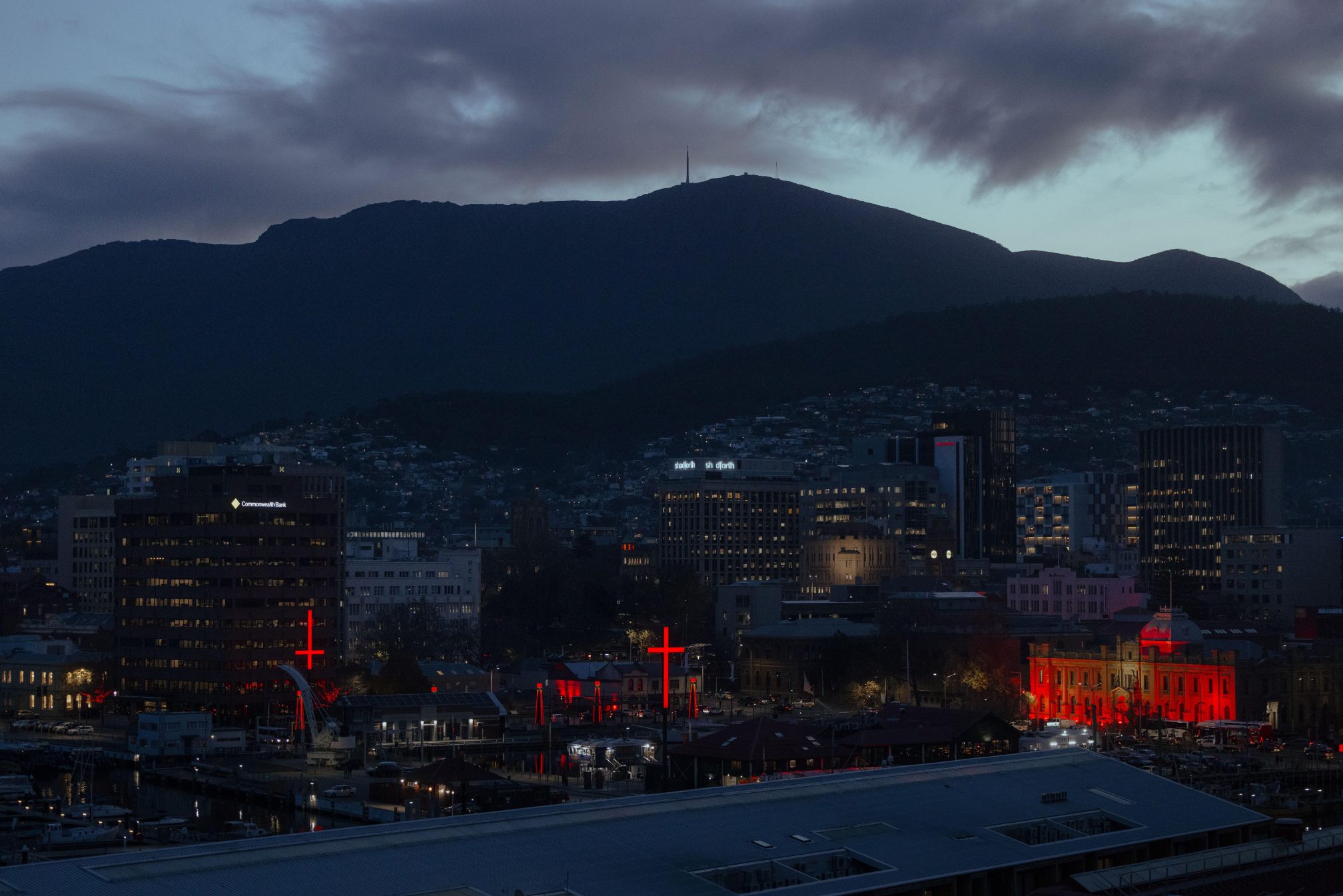
Hobart is a lovely place. It’s calm, there are signs of nature everywhere, and though the roads can get busy, there are really only a few of them. The festival’s iconic cross and its deep shade of red appear on every street and line the harbour. The juxtaposition between these two images stayed with me throughout my stay.
The Thursday of Dark Mofo’s second weekend started with a huge bang, a performance by Headache, the spoken-word project of French producer Vegyn and British poet Francis Hornsby Clark. With the city’s Odeon Theatre as its backdrop, countless eager attendees packed into the space for a show set to feature only them, with no support. As in any arts festival, contemporary conversations that influence the arts are undoubtedly present, for better or worse. Headache’s use of AI-generated voice, bringing to life Hornsby Clark’s poetry, was novel on the duo’s first album, ‘The Head Hurts, but the Heart Knows the Truth’. In 2026, however, embracing AI has come with a far deeper and more understood kind of critique. Platforming a duo with not only a loving fanbase but also sitting at the centre of a fraught, ethically-based conversation on creativity was no doubt purposeful. Headache’s set, while fun in its presentation, saw the duo placing these AI vocals at the very front, fusing them with a variety of edits of popular songs, rather than their original instrumentals. That included The Smiths, Gorillaz, and more, while visuals, which included uncanny valley animals, faces and families with a distinct AI quality to them, played as their backdrop.
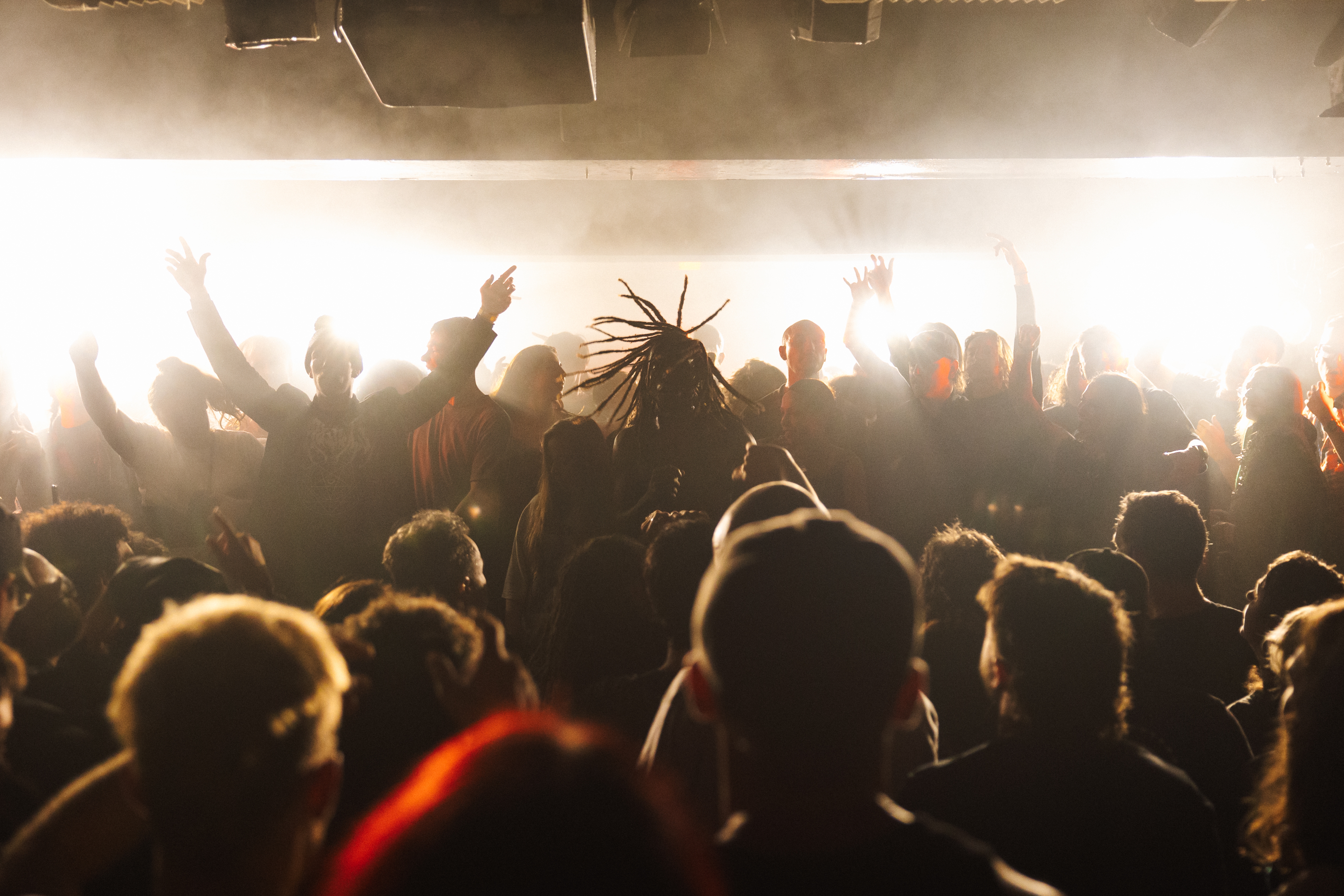
From there, Kenyan musician and singer Lord Spikehart, lauded as a figurehead of greater Africa’s hardcore scene, totally smashed to pieces the nearby Altar Bar. Dark Mofo’s dark reputation has long extended into its platforming of more “hardcore” music, both traditionally hardcore in definition, but noise, IDM, and music that is, like Mofo’s artistic intent, not for the faint of heart. Here, the calm and well-meaning message behind Headache was challenged in its most real sense, with Lord Spikeheart's wall of brutal metal sounds and intense enthusiasm driving the crowd into a fever, in which many people rushed the stage and moshed alongside him.
He left an impact that was incredibly difficult to beat throughout the weekend, a feeling of real, raw intent that sits at the core of what I imagine Dark Mofo to be, and which festivals like Unsound, Soft Centre and others have continued to hone.
Continuing that same rawness was Texas band Power Trip, once again back at the Odeon Theatre. The band, who’d not appeared in Australia for eight years, were met with countless hardcore fans, more than ready to throw themselves into the circle pit at singer Seth Gilmore’s call, or as the show went on, circular finger motion.
A similar kind of mania gripped the crowd back at Altar Bar that evening for Skin On Skin. The artist has become a mainstay of any conversation around Australian dance music’s popularity, particularly on the more easily recognised global stages, and his presence at a venue with a comparatively minor capacity, such as Carriageworks, which he played the very next day, showcased Dark Mofo’s desire not to adhere to the size, scale or notoriety of artists in how they programmed.
The following evening, that same bounce between venues, of which the Odeon Theatre and Altar Bar were the most frequented and thankfully only a block away from one another, saw a similar dance between showings for Ninajirachi, Kelly Moran and Sega Bodega.
Ninajirachi, inarguably one of Australian dance music’s most talked about names, drew in a crowd of curious Dark Mofo tragics and desperately supportive Hobart locals, particularly as the show was open to anyone over 16. With all the star power behind her that she’s mustered and deserved since the release of ‘I Love My Computer’ late last year, Nina’s control over the crowd was second to none all weekend.
At Sega Bodega, a similar kind of obsession was on show as the artist danced atop the decks in true ‘EDM’ style, DJing a set that the crowd was reminded, on many occasions, was entirely his own. With a similar kind of AI-coded visuals on show, though perhaps a little too eagle-eyed to be entirely precise on this, the energy here was worlds away from the comparatively relaxed showing at Headache just the night before.
At this point, whether to you, the reader, or to this writer, Dark Mofo was beginning to feel like it was made up of these kinds of big, slightly isolated experiences, drawing in an incredibly versatile crowd to each. But what truly unified the weekend was Night Mass.
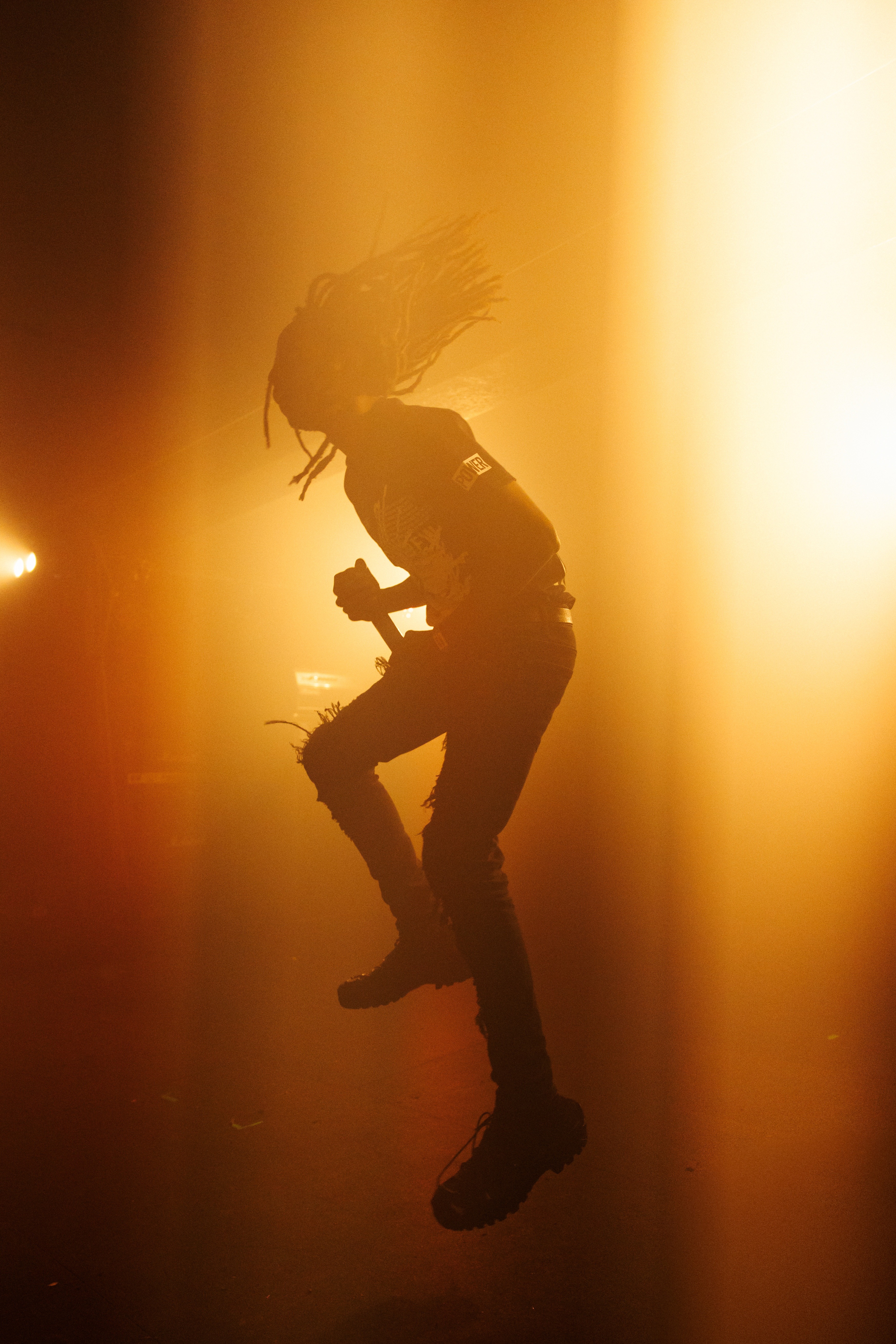
There are many ways that one might hope to describe this kind of experience, and while every Night Mass has been different, or so I’ve heard, this one felt based around a kind of apocalyptic jubilation.
In short, this year’s Night Mass was as if a superclub had set up shop at an abandoned department store. An entire block shut down, bonfires line the street on entry, with trans men working the bar and squeezing alcohol out of dildos into the mouths of willing punters as they stop to find their bearings. While you might try to find your bearings at Night Mass, it’s increasingly impossible to do so. Outside, a loading bay was taken over by Naarm/Melbourne collective INBRAZA, throwing their baile stylings out night after night. Further afield, a carpark was turned into an intimate stage, featuring a reappearance by Lord Spikeheart, POSSESHOT, and many more. Inside, atop a giant neon doll’s playhouse, artists like Becca Hatch, ATARANGI and more featured on its many platforms to an incredibly enthusiastic and gobsmacked crowd.
A winter wonderland with a talking seal and krill puppet, complete with an ice-sculpture penguin for lujing shots of vodka, was a hidden escape, and upstairs, a private cabaret room, a functional two-storey slide and a room created in memory of Chickenfeed, a discount retail chain now no longer in business, provided plenty to gaw and giggle through.
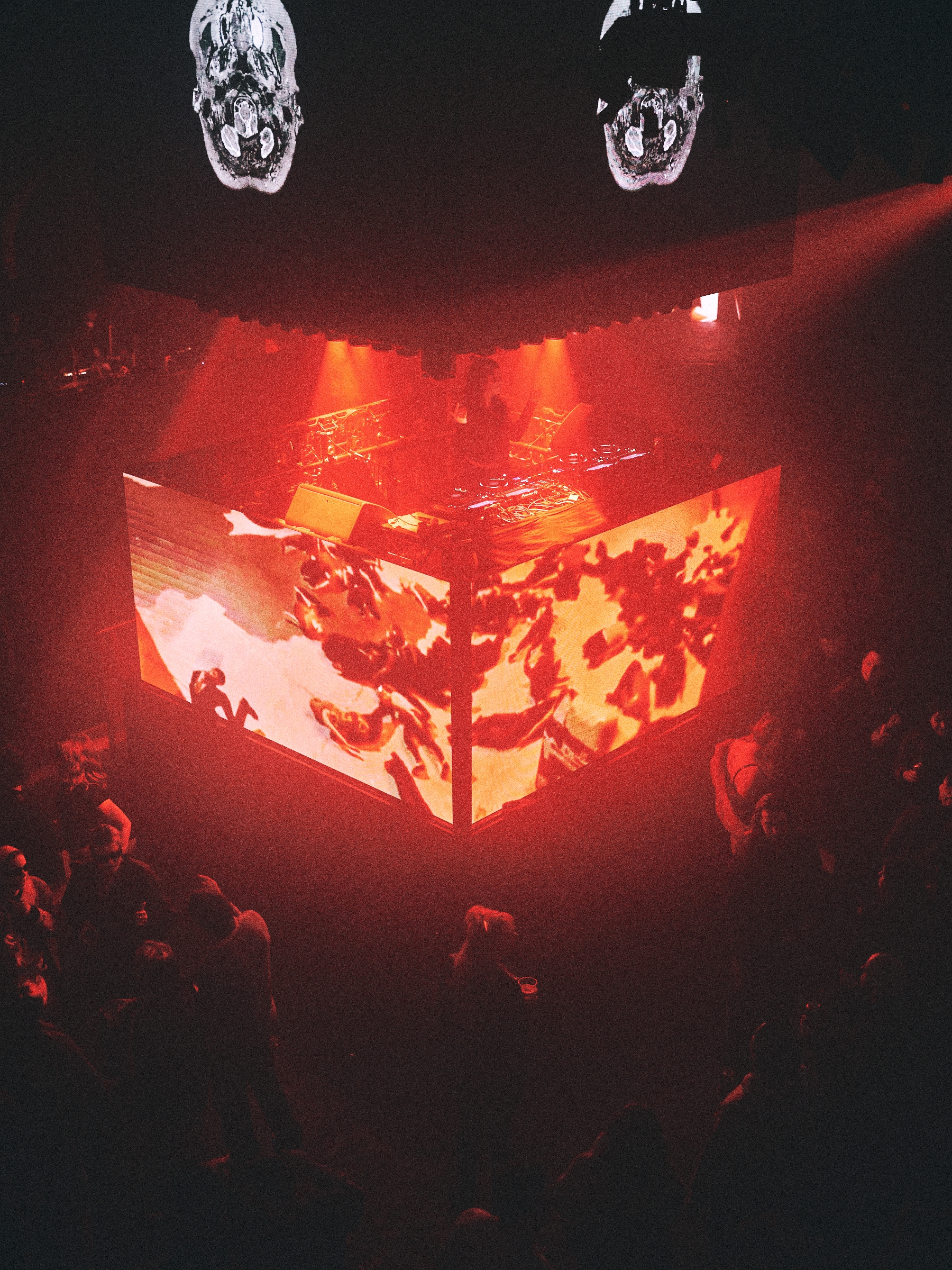
In its biggest room, Night Mass programmed the likes of Obelix and fbi radio’s Deep Web host, Krishtie Mofazzal; a reappearance by Skin On Skin; Naarm producer Fresh Hex; DJ PGZ back-to-back with Yikes; “Godfather of Budots” DJ Love; and, no doubt, many more. Here, Night Mass delivered on one of the closest things to a superclub that Australia has had, erecting a huge pillar in the middle of a giant room surrounded by screens, upon which artists performed, metres above the crowd and at its centre. Visual artists Passive Kneeling and Aakarsh Singh provided an endless supply of tongue-in-cheek visuals, memes, and futuristic interfaces as the artists’ backdrop, with lighting by Blake Hull-Moody, who has lit Inner Varnika, Meredith, MODE, Soma, Outsider, and many more.
In short, it was overwhelming in the best possible way.
Here, in many ways, Dark Mofo revealed a side of itself that is not easily captured in photos or video. Whether in the names already mentioned, the curatorial efforts from the likes of Darren Lesagius and Lane Norice Pitcher, or the countless other minds and hands behind it, Night Mass pushed a kind of controlled chaos and discovery that, in my view, is yet to be replicated anywhere else in the country.
In the days that followed, with the likes of Acid Mothers Temple, Blackwater Holylight, Princess Nokia, Protomartyr, Wu Lyf, and many more, this kind of chaos began to clarify its intention and execution.
With the idea of “goth schoolies” almost inseparable from its reputation at this point, one could be excused for thinking that the general cohort at Dark Mofo is just that. In many ways, you would be right, but increasingly, as the festival has grown in notoriety, that crowd has become a dedicated feature, rather than its base.
In reality, as I perceived it, Dark Mofo is increasingly a place for everyone. In theory, this idea is only positive. Art should be available to all of us, and the impact of showing fewer goth-adjacent punters the extremes of Dark Mofo’s musical programming should be something to strive for, whether by lifting up less “initiated” people or challenging them as the festival sees fit. The world we live in demands an open mind, and for Dark Mofo to have become a “must-see” in the eyes of less-inclined locals, tourists, and more can ultimately be a positive.
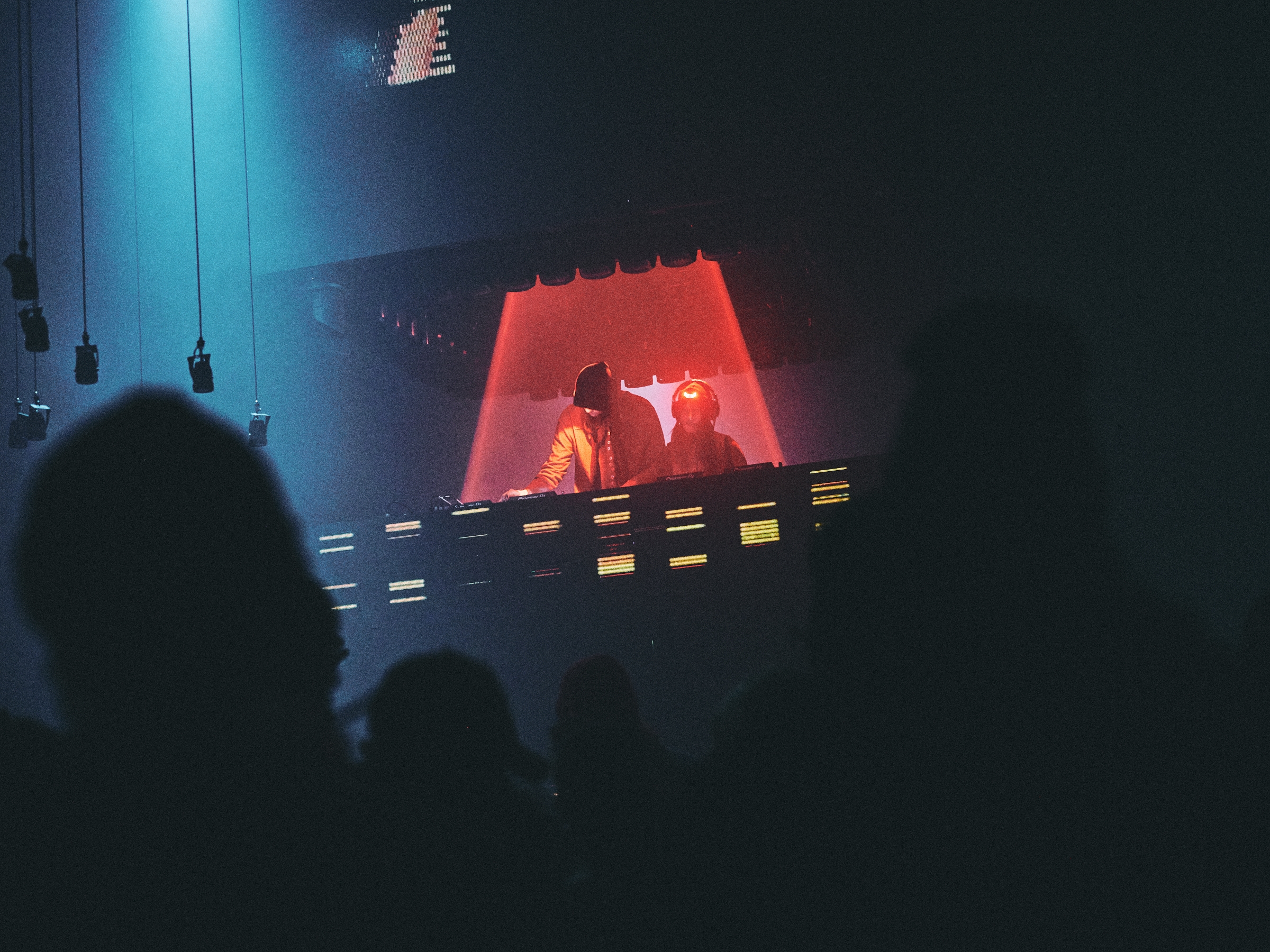
What it does leave, however, is a logistical concern that doesn’t feel in keeping with the festival's mantra. In visiting Dark Park, the aforementioned takeover of The Spirit Of Tasmania and its surrounding dock, visiting Mona, its founders' very well-financed baby, or wandering the culinary offerings of its Winter Feast, perhaps the most obvious interaction one could have would be simply to wait in line.
Standing in line with prams, with older white people giving an uncomfortable emphasis on someone’s race in retelling an anecdote, or shuffling around at Dark Mofo’s many, many, many bars, the crucial financial weight of this patronage becomes clear.
In retelling this and thinking about it at great length, the point here is not to exclude these people, but to consider what art means when it becomes less a focus and more a spectacle. While so much of the art, thought and work on display at Dark Mofo should be celebrated in isolation, it's impossible not to view it as you do, shoulder to shoulder with people who, in a world increasingly schismed, you may not see eye to eye with.
Support for Dark Mofo’s arts programme was undeniable. Whether at Dark Park, an absolutely insane showing of magic and strength at the City Hall, or at SOLAS, the provocative contemporary dance and installation work by Spanish artist Candela Capitán, lines were out the door and, in some cases, around the block.
With Dark Mofo’s musical programming saying so much, these moments of obscurity, where meaning was meant to be perceived rather than told, became so relieving to engage in. While a moment of art may, at some festivals, be reserved as a respite, Dark Mofo’s art challenged in ways that complemented the structure and rigidity of music programming.
My friends and I have developed somewhat of a habit of creating a human table when the party stretches on “a little longer than usual”. It’s an incredible feat of acrobatics that’s amused us to no end for about four years, and though the majority of us have pushed beyond 30 since, an age where complaining about ailments has grown more frequent than ailments themselves, it’s something we oft still do.
To those unaware, it takes a minimum of four people to create a human table, where everyone falls onto each other’s legs to form a square.
We’ve thought of building on it before; the most popular concept was to add a waiter and a customer role to the mix, where someone could lay a tablecloth on the eight-legged table, set out a cup of tea, and calmly take a sip on the dance floor.
Like any activity befitting a kick-on Olympics, it’s a kind of in-joke that we’ve given ourselves all too much credit for repeating. It’s also, understandably, something that has grown slightly less ridiculous the more often we do it. It’s by no means art, but to us, it comes close. I’d never really thought that it was a skill or an idea that had too much meaning, but Dark Mofo was the site of perhaps the most incredible human table I’ll ever lay my eyes on.
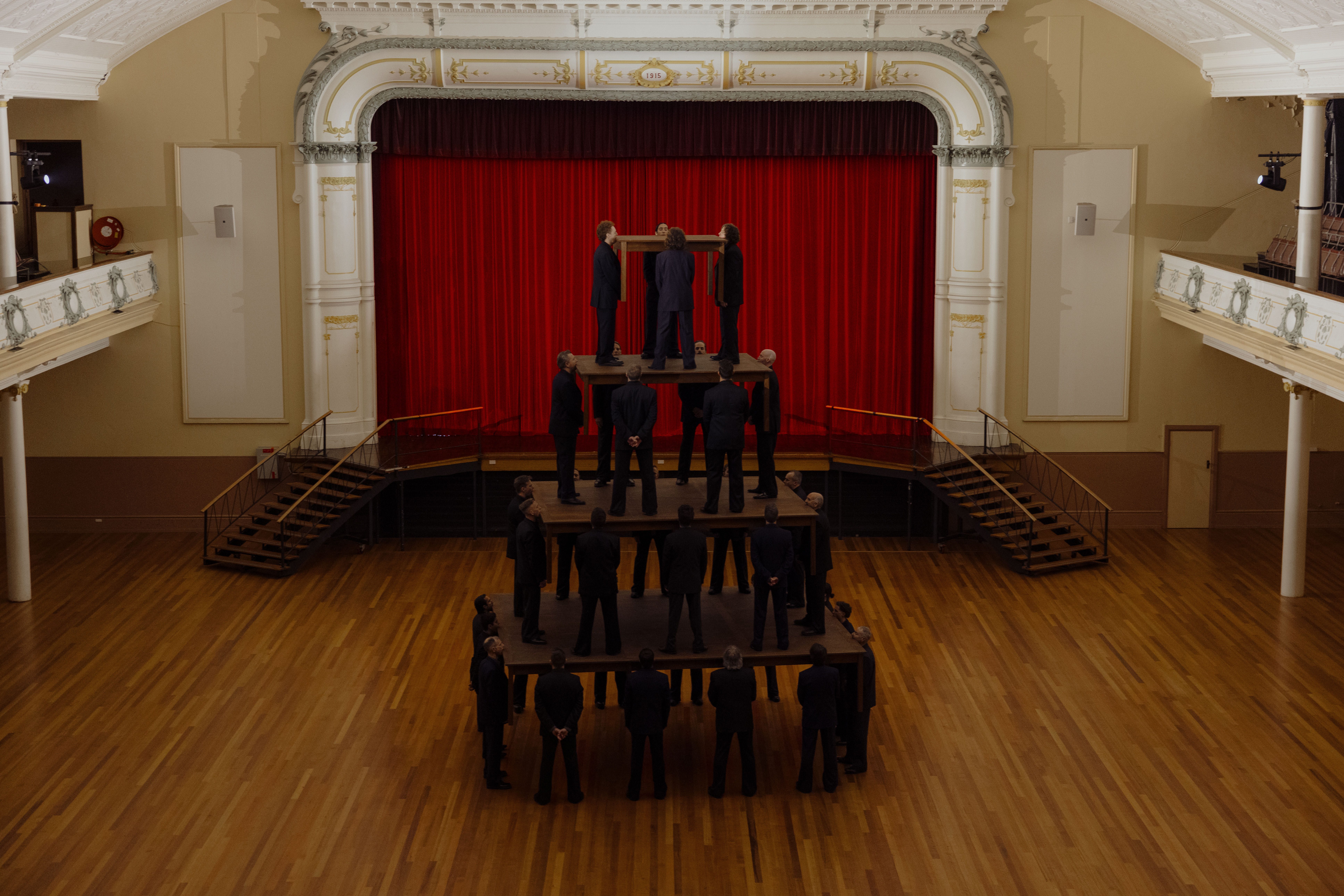
34 people, four tiers, three tables, held up entirely in their mouths. In Hobart’s City Hall, guests were invited in only once STASIS had been erected, and the participants stood there for thirty minutes, holding the weight of one another in their mouths, before people were asked to leave, and its magic could be unravelled in private.
There was a kind of magic involved that extended to SOLAS, too.
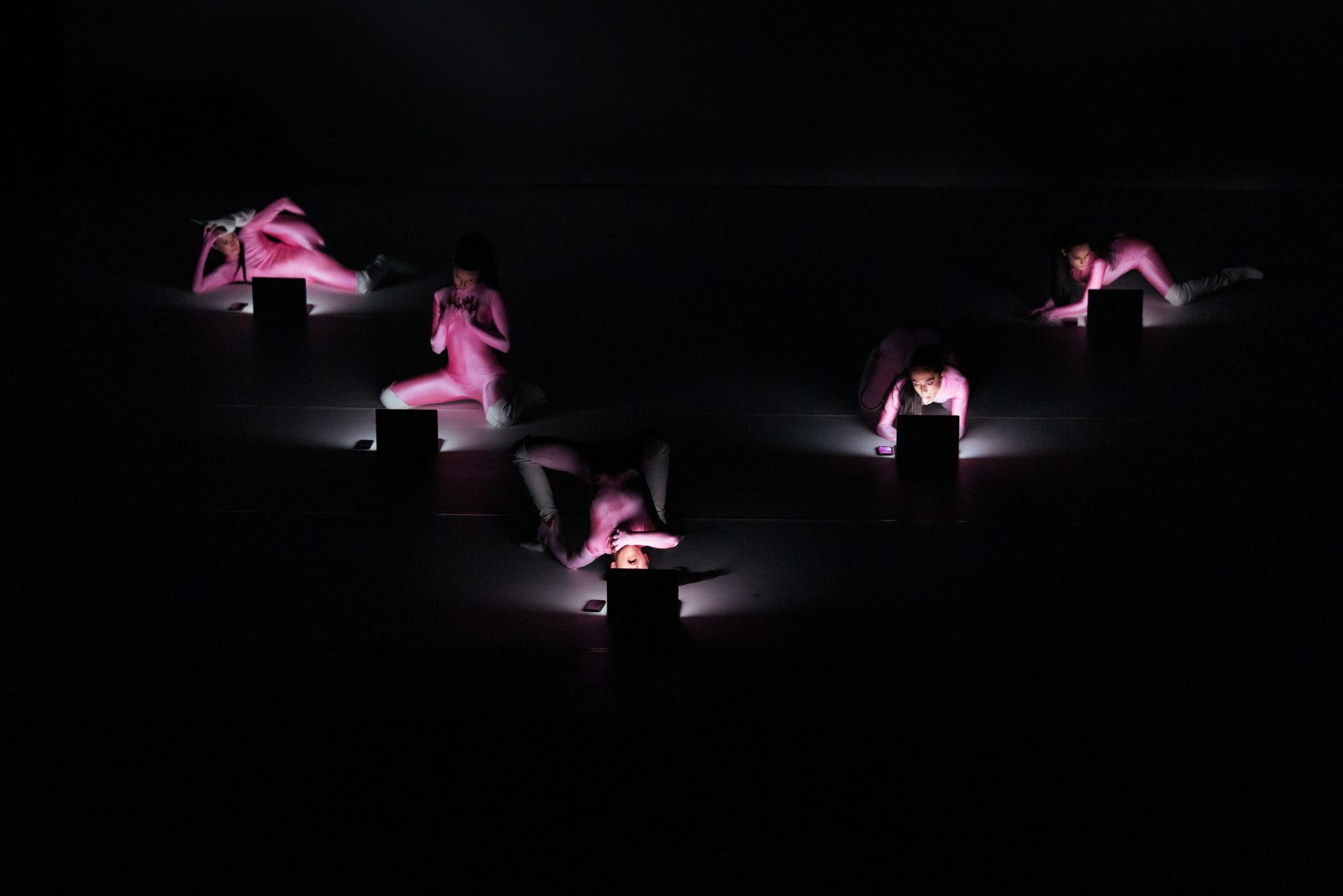
Before the show, which took place every night over both weekends, guests were prompted to register their Digital ID with the Australian government, in line with recent legislation banning young people from “unsafe” online spaces. SOLAS is a performance on-stage, but it also takes place on the viewers’ phones, with a series of laptops streaming to the live webcam platform Chaturbate. I’d never imagined that Dark Mofo would be the final push to do this, but thankfully, I let my VPN do the work for me.
SOLAS saw a group of five women undertake individual cam girl streams as a dance performance, simulating sex acts with great athletic precision, falling in and out of unison, and to a variety of hard techno and reggaeton as its soundtrack. As the performance went on, what originally started as something curious and undoubtedly sexy was performed to the point of near exhaustion by its performers, leaving the audience to question what the act of prolonged bodily consumption was actually all for.
The performance, among many things, provided an opportunity to question what viewership, and desire for expression, in this instance, sexual, really means.
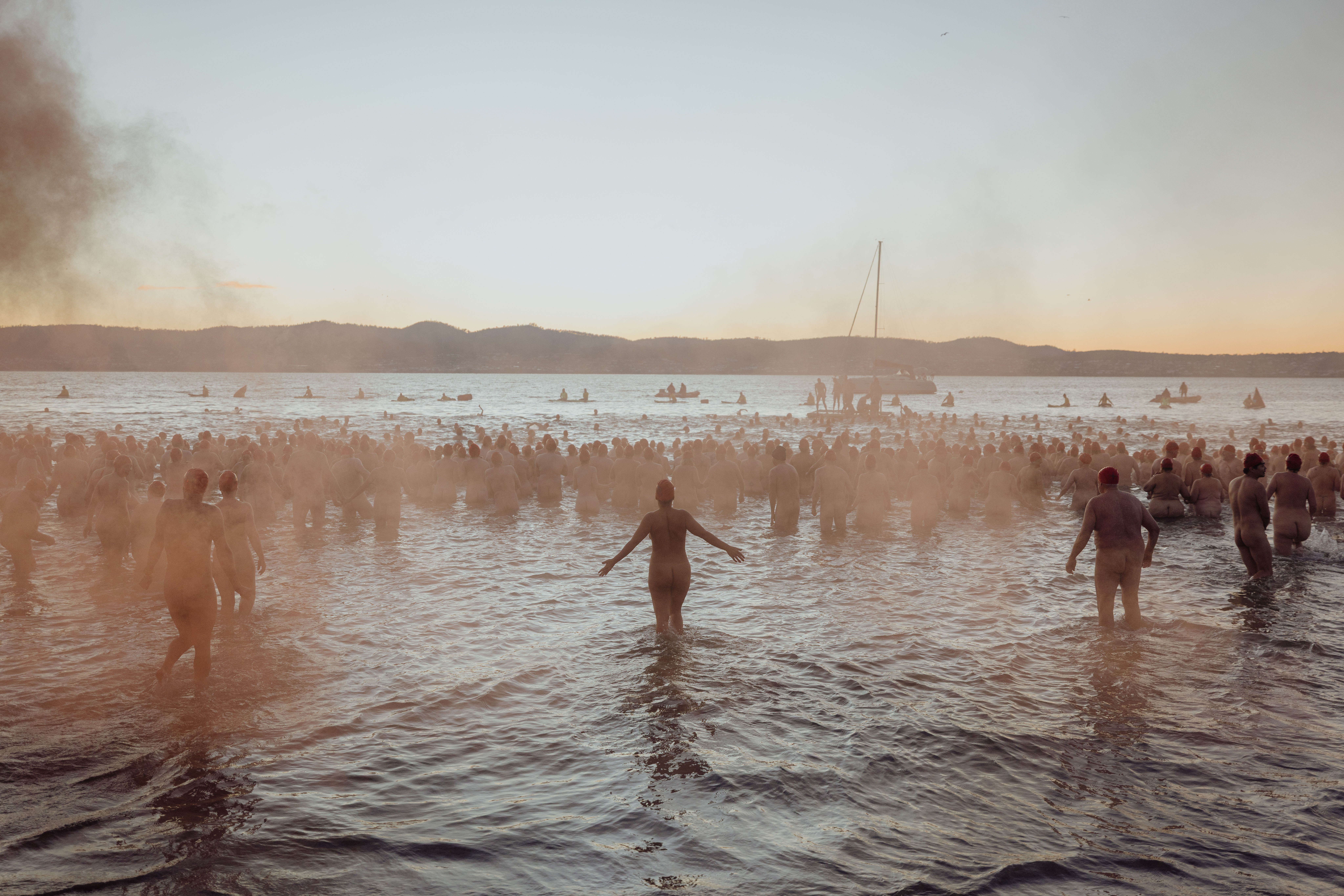
Our world has become a dark comedy that we have no choice but to watch on repeat, every day. That kind of cynicism may feel out of place at a weekend spent with earplugs in and eyes wide open, but it’s in that very darkness that Dark Mofo finds itself most comfortable.
What remains is the question of where that darkness can truly go when it becomes an attraction. Dark Mofo’s provocation hasn’t disappeared, but instead appears to have been recontextualised as a kind of civic pride.
That isn’t to suggest that this year was anything but incredible. World-class music, production, curation, art, performance and humour are aplenty in the sleepy city to the country’s South, and that needs to be celebrated and seen to be believed. Dark Mofo doesn't just provoke; it insists we stop moving long enough to feel something, and that insistence has never felt more necessary.
Maybe just leave the kids at home.
