


 INTERVIEWS
CLOVA: Composing her way into club culture
Writer Laura McInnes speaks to the Aotearoa musician-turned producer about paying homage to music's history in a multitude of ways.
Growing up in Blenheim, a small town at the top of Aotearoa’s South Island, CLOVA (the artist project of producer, multi-instrumentalist, and singer-songwriter Lauren Doherty) recalls one of her earliest childhood memories with music: choosing a song with her mum and dad to bring in the New Year countdown. “Every year would be something different. One year it might be something from Positiva, some cool trancey stuff… One year it was The Prodigy, and one year I remember it being Orbital,” she reminisces. “It became like a little tradition.” Nowadays CLOVA’s New Year’s Eve looks different, but preserves the same tradition as she takes the stage at New Year’s Festivals across the country. She’ll still lead the countdown selections, but this time her own music will play as the clock strikes midnight.
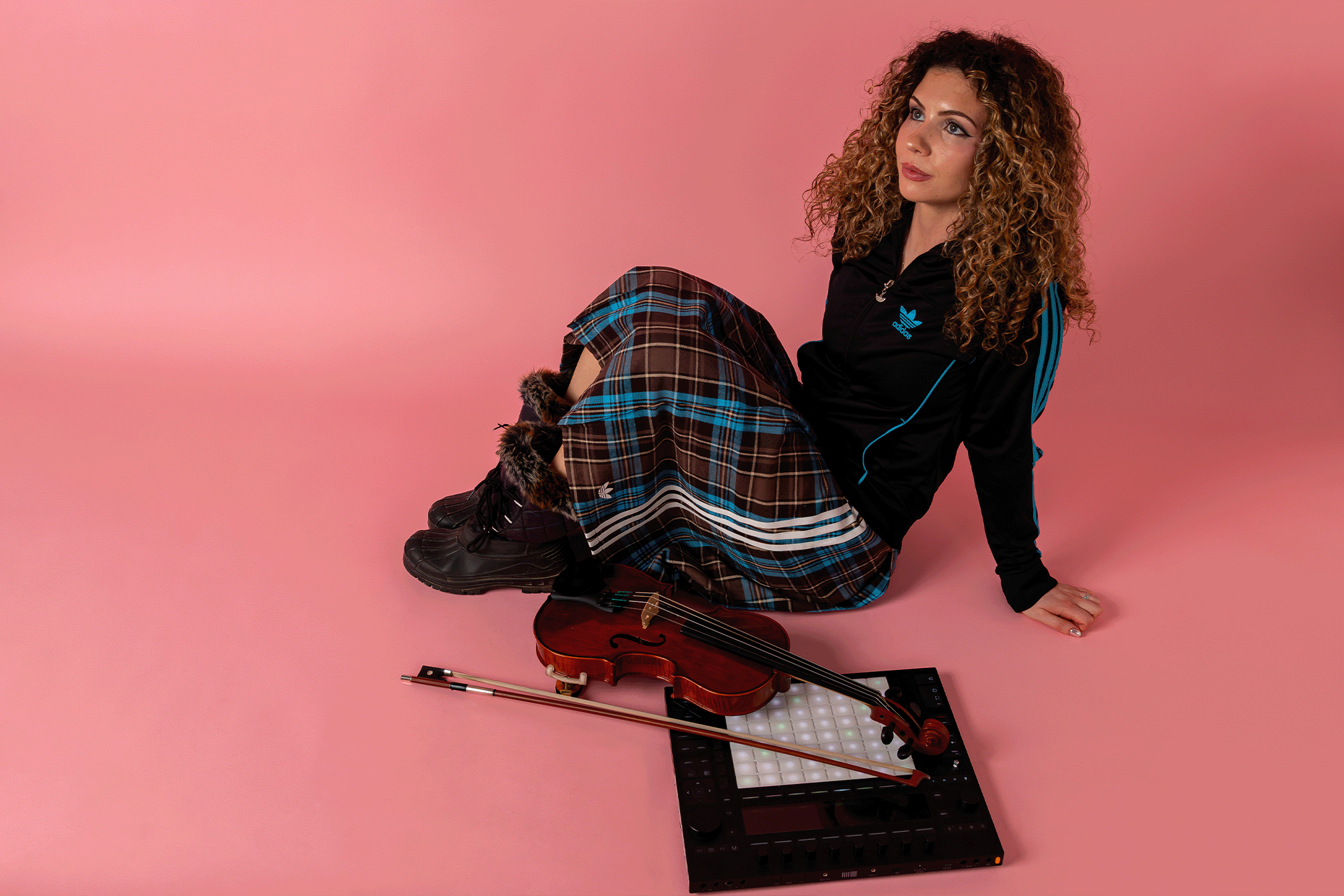
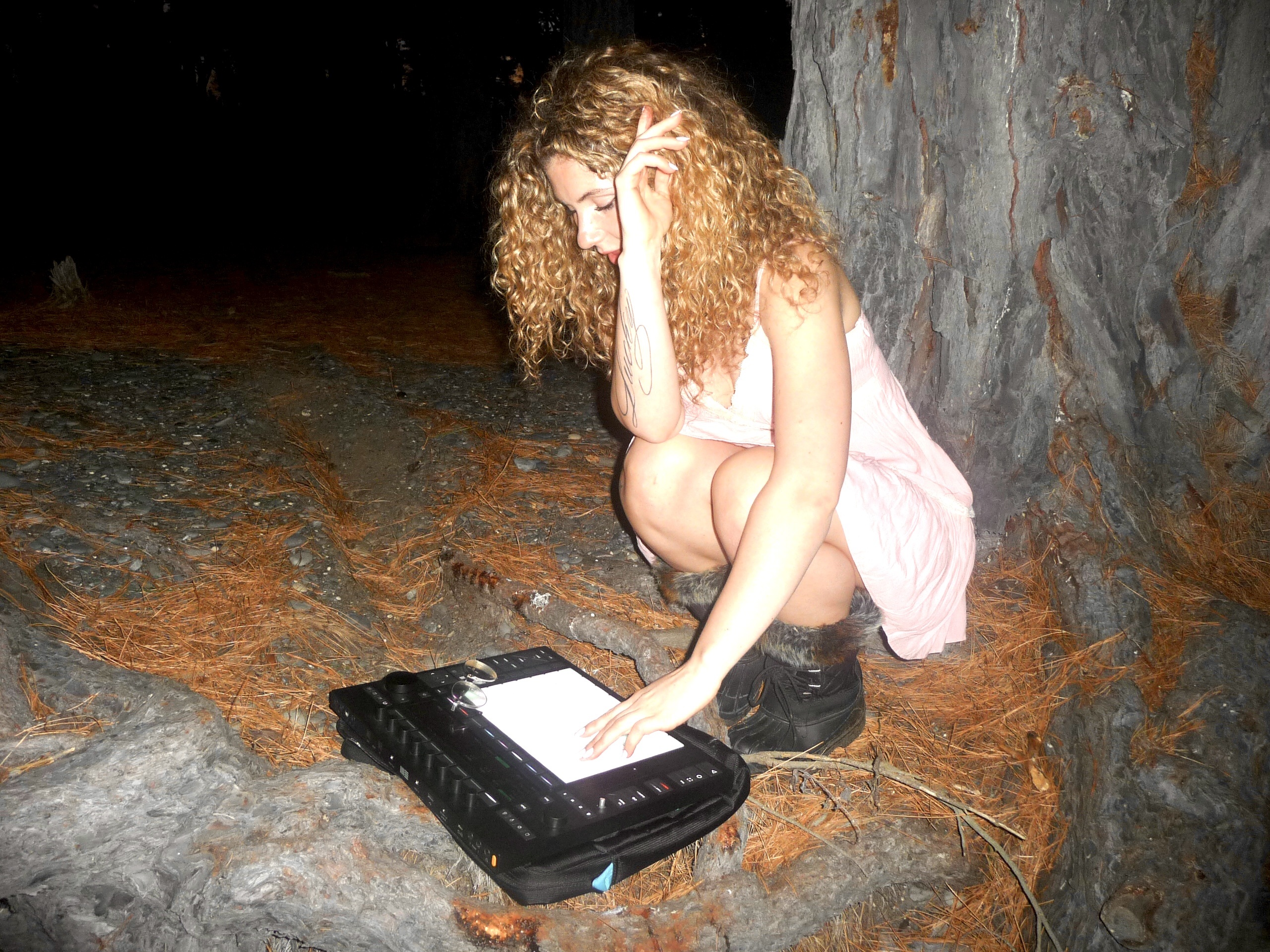
Doherty has been releasing music as CLOVA since she was 16, starting with SoundCloud demos before sharing her double-sided independent debut album ‘SPIRAL’ earlier this year. She’s built a respected reputation with a freestyled live-show approach where no two sets are ever the same, built around her prized Ableton Push and spanning 100% original production laced with live violin and vocals. CLOVA began filming her live sets a few months ago, initially intending to use the recordings to gauge crowd reception for track WIPS. At the same time, posting snippets of these sets to Instagram Reels unlocked the niche 90s dance music algorithm and quickly launched her music to the masses. Rapidly reaching far beyond the Pōneke/Wellington club circuit she came up in, CLOVA has clocked almost 2 million views over the past few months and received support from BBC Radio 1 and Ableton.
“With releasing the album independently, I still hadn't gained enough social media traction to get my streaming numbers up. But I felt like I was building a really strong following with my live show. I did my album release show in Wellington, and it sold out,” CLOVA says.
“I sort of stopped making content for a while, and I just focused on my live set. Then, for a set at Meow, I borrowed my friend's GoPro camera and recorded the whole thing. I figured it wouldn’t do very well because it's just crappy GoPro quality and really low effort - but that was actually the thing that ended up taking off organically on social media. I didn’t really know what I was doing in terms of releasing music and having a release strategy; I just knew that I needed to get the songs out to the world so people actually have something to trace my music back to.”
Her release strategies may reflect the contemporary internet age, but CLOVA is undeniably an old-soul selector and a student of 90’s rave culture, citing veteran artists like MJ Cole and The Prodigy as well as new-generation weapons like Nia Archives and Sâlo as key influences on her work. “My dad dabbled with DJing when he was living back in the UK,” she shares about how she was introduced to the culture. “So he was always playing a lot of old-school '90s dance music right from when I was like a little kid. I've always grown up with dance music.”
Despite being raised in the New Zealand town of Blenheim, where the nightlife scene was virtually nonexistent, CLOVA quickly integrated into Pōneke’s dance community after moving to New Zealand’s capital for university. Immersing herself in the city’s rich creative culture, she became a regular punter, found front row at club nights from respected promoters including Froth, Ghost Media, and Crosseyed, building her foundation as a fan before making the natural progression to becoming a staple rising act regularly appearing on lineups.
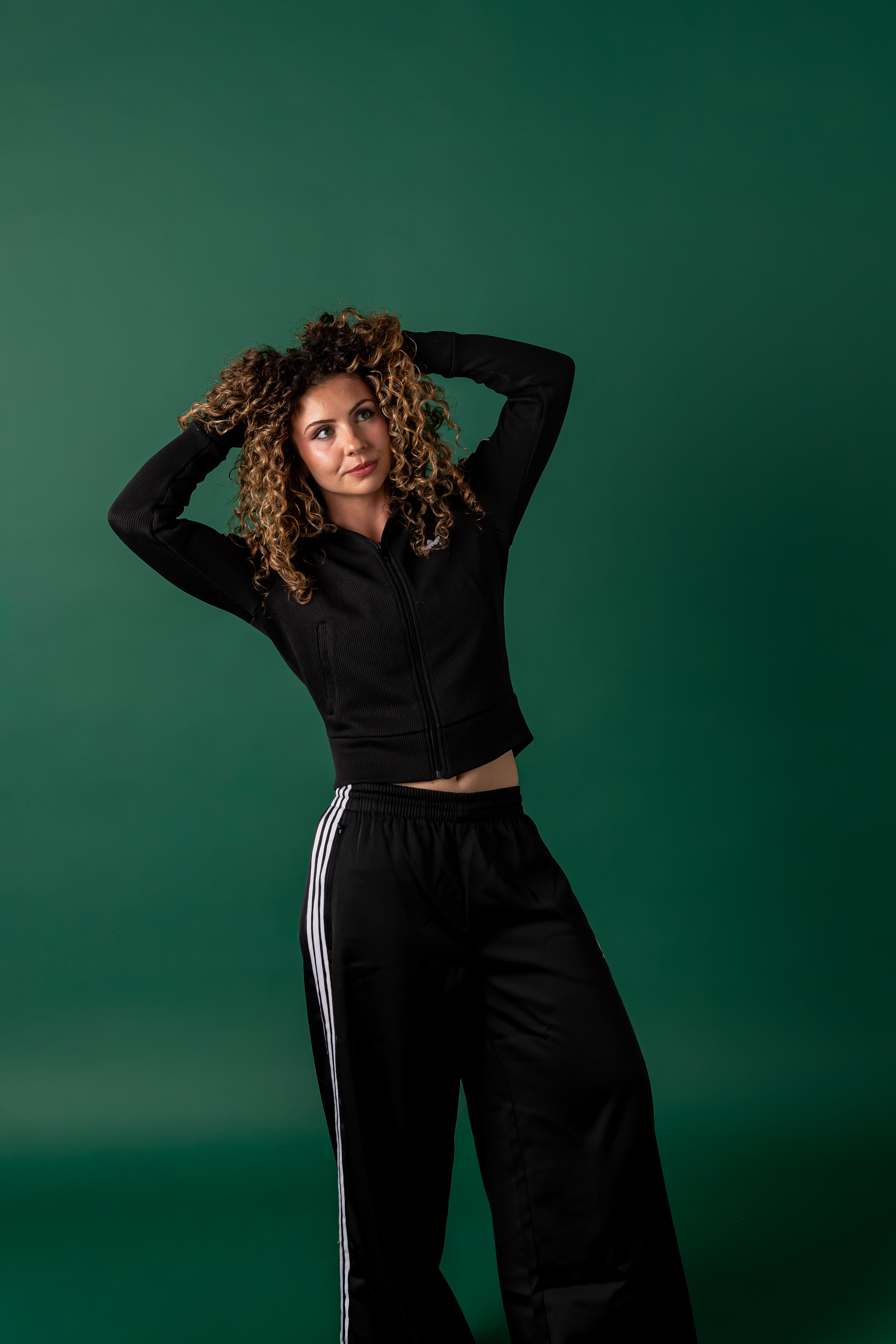
“I went out to lots and lots of gigs all the time, just as a punter,” She reflects. “I was 17 at the time, so I had a fake ID, and I made a point of going and meeting all the producers and promoters who I found on Instagram. I was trying to introduce myself and make myself known to them really early on. I remember one time Young Gho$t (of Ghost Media) was like, “I literally see you out at every single gig!”
Studying orchestral composition by day and producing dance music as CLOVA by night, Doherty's two pockets of musical expression may seem worlds apart, but they're intrinsically connected through their shared use of harmony, structured composition, and a focus on building and releasing tension. First, she picked up the violin at age seven and carries a thread of fascination with string instruments through Doherty’s family DNA, taking after her great-granddad, who worked as a luthier making violins and cellos. She has since become a renowned composition scholar, earning accolades including first place in the Lilburn Composers Competition, a finalist spot in the Todd Composers Competition, and selection for the 2025 AWE Festival. When she was 14, Doherty began experimenting with electronic production, finding her feet with loop pedals and sampling beats from YouTube before moving to her now-beloved Ableton Push hardware. Soon, CLOVA began colliding the worlds of classical and club music, layering lush, transcendent strings with surging drum patterns and deep bass. “I had no idea what I was doing,” she reveals. “But I knew what I wanted to do.”
“It was really clunky at the start,” she says of intertwining her live string arrangements with electronic production. “I always knew I wanted to play my music live. We had these tempo music nights in Blenheim where all the classical students played their pieces. I'd been writing these violin solos to go over like my early beats, and I didn't know how to do it, so I'd make a backing track and bounce it on Ableton, and it'd be terrible. I knew that I wanted to be able to take what I was doing in the classical world and connect it with my love for dance music, but it’s taken me such a long time to get to where it is now - and I still have a long way to go.”
CLOVA’s live set today takes audiences on an immersive journey through genre and multi-instrumentalism, pushing the boundaries of what club music can be. Her live show pulls audiences into a mesmerising trance, as a one-woman band balancing Ableton Push hardware, violin, and live vocals all at once. She started out the way most contemporary DJs do, learning the ropes on an entry-level controller her vinyl-conno dad bought her before graduating to CDJs. But deep down, she knew the conventional DJ path limited her potential.
“I'd been DJing for about a year and a bit around Wellington before I got a grant to get my Ableton Push. I was always really nervous when I would do DJ sets,” CLOVA admits. “I don't know why, but for me, performing with my Push and violin, it's actually way less stressful than a traditional DJ set, and I can enjoy it more and have more fun with it. I feel like my brain just fits it better. It's almost like with DJing, I have too much time to overthink. But when I’m playing live, my brain is fully able to be 100% stimulated, and I don’t have time to overthink anything.”
This year, CLOVA’s countless years of training and studies culminated in her acclaimed debut album, ‘SPIRAL’, released as a double A/B side in April and June. Across 10 tracks, the project channels UK-born genres from jungle to speed garage, meshed with ethereal vocal loops and violin. The whimsical string atmospheres mirror SPIRAL’s deep mythical conceptuality and folklore narratives tied to CLOVA’s Irish heritage. The album's title represents both the ever-evolving cycles of life, growth, and change, and the triskele, a symbol used prominently in Celtic history across stones, artwork, writing and architecture. SPIRAL explores CLOVA’s connection to her heritage, as well as its parallels with indigenous Māori culture, both sharing cross-cultural interconnections across mythology and the preservation of native language. Tracks ‘IRISH LUCK’ and ‘SILVA FERN’ reference plants native to both places she calls home on each respective SPIRAL A-Side and B-Side.
“I've been obsessed with spirals for a really long time. I got my first spiral tattoo after my granddad passed away when I was 17. I felt like the SPIRAL album was a sum of my work so far, but it was also a reference to everything that inspired me,” she shares.
“I have a real love for melody. And no matter what dance music I make, there's always a catchy melody, or a melodic element. I feel like that comes right back to Irish folk music, because it's all melody-driven. You know, you have to memorise jigs, and it's all just patterns. So I feel like that's definitely a big influence in my dance music.”
In August. CLOVA dropped ‘PRINCESS BAY DUB’, her first new music since SPIRAL and first unreleased demo to crack over a million views as a live teaser clip. The tune quickly caught the attention of BBC Radio 1 and has since become the artist's biggest track to date, organically accumulating over 100,000 streams after first being shared exclusively via Bandcamp.
“I made ‘PRINCESS BAY DUB’ last year, and I played it out in my sets quite a lot. But initially I was never a big fan of it, and I didn't know whether I would ever release it or not,” CLOVA reveals. “It wasn't until those clips blew up that I was like, okay, I guess maybe it is a nice track. So I revisited the project, cleaned it up, and added a bit more to the production. Maybe it was because there wasn't any violin in it, so I didn't feel like it belonged on the SPIRAL album. Which now I think was probably a good thing - because I feel like it came out at the right time.” Titled after the Southern Wellington beach, ‘PRINCESS BAY DUB’ is a six-minute genre-bending time capsule intersecting speed garage and deep house, layered between pulsing four-on-the-floor drum patterns, celestial chords, and woozy synths.
CLOVA is about to embark on a 13-date Spring/Summer tour, playing stages she once thought wouldn’t embrace her live show in a music festival market that favours traditional DJ sets. But instead, her innovative approaches have had the opposite effect - and CLOVA’s refusal to compromise her creative vision has carved out a space where she boldly breaks through the glass ceiling. “There were a lot of times when I didn't know whether I could see the live sets working or not,” she admits. “I didn’t know whether it was going to be too difficult, and if it would limit my opportunities. Over time, I've slowly realised I want to make club music, but I don't want to sacrifice the live elements I love so much. So it's like, how can I craft what I'm doing to be able to exist in those spaces?”
Through every one-of-one live set experience, CLOVA intends to push the boundaries between electronic and acoustic music and expand perceptions of what people expect to hear when they step on the dancefloor. The dancefloor is her orchestra, and CLOVA is the club's conductor.
-
Laura McInnes is a Freelance music writer. Follow her on Instagram.
